Manufacturing

Liquid Solvent Dye: Applications, Benefits and How to Choose the Right Solution

The colour is an important factor in most of the products that are industrialized. It can be used to identify various types of products, add value to the product, add value to the product to assist branding, or differentiate one quality of product from the other. For material that is oil-based or has an organic solvent-based system, liquid solvent dye is the answer.

For use in non-aqueous media, liquid solvent dyes will dissolve or disperse in organic, compatible media. They are employed in fuels, petroleum products, oil, lubricants, waxes, and other industrial substances. It’s not just about finding a beautiful colour when selecting a dye for your industry. Compatibility, intensity, stability, and your product’s ultimate purpose all play a role.

Anar Chemicals LLP mentions being the main supplier and industrial manufacturer of liquid petroleum or fuel dyes and cites examples such as gasoline, diesel, petroleum products, oils and lubricants, grease, aviation fuel, kerosene, and mineral oils. The company’s catalogue comprises liquid solvent red, yellow, blue, green, and orange dyes, solvent dye blends, and custom shades.

What Is Liquid Solvent Dye?

Liquid solvent dye is a liquid form of colourant that is used in solvent- or oil-based systems. Solvent dyes are normally defined by their ability to be soluble in organic rather than aqueous solvents and can be used in products that cannot be colourted with traditional water-soluble dyes. In certain instances, solvent dyes can produce intense, pure, and consistent coloring in non-aqueous-based products, depending on the chemistry and formulation.

The final consideration is that, in actual manufacturing, it is not only important that a dye gives the shade required, but it must do so without any apparent precipitation or separation or altering the characteristics of the required product or carrier. This is the reason why choosing a dye considering the complete application is safer than choosing a colour solely from its appearance.

Where Are Liquid Solvent Dyes Used?

Liquid solvent dyes are particularly useful when a product needs transparent or uniform coloration in an oil- or solvent-based medium. Common applications include fuel identification, petroleum products, lubricants, oils, waxes, and selected industrial coating or ink systems.

Key Benefits of Liquid Solvent Dye

  • Colour performance in non-aqueous environments: Colourants for organic solvents, oils, and hydrocarbons.
  • Sharp colour: Strong and consistent colour can be formed with the right formulations of the dye.
  • Universal suitability: Different colourants can be used in products such as fuels, oils, lubricants, waxes, and other industrial products.
  • Wide choice of shades: The commercial ranges of solvent dyes can include a wide choice of colours that can be produced as single shades or as a blend of yellow, red, green, orange, blue, or even mixed shades.
  • Colour you can specify: With some industrial colourants, a formulation can be chosen depending on the solvent and end application used.

How to Choose the Right Liquid Solvent Dye

Things to think about in choosing a liquid solvent dye:

  • Final application: What exactly is the product being coloured? Diesel, gasoline, lubricant, mineral oil, wax, or other solvent-based product.
  • Solvent/carrier compatibility: Make sure the colourant is compatible with the product to be coloured.
  • Desired colour: What colour is needed? Standard colour or a custom blend? If a standard colour, what colour shade is required? Light, medium, or dark? How deep is the colour needed to provide appropriate coverage?
  • Colour strength and dosage: How concentrated does the colour need to be? How much colour should be used to achieve the desired colour without excessive use?
  • Stability: Storage (including shelf life) and temperature and light considerations.
  • Batch-to-batch stability: For commercial production, colour consistency from batch to batch.
  • Relevant technical datasheets, safety information, and application notes

Illustrative Case Study: Selecting a Dye for Fuel Identification

Imagine a fuel distributor needing to visually identify one petroleum product from the other. The idea is not to alter fuel performance but to add a dependable colour indicator to aid identification. In this case, the user would initially specify the fuel composition, desired colour, dosing range, and relevant regional specifications, followed by assessing a suitable liquid petroleum dye on a sample batch.

The test will assess requirements for dissolution, colour uniformity, stability, and appearance of product after storage under proper conditions. If the product meets the technical specifications, the chosen formulation can be further developed and manufactured under controlled environments at pilot/industrial scale. Thus, it is clear that the best liquid solvent dye for any application is the one that meets the relevant technical specification, not the one that demonstrates the strongest colour in the bottle.

Why Supplier and Quality Control Matter

For industrial buyers, choosing a supplier is part of product selection. A reliable supplier should be able to tell you the intended use of the product, give suitable technical data, and support shade or formulation requirements. For high-volume processing, consistent manufacturing and quality control are particularly crucial, since any variation in the colour will cause downstream issues.

According to Anar Chemicals, it has more than 15 years of manufacturing expertise in the production of petroleum dyes, and it provides liquid solvent dyes of various colour families such as Solvent Red, Solvent Yellow, Solvent Blue, Solvent Green, and solvent orange. Anar Chemicals also says it can produce custom-made solvent dyes or solvent dye blends that suit the shade requirements of customers.

Frequently Asked Questions

What is liquid solvent dye?

Liquid solvent dye is a liquid colorant suitable for use in appropriate solvent/oil-based systems where a water-soluble dye would not be appropriate.

Where are liquid solvent dyes used?

Solvent dyes are typically used in applications such as fuel, petroleum, oil, lubricant, mineral oil, and waxes, amongst others, depending upon the dye chemistry and formulation.

How do I choose my liquid solvent dyes?

Take into account the final application, carrier or solvent, shade desired, concentration required, operating conditions, and technical or regulatory requirements.

Are your liquid solvent dyes water soluble?

For the most part, solvent dyes are formulated to dissolve in organic solvents but not in water. The level of water solubility varies by individual dye and formulation.

Can Liquid Solvent Dyes be custom formulated?

There are selected manufacturers who formulate custom shades, mixtures, and grades. Anar Chemicals states they “are able to create custom solvent dyes or mixtures to meet your specific shade requirements”.

What questions should I ask a solvent dye supplier?

Inquire about chemical identity, solvent compatibility, recommended use rate, shade intensity, technical data, hazard data, packaging, consistency, and technical support.

Conclusion

Water-based dyes are not always an appropriate solution. Industries require a colourant that performs not only in colour, but also in chemical and physical compatibility with the final product. Fuel identification, petroleum products, oils, lubricants, and waxes are examples of materials that can benefit from suitable solvent dye technology.

When choosing a dye to use in your manufacturing or procurement department, you should consider what colours it performs in, its shade, concentration, stability, consistency, how the dyes are supplied, and the supplied technical support. By working with a knowledgeable supplier, you can make product sample testing and quality control easier.
Manufacturing

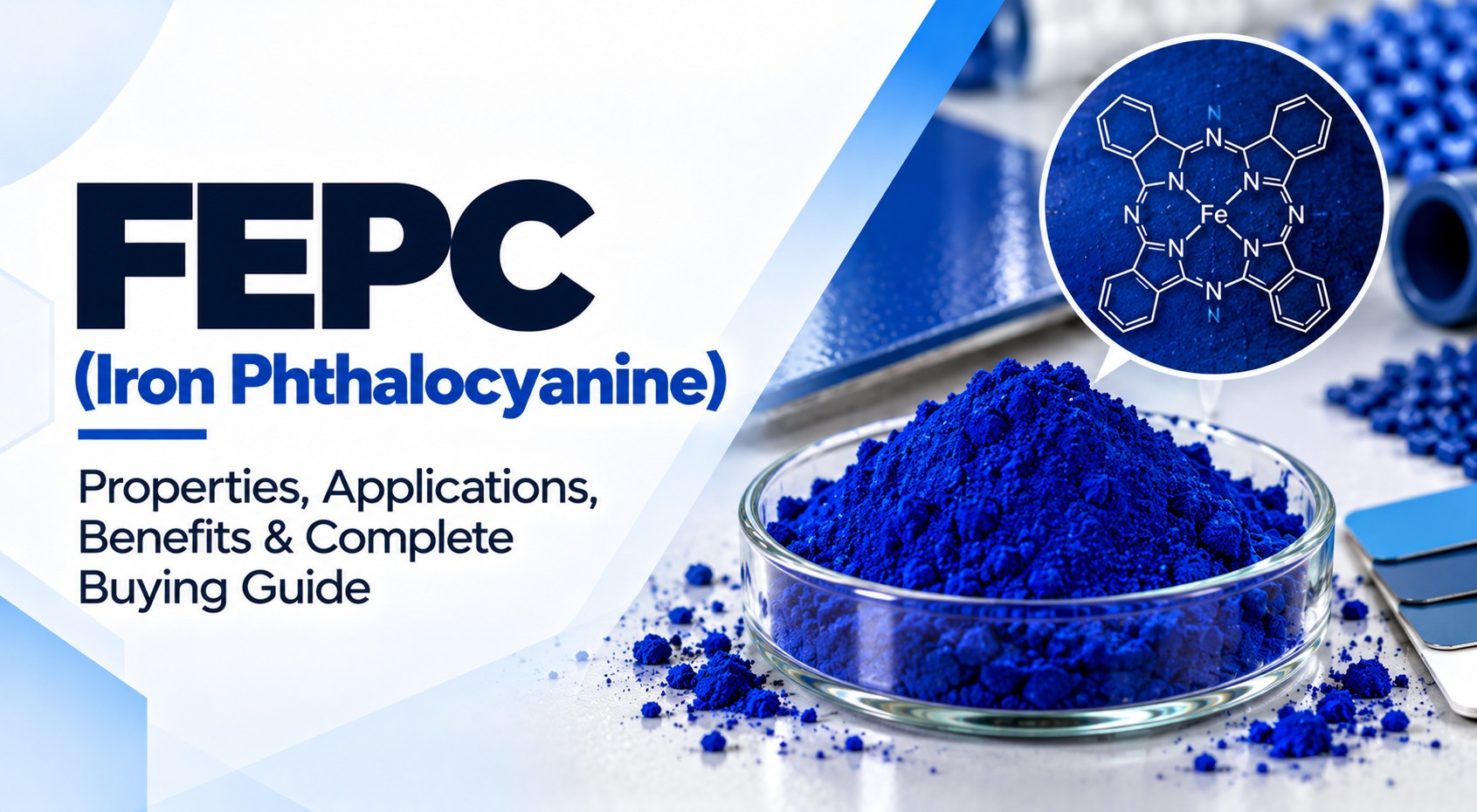
FEPC (Iron Phthalocyanine): Properties, Applications, Benefits & Complete Buying Guide

If you are involved in rubber compounding, tyre manufacturing, or industrial rubber goods manufacturing, then chances are you have used a product that uses FEPC—even if you’ve heard of it by a different name: iron phthalocyanine or ‘FePc‘ for short. It’s one of the quiet-but-essential ingredients that helps rubber processing go faster, more energy-efficiently, and more reliably.

We will tell you what you need to know about FEPC,, including defining what it is, what it does at a molecular level, where you will find it throughout the industry, and what to consider when buying. Whether you are a rubber technologist, procurement officer, or researcher, find out all about metal phthalocyanine here.

What Is FEPC?

The chemical structure of Fe(II) PC. FEPC is the abbreviation for a metal phthalocyanine, where the metal atom (Fe, in this case) is located in the centre of a conjugated macrocycle, which in this context is known as a phthalocyanine (or “Pc”) ring. FEPC CAS number: 132-16-1. Molecular Formula: CHFeN. Molecular Weight: 568.37 g/mol.

Phthalocyanines are a group of planar, aromatic macrocyclic compounds comprising four isoindole groups joined by nitrogen atoms. When an atom is embedded within the ring, as in a metal phthalocyanine, it adopts distinctive catalytic, electronic, and optical properties that vary according to the nature of the metal. The FEPC catalyst, in which the active atom is Fe, or iron, presents a mighty oxidizing catalyst for oxidation that underpins its most valuable industrial application.

FEPC is a dark blue powder. A typical phthalocyanine, FEPC, is stable at room temperature, non-volatile, and insoluble in water and most solvents.

How FEPC Works as a Rubber Peptizing Agent

This is the main industrial use of FEPC, and it would be helpful to know the chemistry.

Natural rubber as received at a rubber goods factory contains polymer chains of extremely high molecular weight. Prior to compounding with vulcanizing agent, fillers, antioxidants and the like, the molecular weight of the natural rubber must be reduced to a manageable level. This is known as peptizing or mastication. This high shear work, in earlier years, was carried out on a two-roll mill or an internal mixer (for example, a Banbury).

FEPC triples the speed of this reaction by functioning as a chemical peptizer. The shearing action during mastication produces free radicals on the rubber chain. With FEPC and oxygen present, the iron centre of the molecule acts as a catalyst for the oxidative chain scission (chemical shearing) of the polymer chain, using the oxygen in the atmosphere to open up the chain at the free radicals.

The real advantage is, of course, the potential for cost savings—less mastication (normally 30-50%), less energy, less equipment wear, more uniform Mooney viscosity of the finished material, and improved dispersion of downstream ingredients. For a tyre maker who produces thousands of tonnes of rubber a month, a slight gain in efficiency can make a big difference to costs.

Applications of FEPC Across Industries

1. Rubber Peptizing (Primary Application)

This is the major section where the FEPC is used in the commercial production process. All types of tyre producers, as well as conveyor belt, rubber hose and any other type of industrial rubber commodity producer, have FEPC as a cost-saving aid to reduce the time and effort of rubber mastication.

2. Catalysis

FEPC‘s iron center makes it an ideal catalyst for a variety of organic transformations, such as the oxidation of terminal olefins into methyl ketones, allylic oxidation of cyclic olefins, 1,4-oxidation of 1,3-dienes, and some elimination reactions. It is employed in academia and in specialty chemistry.

3. Organic Electronics and Photovoltaics

With its planar macrocyclic structure and adjustable electronic properties, FEPC is being studied for use in organic light-emitting diodes (OLEDs), organic thin-film transistors (OTFTs), and organic solar cells.

4. Electrocatalysis

The oxygen reduction reaction at the cathode. FePE scanning electron microscope of an FePC sample. Recent work suggests that FEPC could be an effective, inexpensive, non-precious-metal catalyst for the ORR in fuel cells. This remains an area of intense industrial and academic R and D to replace the more costly platinum-based catalyst.

5. Pigment and Dye Intermediate

Although FEPC is not a general-purpose pigment like CuPc, it is an intermediate in the production of some speciality dyes and composite green pigments.

Case Study: How a Tyre Manufacturer Reduced Mastication Time by 40% with FEPC

Background: The plant was a mid-size tyre manufacturer in Gujarat, India, and was already using Banbury internal mixers to handle approximately 200 tonnes of natural rubber. The rheological characteristics of the rubber dictated a mastication cycle time of 12-14 min. Per batch, to reach the desired Mooney viscosity (ML 1+4 at 100°C = 55-65).

The Problem: Long masticating cycles led to high energy consumption (the Banbury mixer is one of the most energy-hungry pieces of equipment in any rubber plant), poor heat transfer to the rubber (not good for pre-vulcanisation), and reduced batch capacity per day. The tyre manufacturer wanted to be able to raise its output by 25% but to avoid investment in a new mixer.

The Solution: The rubber technologist incorporated FePc (iron phthalocyanine) as a chemical peptizer at levels of 0.1-0.2 phr (parts per hundred of rubber) when preparing the raw/primary mast. The FEPC was simply fed into the Banbury mix as a powder as the raw rubber was added at the start of the cycle.

Key Takeaway: Instead of investing 2-3 crores into a new Banbury for the same added throughput of 104 kg/hr, a chemical additive costing 120-180 / tonne of rubber deliver ed the same capacity gain. FEPC was not just about saving energy – FEPC made a significant difference in the economics of the mastication operation. Even the reduced dump temperature led to less scorching and better downstream compound mixing.

Factors to Consider Before Buying FEPC

  • Purity and dye content: For industrial FEPC, the usual dye content is 90%. Ask for a certificate of analysis, as higher purity allows a more consistent, reliable performance.
  • Particle size: Finer particles allow better dispersion in the rubber matrix during mastication. Larger particles are more likely to distribute unevenly and may result in uneven peptization.
  • Moisture content: Not too low for good dosing and not too high to cause processing problems; specifications should specify maximum levels.
  • Industry know-how: Metal phthalocyanine production is a specialised technology. Select a manufacturer who has existing, established experience of this chemistry; do not opt for a general chemical trader.
  • ISO Certification: Quality, environment, and occupational safety management system of the company. ISO Certifications: ISO 9001: 2015 for the quality management system, ISO 14001: 2015 for the environmental management system, and ISO 45001: 2018 for the occupational safety management system.
  • Technical support: The best quality FEPC vendor would be able to speak about specifics on the optimum dosage, dosing point, and viability with your rubber composition.

Sourcing FEPC: Anar Chemicals

Anar Chemicals LLP is a professional metal phthalocyanine manufacturer with over 30 years of experience in the product group. They pioneered the first metal phthalocyanine and derivatives in India for specialised applications. They have FEPC (iron) manufactured for rubber applications with ISO 9001:2015, ISO 14001:2015 & ISO 45001:2018 Certification. NiPc (nickel) is manufactured for reactive dye applications, and ZnPc (zinc) for catalysis and ink applications. They have a comprehensive Products page on their website, or contact them for technical inquiries and pricing on bulk quantities.

Frequently Asked Questions About FEPC

Q: Full form of FEPC?

(FePC) – Chemical Properties: Size: CAS: 132-16-1; Formula: CHFeN; Molecular Weight: It is a metal phthalocyanine compound. CAS Number: Widely used as an industrial rubber peptizer. FePC, the abbreviation of iron phthalocyanine; Fe is the symbol for iron, and Pc is the abbreviation of phthalocyanine.

Q: What is FEPC used for?

Main applications of FEPC include as a rubber peptizing agent, a chemical used to lower the molecular weight of natural rubber and butadiene styrene (SBR) rubbers during the mastication process—this process softens the rubber, improving processability and making it easier to compound with other ingredients prior to vulcanisation. FEPC is also used as a catalyst and in organic electronic research and as a precursor to some pigments.

Q: Is FEPC safe to use?

If familiar with chemical safety practices, FEPC is safe to use in industry. FEPC is a stable solid at room temperature and is not volatile. Use the PPE (gloves, eye protection, dust mask, etc.) specified in the manufacturer’s Safety Data Sheet (SDS) when handling, storing, or disposing of the material.

Q: How does FEPC work as a rubber peptizer?

FEPC functions as an oxidation catalyst in the rapid mastication, or milling, of rubber. It super-accelerates the process of oxidative chain scission of rubber polymer molecules, significantly shortening the process relative to what can be achieved by mechanical shearing alone. This results in faster, easier processing, more uniform mastication, and improved incorporation of compounding ingredients.

Q: What industries use FEPC?

FEPC is principally related to the rubber manufacturing industry, encompassing tyre, rubber goods and miscellaneous industrial rubber products. In addition to that, FEPC is also applied in the organic dyes and pigments production process (used as phthalocyanine intermediate) and catalysis research, as well as in organic electronics (OLED, OTFT) and photovoltaic cell development.

Q: What is the difference between FEPC and CuPc?

FEPC and CuPc both contain the same phthalocyanine ring, but with different metal centres. CuPc (copper phthalocyanine) has a number of uses as a pigment (a blue-green pigment, CI Pigment Blue 15, used in inks, paints, and plastics. FEPC is mainly used as a rubber peptizing agent and an oxidation catalyst, and not as a pigment, due to its less commercially useful colour properties.

Q: Where can I buy FEPC in India?

Anar Chemicals LLP (anarchem.com) are innovators in the manufacture of metal phthalocyanines for more than 30 years. They manufacture FEPC for rubber applications. They are ISO 9001:2015, ISO 14001:2015 & ISO 45001:2018 certified. They were the first to develop specialty metal phthalocyanines and their derivatives for niche markets in India.

Manufacturing

Fire Retardants: Types, Applications, Benefits & Complete Buying Guide

Imagine the last time you sat on a sofa, used your computer, took your car to the store, or walked into a commercial building. Each of those spaces had items of material in them that have the potential to burn-plastics, foams, fabrics and furniture, insulation, and electrical wiring. And the reason those items don’t simply burst into flame or spread flame quickly once ignited is fire retardants-chemical “fireproofers” that help buy you time.

In this article, we’ll tell you everything you need to know about fire retardants. Not just how they work, but what they are, the chemicals involved, the different types, what they’re used on, what safety standards apply to them, and which one you should use. So, whether you’re a materials engineer, a safety manager, a global sourcing specialist, or just someone in need of fire-safety additives, this article is for you.

What Are Fire Retardants?

Fire Retardants are chemicals that are either incorporated into or applied onto combustible materials, such as plastic, wood, textiles, foam, coatings, and composite materials, in order to inhibit the materials’ combustibility, decrease flame spread rates, and to prevent or decrease the formation of harmful smoke and gases.

We also need to remember what fire retardants do not do: they do not make the material fireproof. There is no additive that can do that for inherently combustible material. What they do is slow down the most crucial early moments of a fire, buying occupants additional time to get out and firefighters additional time to get in. Those extra minutes can be life or death in a building fire.

How Fire Retardants Work

The chemicals are meant to interrupt the process of combustion at one or more stages. There are four main mechanisms of flame retardancy:

  • Gas-phase action: Fire retardants emit active chemicals (Phosphorus or Halogen radicals) which scavenge the even more active (H & OH) radicals responsible for perpetuating the chain reaction. No chain reaction means that the flame can’t go.
  • Condensed-phase char formation: The fire retardant encourages the creation of a carbonaceous layer, or char, on the surface of the material. This char creates a physical and thermal barrier that prevents uncombusted material below the surface from getting warm and having access to oxygen.
  • Endothermic cooling: Some fire retardant compounds (especially metal hydroxides such as ATH and MDH) undergo endothermic decomposition when heated, absorbing considerable amounts of energy and liberating water vapour to the fire. The fire zone is cooled, and the gases are diluted.
  • Intumescence: The advanced fire retardant mechanism. An intumescent fire retardant system puffs up and swells when exposed to heat, creating a viscous multicellular protective char to insulate the substrate from heat radiation. This mechanism is employed by phosphorus-nitrogen systems such as PPM triazine and ammonium polyphosphate.

Key Applications of Fire Retardants

Construction and Building Materials

Insulation boards (EPS, XPS, PIR), structural steel protection coatings, cladding panels, roofing membranes, timber treatments for Cable trays. What are the global building standards for fire performance? Building standards (Euroclass in the EU, ASTM E84 in the US, and NBC in India) are now specifying fire performance requirements for these products. How the Grenfell Tower fire changed fire safety for the construction industry.

Textiles and Furnishings

Protective clothing, military gear, firefighting gear, hotel drapes and bed linen, aeroplane seating, mattresses, and fabric-covered furniture. Includes BS 5852 (furniture), EN 11612 (protective clothing), and California Technical Bulletin 117 (furniture flammability).

Plastics and Electronics

PCB laminates, cable insulation, connectors, battery enclosures, smartphone enclosures, and appliance enclosures. 1. UL 94 sets the international standard. The global explosion of electric vehicles has generated enormous new opportunities for fire-retardant products in batteries and charging stations.

Automotive and Transport

Interior trim, seat foams, headliners, underhood components, wire harnesses, and EV battery enclosures. While FMVSS 302 (US), ECE R118 (Europe), and OEM specs have been driving the adoption of fire retardants, OEMs are now using more demanding specifications, with many requiring halogen-free products.

Coatings and Paints

The other use of fire retardants is on structural steel-the most obvious usage. Intumescent coatings, which can be used on steel, timber, cables, or even composites, work by swelling when subjected to fire. This then develops a layer of insulating char, which prevents the steel from reaching the temperature at which it would fail.

Safety and Regulatory Considerations

The fire retardant industry is governed by a complex web of standards and regulations:

  • UL 94: The worldwide standard for surface burning characteristics of plastic materials, ranging from HB (horizontal burn) to V0 (self-extinguishing within 10 seconds with no dripping).
  • 2.6.2 EU RoHS: Limits certain halogenated fire retardant chemicals in electrical and electronic products.
  • EU REACH: FRs require registration and risk assessment; several halogenated FRs are included on the SVHC list.
  • EN 45545: Railway fire safety standard on performance for flame, smoke and toxicity (FST).
  • FAR 25.853: FAR for aircraft interior material flammability.
  • 2013 9.0National Building Code (India): Sets out fire performance criteria for materials used in building construction in commercial and residential facilities.
  • The overall pattern is clear: regulation is becoming tighter, and the pace of the move towards halogen-free, low-smoke and low-toxicity fire retardants is accelerating everywhere.

Advantages of Modern Fire Retardants

  • Life safety: The primary goal. Fire Retardants provide extra time for people to evacuate and firefighters to act.
  • Property protection: Less damage to structure and contents from slower spread of fire.
  • Regulatory Compliance: Critical to meet building codes, safety standards for products and OEM specifications.
  • Insurance benefit: Fire retardant lowers insurance premium cost and limits exposure to liability.
  • Environmentally friendly: Today’s high-performance, environmentally friendly, halogen-free fire retardant, for example, PPM Triazine.
  • Adaptability: now compatible with practically all combustible materials-glass, plastics, foams, textiles, wood, coatings and composites.

Factors to Consider Before Buying Fire Retardants

  • Target standard: figure out which fire safety test your product needs to pass (UL 94, LOI, EN 45545, ASTM E84, etc.), then trace that back to the fire retardant system that delivers it.
  • Halogen-free requirement: At the point when halogen-free is required by your end customer or end market, consider phosphorus-nitrogen, metal-based, or silicon.
  • Loading vs. mechanical impact: The higher the loading of fire retardant, the more the mechanical properties will suffer. Select a system that can achieve the desired fire rating at the lowest practical loading.
  • Smoke and toxicity: In enclosed environments (buildings, vehicles, aeroplanes, train carriages), the density of the smoke generated as well as the emission of toxic gases may be just as important as the fire resistance of the material.
  • Processing compatibility: Confirm that the fire retardant is processing compatible with your polymer, i.e., that it will tolerate the processing temperature and conditions of your resin without degradation, odor, or build-up of plant.
  • Supplier knowledge: Select a supplier that not only provides a raw material but also formulation advice and technical support.

Case Study: Improving Fire Safety in a Commercial Building Insulation Project with Halogen-Free Fire Retardants

Background: A manufacturer of building products in western India was fabricating EPP (expanded polypropylene) insulation panels for a major commercial building project. The spec called for a Class B1 rating for the panels (according to the DIN 4102 building materials fire test standard, which was incorporated into the project specification) along with the architect’s desired halogen-free materials to meet the building’s green certification.

The Problem: A halogen-free system from the manufacturer was unable to reach B1 with their first brominated additive at 15% loading. Early testing with aluminium trihydroxide (ATH) needed a loading of 58% to come close to B1 – and the panels were so heavy and brittle they did not meet the project’s requirements for thermal insulation and mechanical handling.

The Solution: The Product makes use of an intumescent system using a combination of 75% ammonium polyphosphate and 25% PPM Triazine HF at a loading of 22%. This intumescent char system resulted in excellent fire properties of low enough amount, thus making it possible to maintain adequate insulation properties of the panels.

Key Takeaway: The PPM Triazine delivered the fire rating at a loading less than 50% of that required by ATH and maintained the integrity of the insulation panels (integrity was lost when body cavity temperatures reached 1000°C at the ATH loading). This case study illustrates the benefit of intumescent phosphorus-nitrogen systems in construction.

Sourcing Fire Retardants: PPM Triazine from Anar Chemicals

An Indian registered trademark of MCA Technologies AG, Switzerland, www.annartoo.com, and ANAR Chemicals LLP, the exclusive Indian licensee of MCA Technologies Switzerland for manufacturing and marketing of PPM Triazine-an innovative halogen-free flame retardant based on phosphorus-nitrogen-type intumescent chemistry is available in India through our dedicated joint venture company, Anar Mcat Advanced Electronic Chemicals Pvt Ltd. With ISO 9001:2015, ISO 14001:2015 & ISO 45001:2018 certification, Anar Chemicals provides the company with technical formulation support along with the fire retardant product to meet your specific requirements. Please visit the PPM Triazine product page or Contact us for technical inquiries and bulk pricing.

Frequently Asked Questions About Fire Retardants

Q: What are Fire Retardants used for?

Fire Retardants are used to reduce the flammability of materials across industries including construction (insulation, cladding), electronics (PCBs, cables, battery housings), automotive (interior trim, seat foams), textiles (workwear, upholstery, curtains), and furniture (mattresses, cushions). They delay ignition, slow flame spread, and give occupants critical extra time to escape in the event of a fire.

Q: Are fire retardants safe?

Today’s halogen-free fire retardants-especially phosphorus-nitrogen systems such as PPM triazine-have been designed to be safe from a human health and environmental perspective; they give off very low-toxicity smoke when burning and do not give off corrosive halogen-based off-gases or persistent organic pollutants. This halogenated fire retardant option is no longer used.

Q: What is the difference between “fire resistant” and “fire retardant”?

A substance’s ability to resist fire with no chemical treatment done to the material. A metal or stone would be an example of a fire-resistant material. Fire retardant: A chemical substance applied to or added to a material to inhibit or resist its natural propensity to ignite and burn. For example, a wood panel with a fire retardant treatment.

Q: How do fire retardant chemicals work?

There are several ways fire retardant chemicals act: via gas phase radical trapping (breaking the chain reaction that sustains the fire), condensed phase char formation (producing a shield on the surface of a material), endothermic cooling (absorbing heat and evaporating water), and intumescence (foaming up to form an insulating carbon char ‘blanket’). The most sophisticated fire retardants employ a combination of phosphorus and nitrogen chemistry.

Q: What is PPM Triazine?

PPM Triazine (CAS 93058-67-4) is a proprietary polymeric halogen-free nitrogen synergist developed by MCA Technologies, Switzerland. When blended with ammonium polyphosphate (APP), it forms an intumescent fire retardant system that achieves UL 94 V0 ratings in engineering plastics at moderate loading levels, with low smoke density and minimal toxic fumes.

Q: Which Fire Retardants are halogen-free?

The halogen-free fire retardants are based on phosphorus-containing systems (APP, organophosphates), phosphorus-nitrogen intumescent systems (PPM Triazine+ APP), metal hydroxides (aluminium trihydroxide, magnesium hydroxide), nitrogen-containing systems (melamine cyanurate), and silicon-based additives and other materials. The phosphorus-nitrogen intumescent systems are the most optimized in terms of high performance, loading, and low smoke toxicity.

Q: Where can I buy Fire Retardants in India?

Anar is committed to supplying efficient & environment-friendly fire-retardant PPM TRIAZINE. Anar Chemicals LLP (anarchem.com) is the sole Indian licensee of MCA Technologies, Switzerland, in India for the manufacturing & sale of PPM triazine, a high-performance halogen-free flame retardant. Anar has ISO 9001:2015, ISO 14001:2015 & ISO 45001:2018 certifications & 40+ years of experience in chemical manufacturing.

Manufacturing

Flame Retardants: Types, Applications, Regulations & Complete Buying Guide

All those plastic bits and pieces in your car’s dashboard, all those metres of cabling in your office building, all those foam cushions in your comfy chair, and every bit of protective workwear on a factory floor-they all contain flame retardants. Those are the chemicals that hold the line between conventional combustible stuff and a devastating inferno, and I can’t think of any safety engineer more essential.

This guide provides insights into what flame retardants are, how they work, types of flame retardants, the applications of Flame Retardants in different industries, and a huge regulatory decision that will change the game for the industry. This guide will be useful to anyone interested in polymer technology or working as a polymer engineer or compliance officer in compliance and will provide enough of the right information to make their work easier.

What Are Flame Retardants?

Flame retardants are chemical formulations that are added or applied to materials (mainly plastics, textiles, foams, and coatings) to increase their fire resistance and slow the growth of a fire. Flame retardants are not fireproofing chemicals; they delay the time to the start of a fire, slow the spread of flames and provide more time for occupants to escape.

There are four principles that flame retardants can operate by.

  • Gas phase radical trap: FR liberates active species (phosphorus or halogen radicals) that break the chain reaction in a flame by scavenging the highly reactive H and OH radicals that are actually maintaining the burning condition.
  • Condensed-phase char production: FR supports the creation of a carbonaceous char layer on the surface of the material, serving as a barrier to prevent the flame from contacting unburned material.
  • Endothermic cooling: Certain FRs (such as metal hydroxides) undergo endothermic decomposition, which helps to cool the fire by absorbing heat and expanding water vapor while also reducing the concentration of flammable gases.
  • Intumescence: The formulation of the FR system makes the material foam, forming an insulating, expanded char which protects the substrate from heat and flame; this is the mechanism used by advanced phosphorus-nitrogen systems such as PPM Triazine.

The Halogenated vs. Halogen-Free Debate

The Conversation at the Heart of Flame Retardants Today. Brominated and chlorinated flame retardants were the industry standard for decades, owing to their remarkably high performance at extremely low loadings. However, their known impacts on the environment and human health have prompted a worldwide regulatory reaction:

EU RoHS Directive: Limits certain brominated FRs (PBBs, PBDEs) in electrical and electronic devices.

  • REACH regulation in the European Union: The following halogenated flame retardants are classified as SVHCs, or as restricted substances in Annex XVII.
  • Stockholm Convention: Some, for example, brominated flame retardants, are subject to specific control under the Stockholm Convention on POPs, which is a list of chemicals that have to be removed or restricted.
  • OEM demands: All globally leading car and electronics manufacturers (BMW, Apple, Samsung, and Volvo) are now demanding completely halogen-free materials for their procurement.
  • Halogen-free flame retardant consumption is on the rise indeed. The real question for the majority of users is not “Should I go halogen-free?” but “Which one?”

Key Applications of Flame Retardants

Electronics and Electrical

RCBs: Laminates, cable insulation, and connectors; enclosures for batteries; enclosures for phones and notebooks. Many examples of the impact of RoHS migration with 100% of consumer electronics made from halogen-free FRs. The growth of EVs will lead to a nuclear-level increase in demand for battery pack fire safety.

Construction and Building

Building insulation-EPS, XPS, PU cladding boards, roofing membranes, pipe insulation, building insulation, and fire ratings in building codes (Euroclass and ASTM E84 and BS 476-are all about flame performance.

Automotive and Transport

Interior, under-hood or under-body traction mats; foams for seats, headliners; EV battery encapsulation, wire harness cover and pads and spools; interior car components such as sidewalls, armrests and headliner, ceiling pads, pet barriers, inside and outside shields, light strips for doors and dashboards.

Textiles and Furnishings

Protective clothing, military uniforms, plane seats, hotel curtains, Mattress ticking, upholstery. The use of FR is driven by standards such as EN 11612 (protective clothing), BS 5852 (furniture), and FAR 25.853 (aircraft interiors).

Railway and Aerospace

Cladding materials, flooring, cable ducting, and seat materials: EN 45545 (railway fire safety) and FAR 25.853 are among the most rigorous flame, smoke, and toxicity (FST) standards in any industry.

PPM Triazine: A Next-Generation Halogen-Free Flame Retardant

There are several halogen-free alternatives, one of which is the technologically advanced PPM Triazine (CAS 93058-67-4), a polymeric nitrogen synergist formulated by MCA Technologies, Switzerland, which acts as a synergist in conjunction with ammonium polyphosphate (APP) to form a highly effective intumescent FR system.

What distinguishes it from other classes of conventional nitrogen synergists (melamine, simple triazines): 1. The large molecular weight of the PPM triazine polyamide matrix. This polymeric structure prevents 3 persistent problems typical for other small-molecule agents: sublimation in high-temperature processing, toxic ammonia release from self-condensation, mould deposits or plate-out on finished parts.

Case Study: Automotive Interior Manufacturer Transitions to Halogen-Free Flame Retardants

Background: A leading automotive supplier of polypropylene interior parts for a European OEM had been ordered to change its plastic materials from brominated fire retardants to halogen-free options in 18 months in order to comply with the changes in the OEM’s new material requirements for parts as well as with the changes in EU regulations.

The Problem: The present brominated FR system gave UL 94 V0 at 12% loading with acceptable retention of mechanical properties. First attempts at using aluminium trihydroxide (ATH) gave ~55% loading necessary for near V0, but this reduced impact strength by 60%, making the parts very brittle for crash safety performance. A melamine nitrogen system resulted in processing difficulties, with ammonia odour, surface residues, and mould fouling.

The Solution: The engineers opted to go with an intumescent system of 75% ammonium polyphosphate + 25% PPM triazine HF at 23% total loading. The polymeric nature of PPM triazine addressed the sublimation and ammonia issues that were brought on by smaller-molecule systems.

Key Takeaway: PPM Triazine provided V0, halogen-free performance at less than half of the ATH loading, while maintaining the mechanical properties critical to automotive crash performance. Total cost increase was circa 8-10% of the addition to the FR line item, although this was mitigated by no retooling of the application to maintain the existing cycle time and avoid the mechanical failures seen with the alternative fire performance.

Factors to Consider Before Buying Flame Retardants

  • Target: What fire safety standard does your part need to comply with (UL 94, LOI, EN 45545, FAR 25.853, etc.)? Find the UL/fire safety standard you need to comply with, go back to the FR system.
  • Halogen-free requirement: Where halogen-free is a customer or end-market requirement, it can instantly limit you to phosphorus-, nitrogen-, metal hydroxide-, or silicon-based systems.
  • Mechanical property impact: Increased FR loading results in a decrease in impact, tensile, and elongation performance. Select systems that can meet the desired fire rating at the lowest loading to minimise these losses.
  • Processing compatibility: The FR should meet your processing temperature, shear, and molding/extrusion parameters for the volume and rate required for the specific polymer without exhibiting degradation or discolouration, or gumming the equipment.
  • Smoke and Toxicity: In-box applications (defense, aerospace, electronics), the volume of smoke and toxic gas emission can be equally as important as the flame retardance of the plastic.
  • Supplier insight: select a supplier that provides far more than the FR additive-they should be able to support you with formulation guidance, technical expertise, and regulatory compliance.

Sourcing Flame Retardants: PPM Triazine from Anar Chemicals

Anar Chemicals LLP holds the sole license to manufacture and sell PPM Triazine from Anar Chemicals, Switzerland, under the brand name MCA Technologies as PPM Triazine for the Indian market. PPM Triazine is supplied in India by Anar Mcat Advanced Electronic Chemicals Pvt. Ltd., an Indian joint venture company, which is a 50/50 partnership between Anar Chemicals LLP and MCA Technologies GmbH.

Frequently Asked Questions About Flame Retardants

Q: What are flame retardants?

Flame retardants are chemical formulations that are incorporated into the structure of a material (Plastics, Textiles, Foams, Coatings, Building & Construction Products) to prevent or delay the spread of fire. They achieve this by disrupting the chemical reaction (by trapping radicals in the gas phase, forming a char in the condensed phase, or cooling through endothermic reactions or a mixture of both).

Q: What is the difference between halogenated and halogen-free flame retardants?

Halogenated flame retardants contain bromine or chlorine chemistry and form a chemical bond with combustion radicals, the propagation phase of the fire, in the gas phase. Halogenated fire retardants provide high levels of flame resistance at low loading levels but give off toxic smoke, corrosive gases, and very high levels of toxic environmental pollutants when exposed to fire.

Q: Why is the industry shifting to halogen-free flame retardants?

The trend is driven by tougher rules and regulations (EU RoHS, REACH, WEEE); the toxicity of smoke during building and vehicle fires; the durability of halogenated compounds in the ecosystem; and OEM requirements for supply chains to use HF materials. The trend is particularly strong in electronics, automotive, and building.

Q: What is PPM Triazine and how does it work?

PPM Triazine (CAS 93058-67-4) is an MCA Technologies patented polymeric nitrogen synergist. It is compatible with ammonium polyphosphate (APP), producing an intumescent fire retardant system. As the polyurethanes and polyesters are exposed to high temperatures, the material foams, crosslinks, and carbonizes to produce an extremely dense “fire shield” which is multi-functional, preventing the ingress of heat, lowering oxygen levels, and preventing the polymer from dripping.

Q: What UL 94 ratings can be achieved with flame retardants?

Rating depends on the FR system and loading level. Metal hydroxide systems for 20-25% loading at PPM Triazine+APP give UL 94 V0 in polypropylene at 1.6 mm. For the same rating, a metal hydroxide system would need 50-60% loading, which could lower mechanical properties. In general, halogenated systems get V0 at 10-20% loading.

Q: Which industries use Flame Retardants most?

These include electronics (PCBs, cables, casings), building and construction (insulation, cladding, structural and architectural coatings), automotive (interior parts, EV battery packs, wiring looms), textiles (protective clothing, interior furnishings), and train and aerospace (interior panels, seats). All industries in which fire safety requirements are in place.

Q: Where can I buy halogen-free Flame Retardants in India?

Anar Chemicals LLP (anarchem.com) is the sole licensee of MCA Technologies, Switzerland, for manufacturing and marketing PPM Triazine, the more sustainable solution for halogen free flame retardant based on phosphogen nitrogen technology. They are ISO 9001:2015, ISO 14001:2015 & ISO 45001:2018 certified, with over 40 years of experience.

Manufacturing

Oil Soluble Dye: Types, Applications, Benefits & Complete Buying Guide

Every time you see colored fuel traveling down a refinery pipeline, see transmission fluid travel in a straight line into the side of a car’s wheel arch, or see an eye-catching coloured candle on your dinner table, you are seeing an oil-soluble dye. We use the term ‘oil soluble’ to describe the type of colorants found in this product line. This means that the dyes are formulated for use in clear, hydrocarbon-based mediums, including wax, fuels, and oils.

In this guide, you will learn about the properties of oil-soluble dye, its functions, the different types of oil-soluble dye, industries that use it, and the important factors to consider when choosing an oil-soluble dye supplier. From formulating lubricants to dying fuels and making candles to oil-based inks, we’ve got you covered.

What Is Oil Soluble Dye?

An oil-soluble dye is a colour additive that is capable of dissolving on the molecular level in a non-polar solvent such as hydrocarbons, mineral oils, vegetable oils, petroleum-based fuels, waxes, fats, or greases. The other common types of dyes are water-soluble and pigment. Water-soluble dyes are dyes that are free to dissolve into water, whereas pigments are insoluble particles that have to be dispersed in a colour medium.

Most oil-soluble dyes fall under the “solvent dye” classification. Chemically they are the “solvent dyes.” The second two words are simply a different way of defining the same group of dyes: from the perspective of their practical property, i.e., Being insoluble in water or their solvent-based nature.

Today’s oil-soluble dyes are available in the form of liquid concentrates, pre-dissolved in a high-flash hydrocarbon, xylene, or toluene solvent. This direct liquid-to-liquid presentation allows you to quickly add the colour: simply extract the desired amount, inject it into the product, and the color instantly disperses evenly.

Key Characteristics and Properties

What makes a good oil-soluble dye? Here are the properties that matter most in industrial applications:

  • Solubility: It is important that the dye should be completely soluble in the desired medium with no evidence of haze, precipitation, or sludge, even at lower temperatures.
  • Coloring strength: The greater the tinting strength at the lower concentrations (parts per million for fuel, percentage for ink and candle), the more economical the finished cost of the dye.
  • Resistance to chemicals: -Environment: the dye does not interact with the chemical features of the medium to color.
  • Thermal stability: The coloring agent of dye must be resistant to degradation or changing colour at high temperature during operation, like in plastics production (< or = 300°C) and also in lubrication for engines.
  • Lightfastness: The lightfastness test indicates the level of resistance of the dye to being faded as a result of visible or UV light. The importance of lightfastness of colour for printing inks, paints, candles, etc.
  • No migration: Dyes must stay inside the medium without bleeding or discolouring the substrate.

Applications of Oil Soluble Dye Across Industries

Fuels and Petroleum Products

The largest market for oil soluble dyes. Used to differentiate taxes, grade differentials, and prevent illegal adulteration of gasoline, diesel, kerosene, aviation fuel, and heating oil by refiners and fuel distributors. All the coloured fuels you’ve seen-the red off-road diesel, the blue avgas, and the yellow kerosene-are all used oil-soluble dyes.

Lubricants and Industrial Oils

Fluid ID all of the following often require a dye to identify the fluid. Transmission fluid (red), coolant (green or orange), hydraulic oil (blue or amber), and gear oil-all require an oil-soluble dye to identify the product. The dye must be robust in the chemical and thermal environment of the working machine.

Wax and Candle Manufacturing

Oil-soluble dyes disperse well in paraffin, soy wax, and gel wax, creating bright, uniform colour and do not settle out or cause wick clogging. They are the ideal colorant for high-end candles.

Printing Inks and Coatings

Oil-based and solvent-based inks for packaging, markers, ballpoint pens, and industrial coding rely heavily on metal-complex and azo oil-soluble dyes. The dyes provide high tinting strength, fast dispersion, and good lightfastness.

Plastics and Polymers

Oil-soluble dyes are dispersed in the melt, such as by extrusion or injection molding, to produce clear, brilliant colour on the polymer, such as polystyrene, acrylic, PET, nylon, polycarbonates, and ABS. Heat-stable anthraquinone and perinone types can withstand processing temperatures over 300°C.

Smoke Dyes and Pyrotechnics

Speciality oil-soluble dyes are used in coloured smoke formulations for military signaling, airshow displays, rescue operations, and crowd management applications.

Advantages of Oil Soluble Dye

  • New dissolution: Produce a molecular liquid solution that does not form any suspension, precipitation, or filtration plugs.
  • Bright clear tint: A bright clear tint that allows you to see through it (important for fuel and lubricating oil).
  • Chemically neutral: No impact on fuel efficiency, viscosity of lubricants, or properties of plastic.
  • Powerful compatibility Works across a vast spectrum of non-polar media-from light gasoline to heavy gear oil to solid wax.
  • Economical: Due to a very high tinting strength, very low dosing.
  • Liquid format safety: The new liquid formats of today have abolished dust risks that were commonplace with the past powder dyes.

Factors to Consider Before Buying Oil Soluble Dye

  • Application fit: Use the right type of dye for the application. For instance, azo or anthraquinone dyes for fuels, heat-stable dyes for plastics, and metal-complex dyes for inks. Think applications first.
  • Compatibility in your particular product: Not every oil-soluble dye performs the same in every oil. Please test compatibility with your particular base oil, fuel, or wax prior to buying in bulk.
  • Regulatory compliance: For fuel applications, the dye must comply with your jurisdiction’s regulations with respect to colour and concentration.
  • Zero insolubles: This causes filter and injector blockage and dosing equipment blockages. Demand formulations with no impurities.
  • Batch consistency: Each batch should have the same colour strength. Can they provide certificates of analysis?
  • Quality management: ISO 9001:2015, ISO 14001:2015, and ISO 45001:2018 certifications show quality management, as well as safety and environmental standards.

Storage and Handling Guidelines

Store in the original and tightly closed containers in a cool and dry environment (5°C – 40°C), away from heat and direct sunlight. Ensure solvent-based liquid formulations are stored in suitable areas (flammable-liquid stores). Use gloves, eye/face protection, and suitable clothing; avoid breathing fumes; and ensure good ventilation. Refer to the manufacturer’s instructions in the Safety Data Sheet (SDS). Shelf life from date of manufacture is generally 1-2 years if stored correctly.

Case Study: Standardising Lubricant Colour Across a Global Brand

Background: A global lubricant manufacturer of transmission fluid, gear oil, and hydraulic fluid in the Middle East, Africa, and Asia had more than 20 plants with four different blending sites, causing requests from distributors for the same product to be manufactured in a particular plant. For instance, the flagship red transmission fluid was pinkish in some plants and bright red in others.

The Problem: All plants independently ordered oil-soluble dye from local suppliers and experienced huge variation in colour from batch to batch and plant to plant. Distributors and end users became suspicious of authenticity, and the discrepancies were damaging to the brand’s premium status. Two significant automotive OEM customers lodged formal quality concerns.

The Solution: The manufacturer combined its Oil Soluble Dye supply with a single ISO-certified source, able to supply equivalent liquid dyes to all 4 of its plants. The principal supplier provided a custom sample red dye mixture (azo-based with a high-flash solvent matrix) with spectrophotometric color match to an agreed standard and certificates of analysis on each delivery.

Key Takeaway: The colour you choose is part of your brand. With one quality-assured oil-soluble dye vendor, the lubricant manufacturer was able to remove the variance that was weakening all of the factors that drive sales-distributor confidence and OEM trust-as well as decreasing buying costs. This is a reminder that availability is key.

Choosing a Trusted Oil Soluble Dye Manufacturer

Anar Chemicals LLP is a well-known oil-soluble dye manufacturer based in India who is ISO 9001:2015, ISO 14001:2015 & ISO 45001:2018 certified, with over 40 years’ experience. Their Liquid Petroleum or Fuel Dyes series of oil-soluble dyes-azo, anthraquinone, and custom-blend oil-soluble dyes in red, yellow, blue, green, orange, and custom colors. Anar also makes candle dyes and smoke dyes that use the same oil-soluble technology. Visit the Products page or email them for OEM or customized options.

Frequently Asked Questions About Oil Soluble Dye

Q: What is Oil Soluble Dye?

Oil-soluble dyes are suitable for colouring non-aqueous media, including fuels, lubricants, hydraulic oils, waxes, candles, plastics, printing inks, and coatings. These dyes are insoluble in water and are soluble in media containing hydrocarbon and oil-based components and give bright transparent colours without any impact on the functioning of the media.

Q: Are Oil-Soluble Dyes Harmful?

No. When used in the concentrations typically needed for industrial applications (5-20 ppm for fuels, up to 5% in inks), oil-soluble dyes do not react with the host product. Liquid forms of oil-soluble dyes get rid of the dust hazard when powders are used.

Q: What do you mean by oil-soluble dye?

Oil-soluble dye is a type of coloring agent that, in a specific way, can be dissolved in certain oil to then give the liquid the desired color. Oil-soluble dyes are primarily used to give a color to a vast range of products, as, for example, a variety of fuels.

Q: What is the distinction between solvent dyes and oil soluble dyes?

In essence they are the same thing-just one is from the scientific classification point of view, and the other is from the practical use. A solvent dye is a reference to the classification of the dye (it’s a dye that will dissolve in a solvent that is an organic solvent). Oil-soluble dye also describes the property of being dissolved by oil or hydrocarbons.

Q: What oil-soluble dyes is suitable for food and cosmetics?

The only food-grade and cosmetic-grade oil-soluble dyes are approved by the authorities like the FDA (US) and FSSAI (India). Oil-soluble dye is not suitable for fuels and lubricants. Oil-soluble dyes used in plastics and other industries are not suitable for food and cosmetics.

Q: How much does Oil Soluble Dye cost in India?

Oil-Soluble Dye-Based in India, they manufacture oil-soluble dyes from Anar Chemicals. Anar Chemicals is an ISO 9001:2015, ISO 14001:2015 & ISO 45001:2018 certified company with 40 years of experience in petroleum dyes & specialty chemicals. They manufacture oil-soluble dyes in red, yellow, blue, green, orange & custom shades.

Q: How do you store oil soluble dyes?

Store in tightly sealed original containers in a cool, dry place between 5°C and 40°C, away from direct sunlight and sources of heat. Solvent-based liquid formulations Store in a flammable-liquid store, as required. Shelf life are usually 1-2 years if correctly stored.

Manufacturing

Gasoline Dye: Types, Uses, Regulations & Complete Buying Guide

Next time you are at a petrol station, spare a thought for the unsung chemistry happening inside the fuel you are pumping. That slight tint of colour in your gasoline? It is not an accident — it is the work of a Gasoline Dye, a speciality solvent-soluble colourant added at the refinery to tell the world exactly what kind of fuel it is, where it should go, and how it should be taxed.

In this guide, we will cover everything you need to know about Gasoline Dye: what it is, why it is added, the types available, where it is used, how it is regulated around the world, and what to consider when sourcing it. Whether you are a refinery operator, a fuel distributor, or a procurement specialist, this article is for you.

What Is Gasoline Dye?

Gasoline Dye is an oil-soluble colourant that dissolves completely in gasoline (petrol) and other light hydrocarbon fuels to give them a distinctive colour. These dyes belong to the solvent dye family — typically azo or anthraquinone compounds with long alkyl side chains that ensure excellent solubility in non-polar media.

At typical dosing levels of 5 to 20 parts per million, Gasoline Dye is chemically inert. It does not alter the fuel’s octane rating, combustion characteristics, volatility, or engine performance. It simply adds a visual marker that carries significant regulatory, safety, and commercial meaning.

Modern gasoline dyes are supplied as concentrated liquid solutions in high-flash or xylene solvent bases, ready for direct injection into the fuel stream at refineries or terminals. This liquid format replaced older powder dyes and offers major advantages in safety, consistency, and automation.

Why Gasoline Is Dyed

1. Octane Grade Differentiation

This is one of the most practical applications of Gasoline Dye. Refineries and distributors use different colours to distinguish between regular, mid-grade, and premium gasoline during storage, pipeline transport, and dispensing. When millions of litres flow through shared infrastructure, colour-coding is a critical safeguard against mix-ups that could damage engines or void warranties.

2. Aviation Fuel Safety

Aviation gasoline (avgas) uses a mandatory, internationally standardised colour system. 100LL (low-lead) avgas is dyed blue, 100/130 grade is green, and 80/87 grade is red. This colour-coding exists for one reason: safety. Fuelling an aircraft with the wrong grade can cause engine failure in flight. The colour is the first and most visible safeguard against this catastrophic scenario.

3. Tax Enforcement and Fiscal Marking

In many countries, specific gasoline grades or applications carry different tax rates. Gasoline Dye allows enforcement agencies to visually confirm whether fuel has been properly taxed. In some markets, untaxed or subsidised gasoline is dyed a specific colour to prevent it from being resold at the taxed price.

4. Anti-Adulteration

In markets where fuel adulteration is a concern — such as mixing cheaper naphtha or solvent into gasoline — Gasoline Dye provides a visual quality check. If the colour changes, dilutes, or disappears, it is an immediate signal that the product has been tampered with.

5. Branding and Product Identity

Some fuel marketers use proprietary colours for their premium or branded fuel lines. A distinctive colour reinforces brand identity at the retail level and helps consumers associate visual cues with quality.

Types of Gasoline Dyes

Gasoline dyes can be categorised by chemical class, colour, and function:

TypeChemical ClassColoursKey ApplicationsExample Dyes
Azo Solvent DyesDiazo / mono-azoRed, Yellow, OrangeOctane grade ID, tax marking, anti-adulterationSolvent Red 19, Solvent Red 164, Solvent Yellow 107
Anthraquinone Solvent DyesAnthraquinoneBlue, Green, VioletAviation gasoline, grade differentiationSolvent Blue 79, Solvent Blue 35, Solvent Green 33
Blend / Mixture DyesMixed azo + anthraquinoneGreen, Bronze, Brown, customCustom grade ID, proprietary brandingSolvent Green 33, custom blends
Fluorescent DyesVariousBright yellow, greenLeak detection, flow tracingFluorescent Yellow, Fluorescent Green
Fiscal Markers (Invisible)ProprietaryColourlessTax fraud detection, forensic enforcementACCUTRACE Plus, proprietary markers

For most gasoline applications, azo-based dyes in red and yellow dominate. Anthraquinone-based blue dyes are critical for aviation gasoline. Green dyes (blends of blue and yellow) serve specific country regulations. And invisible markers add a forensic layer that complements visible colour.

Dyed Gasoline vs. Undyed Gasoline: What Is the Difference?

FactorDyed GasolineUndyed (Clear) Gasoline
Chemical CompositionIdentical base fuelIdentical base fuel
Octane RatingUnchangedUnchanged
Engine PerformanceNo differenceBaseline
Visual AppearanceTinted (red, yellow, blue, green, etc.)Clear or pale straw
IdentificationInstantly identifiable by colourRequires documentation or testing
Tax/Grade StatusMay indicate specific grade, tax category, or use restrictionDefault taxed automotive fuel
Anti-AdulterationColour change signals tamperingNo visual safeguard
Cost of DyeNegligible (fractions of a paisa per litre at ppm dosing)None

The takeaway: adding Gasoline Dye costs virtually nothing per litre but delivers enormous value in identification, safety, compliance, and fraud prevention.

Regulatory Overview: Gasoline Dye Around the World

Gasoline dye regulations vary by country, but the underlying principle is consistent: use colour to prevent misuse, ensure safety, and protect tax revenue.

Country/RegionApplicationColourKey Regulation/Standard
United StatesAviation gasoline grade IDBlue (100LL), Green (100/130), Red (80/87)ASTM D910; FAA regulations
United StatesTax-exempt fuel markingRedIRS 26 CFR 48.4082-1
European UnionFiscal fuel markingNear-invisible markerEU Decision 2022/197 (ACCUTRACE Plus)
United KingdomRebated gas oil and keroseneRed + fiscal markerHydrocarbon Oil (Marking) Regulations 2002
IndiaFuel grade differentiationVarious (red, yellow, blue)Country-specific petroleum ministry guidelines
CanadaTax-exempt fuelRed/purple + yellow markerProvincial regulations

For manufacturers and suppliers, understanding these regulations is essential. A Gasoline Dye that works perfectly in one market may not meet the requirements of another. This is why choosing a manufacturer with global regulatory knowledge matters.

Advantages of Using Gasoline Dye

Instant identification: Colour tells operators, distributors, and inspectors what the fuel is, without lab testing.

Safety in aviation: The avgas colour-coding system is a life-saving standard that prevents misfuelling.

Tax compliance: Dye-based programmes protect government revenue and deter fraud.

Anti-adulteration: Colour changes signal product tampering immediately.

Negligible cost: At ppm dosing, the cost per litre of dyed fuel is effectively zero.

No performance impact: Chemically inert; zero effect on octane, combustion, or engine longevity.

Factors to Consider Before Buying Gasoline Dye

Regulatory match: The dye must comply with the specific colour and concentration requirements of your target market. Aviation dyes follow ASTM D910; road fuel dyes follow IRS or local petroleum authority guidelines.

Gasoline compatibility: Gasoline is a lighter, more volatile product than diesel. The dye must be fully soluble in light hydrocarbons without any precipitation, even in low-temperature storage.

Colour stability: The dye should maintain consistent colour intensity over the fuel’s storage life. Fading or colour shift can cause compliance issues and consumer complaints.

Zero insolubles: Insoluble particles can block fuel injectors and filters. Insist on impurity-free liquid formulations.

Batch consistency: Every production batch should deliver identical colour strength. Request certificates of analysis with spectrophotometric data.

ISO certification: ISO 9001:2015, ISO 14001:2015, and ISO 45001:2018 signal a manufacturer’s commitment to quality, environment, and safety.

Custom blending: Some markets and brands require proprietary colours. A capable manufacturer can match any shade.

Case Study: How a National Fuel Marketer Used Gasoline Dye to Differentiate Its Premium Brand

Background: A national fuel marketing company operating over 800 retail outlets across South Asia wanted to launch a premium high-octane gasoline brand to compete in the growing premium fuel segment. The fuel itself was a 95-octane formulation with additive packages, but the challenge was making it visually distinct from the company’s standard 87-octane product at the pump.

The Problem: Both the standard and premium fuels were clear, pale-straw-coloured liquids. Without a visual differentiator, consumers had no way to confirm they were receiving the premium product they paid extra for. Early market research showed that 68% of surveyed customers felt “unsure” whether the premium fuel they purchased was actually different from regular gasoline. This perception gap was undermining the premium’s price point and brand value.

The Solution: The company partnered with an ISO-certified Gasoline Dye manufacturer to develop a proprietary amber-gold colour for the premium fuel. The dye was a custom blend of Solvent Yellow 107 and a trace of Solvent Orange 98, formulated in a high-flash solvent base for direct injection at the company’s blending terminals. The standard-grade gasoline remained clear, creating an immediate visual contrast.

Results:

MetricBefore (No Visual Differentiation)After (Gasoline Dye Branding)
Consumer Confidence in Premium Product32% “fully confident”89% “fully confident”
Premium Fuel Sales Volume (Monthly)Baseline+27% increase within 6 months
Customer Complaints (“Is this really premium?”)~45 per month<3 per month
Brand Recognition (Aided Recall)LowRanked #2 in category within 12 months
Cost of Dye Per LitreN/A₹0.02 per litre
Adulteration Complaints at RetailOccasionalEliminated (colour tamper-evidence)

Key Takeaway: A colour change costing two paise per litre unlocked a 27% increase in premium fuel sales and transformed consumer confidence. This case demonstrates that Gasoline Dye is not just a compliance tool — it is a powerful branding and commercial instrument when used strategically.

Choosing a Trusted Gasoline Dye Manufacturer

Anar Chemicals LLP is an established gasoline dye manufacturer based in India, ISO 9001:2015, ISO 14001:2015 & ISO 45001:2018 certified, with over four decades of experience in petroleum dyes and speciality chemicals. Their Liquid Petroleum or Fuel Dyes range covers red, yellow, blue, green, orange, and custom-blend solvent dyes for gasoline, diesel, kerosene, and lubricants — all available in high-flash and xylene solvent bases. Explore their Products page or contact them directly for bulk and custom requirements.

Frequently Asked Questions About Gasoline Dye

Q: What is Gasoline Dye used for?

Gasoline Dye is used to colour gasoline (petrol) for identification, grade differentiation, tax enforcement, anti-adulteration, and branding purposes. It dissolves completely in the fuel without affecting octane rating, combustion, or engine performance.

Q: Why is petrol coloured differently?

Petrol is coloured differently to distinguish between octane grades (regular vs. premium vs. super), to mark tax-exempt or subsidised fuel, to prevent adulteration or mixing errors, and in some cases for aviation safety (to prevent misfuelling aircraft). Each colour serves as a visual code recognised across the supply chain.

Q: Are gasoline dyes safe?

Yes. Gasoline dyes are chemically inert at the concentrations used (typically 5–20 ppm). They do not affect fuel quality, engine performance, or emissions. Liquid formulations are safer to handle than powder dyes since they eliminate airborne dust. Standard chemical safety precautions apply during handling.

Q: How are fuel dyes in gasoline detected?

Fuel dyes in gasoline are detected through visual inspection, dip-testing with absorbent paper, portable spectrophotometry, and laboratory GC-MS analysis. Even trace residues from past fills can be identified, making enforcement highly effective.

Q: What dyes are used in aviation gasoline?

Aviation gasoline (avgas) uses a specific colour-coding system for safety: 100LL (low-lead) is dyed blue, 100/130 grade is green, and 80/87 grade is red. These colours prevent dangerous misfuelling and are mandated by aviation authorities worldwide.

Q: Where can I buy Gasoline Dye in India?

Gasoline Dye is available from speciality petroleum dye manufacturers such as Anar Chemicals LLP (anarchem.com), an ISO 9001:2015, ISO 14001:2015 & ISO 45001:2018 certified company with over 40 years of experience. They produce a full range of solvent dyes for gasoline in multiple colours and solvent bases.

Q: Does Gasoline Dye affect fuel economy or engine life?

No. At the ppm concentrations used, Gasoline Dye has zero measurable impact on fuel economy, octane rating, combustion efficiency, or engine longevity. The dye is purely a visual marker.

Manufacturing

Petroleum Dye: Types, Applications, Regulations & Complete Buying Guide

Head down to a fuel depot, a refinery tank farm, or a lubricant blending plant and you’ll see something a little amusing: the products are all coloured. Diesel might be all red, gasoline all yellow, kerosene all blue and transmission fluid a rich crimson hue. None of these colours have any natural origin: they all owe their colour to Petroleum Dye – oil soluble colourants for hydrocarbons.

In this article, we’ll define petroleum dye, detail its importance throughout the fuel and lubricant supply chain, describe the types of petroleum dyes, discuss the regulations regarding petroleum dye, and provide a guide for the procurement of petroleum dyes. No matter where you are in the supply chain—fuel refiner, fuel distributor, or lubricant manufacturer—this article is sure to come in handy.

What Is Petroleum Dye?

Petroleum Dye is a colourant available in all Solvent bases – Penetrating, Solvent 10, Solvent 20, Staining & Solvent 100 – that is completely soluble in hydrocarbon products – fuels, oils, lubricants, waxes, greases and other hydrocarbons – with no change to their composition or key performance properties. These dyes fall into the solvent dyes class (as opposed to the water-soluble dyes) and are generally derived from azo or anthraquinone structures.

Today’s petroleum dyes are supplied in liquid form, pre-dissolved in high-flash solvents, xylene or other ready-to-inject forms for direct use in fuel or oil. The move to a liquid-to-liquid form from the traditional powder dye, an industry norm up until the 1960s, has made for safer, more reliable and more consistent applications.

Effects of Petroleum Dye On the concentration levels used in the Petrocolour products (generally 10-20 parts per million) the dye is extremely stable and chemically inert and does not influence the combustion profile, octane or cetane qualities, viscosity or any other functional property of the host product. It is only added for colour.

Why Petroleum Products Are Dyed

1. Tax Enforcement and Fiscal Marking

This is the leading commercial end-use for Petroleum Dye globally. It is a favourite amongst many governments around the world to add coloured dyes (typically red) to diesel and heating oil that are not taxed to enable them to be easily identified by authorities as being off-road not on-road. In the US IRS approved Solvent Red 164 for this use (Tax-Exempt Diesel 26 CFR 48.4082-1).

2. Fuel Grade Differentiation

Refinery and distributor storage tanks, pipelines and dispensers all have separate colours so you never get the right type of fuel – high octane vs. low octane gasoline, high sulphur vs. low sulphur diesel, airline fuel vs. automotive fuel. Colour-coding saves money and can save lives.

3. Anti-Adulteration and Quality Control

In a country like India, there is also a big issue of adulteration in fuel (adulteration is the mixing of other cheaper products like kerosene with the main product diesel). Petroleum Dye can be used as a visual quality marker to spot adulterated fuel at the time of distribution and retail sale.

4. Branding and Product Identity

Petroleum Dye is used by lubrication and speciality oil manufacturers to make products instantly recognisable. For instance, transmission fluid is red, whereas coolant is green or orange, and hydraulic oil can be coloured blue or amber. Colour coding lends clarity to product identification and helps end-users recognise individual brand logos.

5. Leak Detection

Petroleum engine, hydraulic, and HVAC system fluorescent dyes can be added to circulate with the fluid to help identify leaks. The dye will gather at the source of the leak so it can be easily seen with a UV light. This is a fast diagnostic tool with no disassembly involved.

Regulatory Overview: Petroleum Dye Around the World

Most fuel-generating and consuming nations have their particular oil color marking regimen. The guidelines might be various, yet the concept stays the same: utilize some form of colors, some chemical marker, or both to discourage tax evasion, adulteration, and unauthorized usage of tax-exempt fuels. The US Internal Revenue Service (IRS) necessitates the usage of Solvent Red 164 on its diesel fuel.

The UK’s oil dyes contain both red and a fiscal marker for gas oil and kerosene. Different states in India use a variety of color codes for various fuel products. Canada’s approach involves red and / or purple dye together with yellow markers.

Advantages of Using Petroleum Dye

  • Immediate visual identification: Colour instantly reveals what the product is. No need for expensive lab analysis or costly instruments.
  • Protection of tax revenues: The enforcement programs delivered by dyes preserve billions of government tax revenues each year.
  • Grade-separation for safer storage and handling: Color-coding safeguards fuel integrity during storage and transportation.
  • Brand differentiation: Unique colours differentiate brands of lubricants and oils, and reinforce confidence in the brand.
  • Economical: When used at the ppm level, the cost per litre of Petroleum Dye is insignificant in comparison to the value it provides.
  • No degradation: Chemically inert; does not alter the functional properties of the host product.

Factors to Consider Before Buying Petroleum Dye

  • Regulatory match: Ensure the dye meets the specific regulations of your target market (e.g., Solvent Red 164 for US tax-exempt diesel, specific colour codes for India).
  • Remains in solution: The dye should be permane in solution, stable at any temperature and should not produce any clouding, sediment or phase separation.
  • No insolubles: Insoluble impurity particles will decrease the efficiency of dosing pump, injectors and filter. They will need no impurities free formula.
  • Batch to batch uniformity: The colour intensity should be uniform between batches. Ask for the certificate of analysis with spectrophotometric readings.
  • Solvent base flexibility: You may need dyes in high-flash, xylene or toluene solvent bases, depending on your process. A flexible manufacturer can supply you with all of these.
  • ISO certification: Seek ISO 9001:2015,ISO 14001:2015 and ISO 45001:2018.
  • Colour matching: Additional colours needed for specific markets. A skilled manufacturer can produce any colour needed.

Case Study: How a Multi-State Fuel Distributor Standardised Colour Across 15 Depots

Background: The client, a distributor for a large fuel retailer, supplied diesel, kerosene, and Gasoline to its retail points as well as to industries, through 15 depots across central and western India. All depots procure Petroleum Dye independently from local vendors, thus the same grade of fuel showed colour variations across depots.

The Problem: Retail outlet owners said the same diesel from different depots “looked different”—some had a deep red tint, some not tinted at all. This caused consumer trust issues and a handful of adulteration complaints to the district supply office, although the fuel was well within specification. Two depots were also identified in the state-level quality audit as having dye levels outside the approved limits.

Actions Taken: The distributor identified a single ISO-certified vendor to supply all the purchases of petroleum dyes. This has included the acquisition of solid/powder-based dyes to prefabricate high-flash solvent-based liquid dyes. Dosing of red (diesel) and yellow (kerosene) dyes has been standardized, and equipment to automatically dose these has been installed at all warehouses.

Summary: The largest upgrade to standard was not a reduction in price—it was a lowering in variability. By choosing one quality-controlled petroleum dye supplier, the distributor was able to remove the color variability, which was eroding consumer confidence and attracting regulatory investigation. The principle is simple—in petroleum dye, consistency is king.

Choosing a Trusted Petroleum Dye Manufacturer

Anar Chemicals LLP is a well-established petroleum dye manufacturer of India 45+years ISO 9001:2015, ISO 14001:2015 & ISO 45001:2018 certified manufacturer. With liquid petroleum or fuel dyes such as solvent red 164, solvent yellow 107, solvent blue 79, solvent green 33, solvent orange 98, and a complete catalog of personalized blends of solvent dye mixtures. Of the same quality ingredients but exclusively for candle color dyes & smoke dyes too. To know more about the products, please go through their pages, and if you want to purchase in bulk or have your own dye mixture, always contact them directly.

Frequently Asked Questions About Petroleum Dye

Q: What is Petroleum Dye used for?

Colorly used to dye or colour LPG, gasoline, and other petroleum products to differentiate, tax identification, grade identification, prevent adulteration, protect, and detect leaks. It is fully soluble in all hydrocarbon products and has no effect on chemical or combustion properties.

Q: Why are fuels coloured differently?

There are three main reasons for having different coloured fuels; for example, high-octane vs. low-octane petrol or taxed on-road fuel versus tax-exempt off-road fuel or kerosene versus gas oil versus aviation fuel. The measures help to avoid hazardous errors and facilitate customs/authorities enforcement.

Q: Are Petroleum Dyes safe?

Yes. Petroleum dyes do not change the combustion, performance, or flow through the fuel system as they are inert at the low concentrate levels used (10-20 ppm). A non-dusting liquid form of petroleum dye is available and can be used safely, following normal chemical safety procedures (gloves, eye protection, good ventilation).

Q: How are fuel dyes detected?

Since visible dyes are where they are visible, use can be determined visually and validated by dip testing at the roadside or by a gas chromatograph mass spectrometer (GC-MS) at a forensic laboratory. Blind tests using portable spectrometers (portable GC-MS) are also common. New portable technologies can detect the colour at extremely low levels of parts per billion.

Q: How do dyes differ from markers in the petroleum industry?

Chemical additive, which may be colourless or only faintly visible with the naked eye, but can be detected through chemical testing. Some programmes use both for enforcement—the dye for rapid roadside identification and the marker for overnight forensic identification.

Q: Where can I buy Petroleum Dye in India?

Petroleum Dye is also produced by speciality dyes manufactures like Anar Chemicals LLP, (anarchem.com) Anarchem ISO 9001:2015, ISO 14001:2015 & ISO 45001:2018 certified chemicals company has manufactured petroleum dye for over 4 decades and has become a leader in the industry. We manufacture the complete range of red, yellow, blue, green, orange, and custom petroleum dyes.

Q: Can petroleum dyes be custom-blended?

Yes. Advanced color matching capabilities and experience allow manufacturers to combine dyes to fulfill a variety of country-specific or corporate-specific color and concentration standards and requirements. Anar Chemicals offers tailor-made color matches and custom formulizations for petroleum clients on a global basis.

Manufacturing

Liquid Dye: Types, Applications, Benefits & Complete Buying Guide

Are you in the business of fuel blending, textile processing, ink manufacturing, or any industry that demands reliable, uniform color? Then you’ve most likely already transitioned from powder dyes to liquid dye-and if you haven’t, maybe we can persuade you. In the last three decades, liquid dyes have gradually replaced powdered dyes in nearly every industrial application-and there are many reasons why.

Here’s a brief overview of what is in this article: We’ll explain what liquid dye is, the different types of dyes and applications, when it’s better than powder dye, and where you should source it from. This information is useful whether you are a procurement manager sourcing liquid dye, a formulation chemist, or simply looking for colourant options to use in a new project.

What Is Liquid Dye?

It is a colourant that has been dissolved or suspended within a liquid carrier-either a solvent (like xylene, toluene, or high-flash hydrocarbons) or water. While powder dyes must be weighed and ground and dissolved manually, liquid dyes are ready-to-go… measure out what you need, add it to the process, and enjoy instant colourant addition in a highly uniform distribution.

On the surface, this simple distinction between liquid and powder doesn’t seem to matter, but it has enormous safety, performance, efficiency, and cost implications. We’ll explain all that next.

Key Applications of Liquid Dye Across Industries

Petroleum and Fuel Colouring

No wonder this is one of the largest single markets for liquid dyes. Operating at the bottom of the oil refining chain, refineries globally colour-code their fuels with solvent-based liquid dyes for tax identification, grade differentiation, and anti-adulteration purposes. The shift from powder dyes to liquid dyes in the industry started in the 1960s and is now almost complete.

Textiles and Garments

Liquid Dyes are used by textile mills for the dyeing of cotton, wool, silk, nylon and blended fabrics. Between product application and increased speed of dye-bath preparation, as well as providing more even colour absorption and less waste than the traditional dye powder dosing method, the benefits of liquid dye preparations are considerable.

Inks and Coatings

Cochineal is a solvent-based or water-based liquid dye for printing inks (packaging, marker, ballpoint pen, and industrial code printers). Metal-Complex Liquid Dyes: This type of liquid dye, also called chalcone dyes, has applications as wood stains, leather finishes, and transparent finishes.

Plastics and Polymers

These dyes are coloured in a solvent, which is used to colour thermoplastics, such as polystyrene, acrylic, PET, nylon, and polycarbonate, when they are moulded or extruded. The dyes dissolve in the melted polymer, creating clear, bright colouring.

Wax, Candles, and Speciality Products

Liquid dyes dissolve cleanly in paraffin, soy wax, and gel wax, making them the preferred choice for candle manufacturers who need consistent colour without sediment or wick-clogging issues.

Factors to Consider Before Buying Liquid Dye

  • Matching between the dye: Ensure that the dye is compatible with the application. For instance, fueldyes for the fuel applications and water-soluble dyes when it comes to textile applications. An incompatible dye would be insoluble or separate into different phases.
  • Dye Concentration: Liquid dyes are available in a whole range of concentrations of active dye. The concentrated dye liquids, although they cost more per liter, can be used to create the same quality as inferior dye, which costs less to transport and store.
  • Compliance with regulations: Confirm the coloring of the fuel conforms to the marking regulations of the local government. For textile dyes, ensure that the dye product conforms to the legal requirements of OEK-TEX, REACH, and others.
  • Batch to batch consistency: Ensure the CoA from your dye supplier of the strength of the dye and color of each batch. This consistency is crucial to the quality of the goods produced later.
  • ISO Certification: You must be looking for 3 ISO documents to make sure the practices that its manufacturer is following to acquire the quality, safety, and environmental management. ISO 9001:2015, ISO 14001:2015, ISO 45001:2018.
  • Colour matching expertise: the more advanced manufacturer will provide a colour matching service and be capable of producing a custom colour blend.

Storage and Handling Tips for Liquid Dye

Recommended Storage Liquid dyes should be stored in well-sealed, original packaging and stored in a cool, dry, ventilated location ideally between 5C and 40C. They should be protected from sunlight and sources of heat. Solvent-based Liquid dyes should be stored in a location that satisfies the requirements for solvent venting and flammable-liquid fire safety requirements. Wear appropriate PPE (gloves, eye protection, and lab coat) and refer to manufacturer’s SDS.

Case Study: How a Textile Mill Cut Dyeing Time by 40% After Switching to Liquid Dye

Background: For a mid-size textile mill in Surat in the Indian state of Gujarat, that handles around 15,000 metres of cotton fabric a day, powder reactive dyes were used for their continuous dyeing line. The dye-kitchen operation consisted of weighing the powder dyes manually, pre-dissolving them in hot water, filtering out the undissolved particles and then transferring to the dye-bath tank-a time-consuming process of 45-60 minutes per batch.

The Problem: The powder dissolution section was the bottleneck of the entire dyeing line. The mishandling of powders was resulting in specking (powder adhering to the fabric) contributing to 6-8% rejections when products were initially checked for quality. An added issue was that powder handling was contributing dust contamination to the dye kitchen and posing occupational health issues, needing costly extraction equipment.

The Solution: It would go from the mill to the pre-dissolved liquid reactive dyes which is ISO certified manufacturer The liquid dyes would come in a sealed drum at a standardised concentration so that a volumetric dose can be added to the dye-bath via a metering pump – no weighing, dissolving and filtering involved!

Key Takeaway: Liquid Dye -More Than One Efficiency Board Liquid Dye showed two efficiency boards in one. By getting rid of a powder-dissolving bottleneck, they created a “revolution” in the operation. Saving over a 24-hour period 40% more production, fewer fabric rejects, and less dye wasted paid for the small added cost of Liquid Dye per litre.

Choosing a Trusted Liquid Dye Manufacturer

When sourcing Liquid Dye for industrial use, the manufacturer’s track record matters as much as the product itself. Look for a supplier with deep domain expertise, proven batch consistency, ISO certification, and the flexibility to offer custom formulations.

Anar Chemicals LLP is an Indian manufacturer of liquid dyes and speciality chemicals with over 40 years of experience. They are ISO 9001:2015, ISO 14001:2015 & ISO 45001:2018 certified and develop and manufacture a wide variety of liquid solvent dyes for use in petroleum products, candle dyes, and smoke dyes. Their Liquid Petroleum or Fuel Dyes come in reds, yellows, blues, greens, and oranges and custom blends in numerous solvent bases and can be found in their full product catalogue or by making contact.

Frequently Asked Questions About Liquid Dye

In what fields is liquid dye used in?

Liquid dye has many uses, like to dye fuel, lubricant, fabric, plastic, ink, paper, wax, candlestick, leather, and also cosmetics. Liquid dye dissolves very easily compared to that of powdered dye, and also it is easier to get spread evenly.

Can You Tell Me Whether Liquid Dye Is Better Than Powder Dye?

Liquid dye has a number of benefits over powder dye as it does not pose a dust hazard, does not require pre-dissolving, delivers consistency in color, and can be readily administered to an automatic dosing system. Despite this, powder dyes are employed for a handful of specialized compound usages.

What are the common types of liquid dyes?

The main categories are solvent-based liquid dyes (such as fuels, oils, and plastics), water-based liquid dyes (such as textiles, paper, food, cosmetics), reactive liquid dyes (such as cotton and cellulose fibers), acid liquid dyes (such as wool, silk, and nylon), and metal-complex liquid dyes (such as inks, coatings, wood stains).

How should liquid dyes be stored?

Liquid dyes should be stored in light-resistant, airtight containers and kept in a cool, dry place. A shelf life of 1-2 years is typical if stored correctly. Light exposure, heat, and being oxidised by acids and alkalis are primary causes of life reduction.

Where Can I Purchase Liquid Dye in India?

Anar Chemicals LLP (anarchem.com): This is an ISO certified liquid dye manufacturer based in India with more than 4 decades of experience. They manufacture petroleum liquid dyes, candle dyes, and smoke dyes, which are supplied to global customers. Other directories include India Mart and Trade India.

Can liquid dyes be custom-blended?

Yes. Anar Chemicals and other experienced manufacturers can provide bespoke dye blends or colour matches for your requirements. This is often seen with colouring of petroleum fuels, when local legislation often dictates the colour.

Are liquid dyes safe to handle?

A benefit of using liquid dyes versus powder dyes is that there is no dust floating in the air and you are not breathing it in. While this is true, there are still chemical safety issues to take into consideration, including chemical gloves, eye protection, and proper ventilation. Always read the manufacturer’s SDS.