Uncategorized

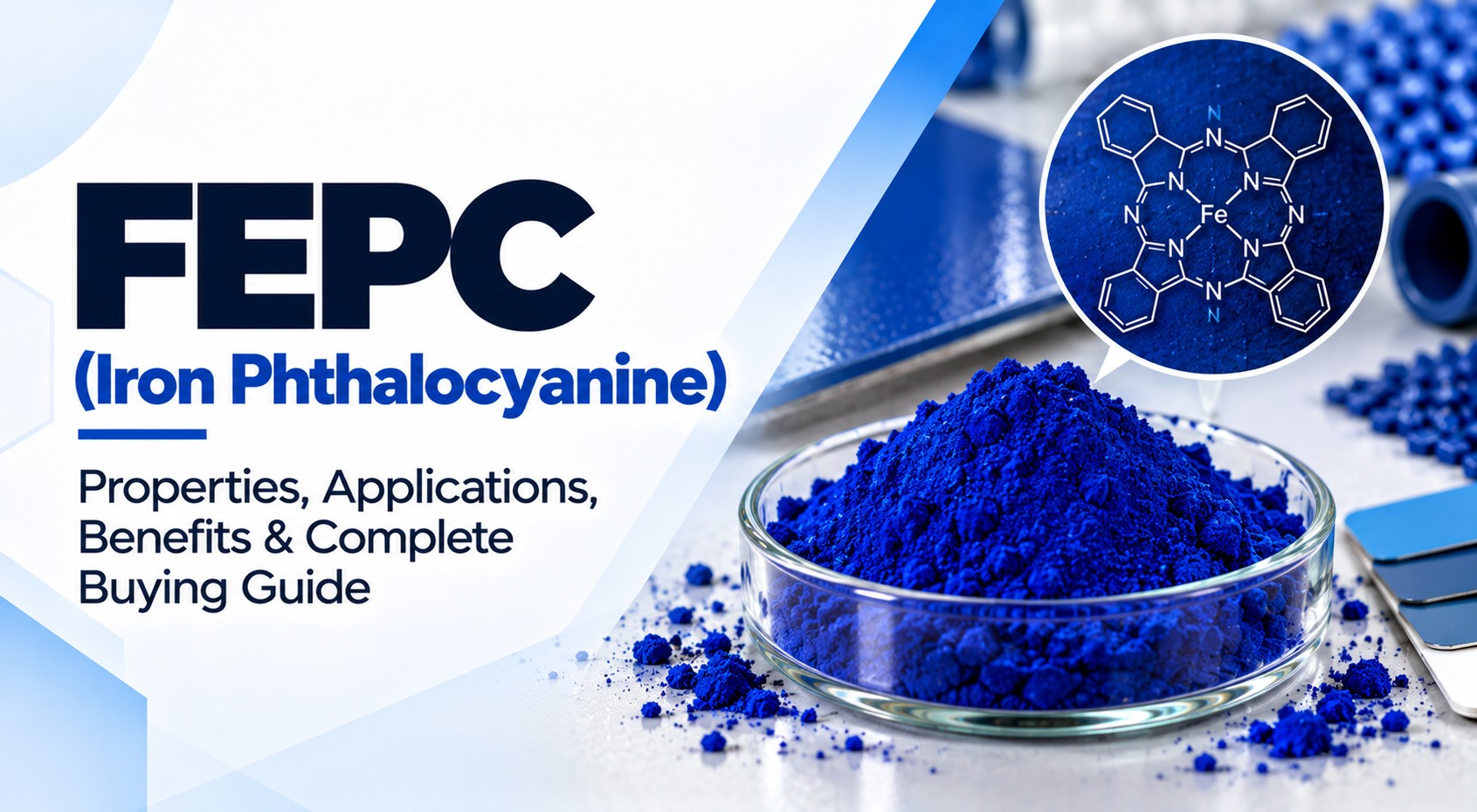
FEPC (Iron Phthalocyanine): Properties, Applications, Benefits & Complete Buying Guide

If you work in rubber compounding, tyre manufacturing, or industrial rubber goods production, you have almost certainly used a product that relies on FEPC — even if you know it better as iron phthalocyanine or simply “FePc.” It is one of those quietly essential chemicals that makes modern rubber processing faster, more energy-efficient, and more consistent, yet it rarely gets the attention it deserves.

In this guide, we will explain exactly what FEPC is, how it works at a molecular level, where it is used across industries, and what to look for when sourcing it. Whether you are a rubber technologist, a procurement specialist, or a researcher exploring metal phthalocyanine applications, this article is for you.

What Is FEPC?

FEPC stands for Iron Phthalocyanine (chemical symbol: FePc). It is a metal phthalocyanine compound in which an iron (Fe) atom sits at the centre of the phthalocyanine (Pc) macrocyclic ring. Its CAS number is 132-16-1 and its molecular formula is C₃₂H₁₆FeN₈, giving it a molecular weight of 568.37 g/mol.

Phthalocyanines are a family of large, planar, aromatic macrocyclic compounds built from four isoindole units linked by nitrogen bridges. When a metal ion is incorporated at the centre of this ring, the resulting metal phthalocyanine acquires unique catalytic, electronic, and optical properties that depend on the specific metal. In the case of FEPC, the iron centre gives the molecule potent oxidation catalysis capability — which is the foundation of its most important industrial application.

In appearance, FEPC is a dark blue powder. It is stable at room temperature, non-volatile, and insoluble in water and most common solvents — typical characteristics of the phthalocyanine family.

Key Properties and Specifications of FEPC

PropertyDetails
Full NameIron Phthalocyanine (Iron(II) Phthalocyanine)
Chemical SymbolFePc (FEPC)
CAS Number132-16-1
Molecular FormulaC₃₂H₁₆FeN₈
Molecular Weight568.37 g/mol
EC Number205-047-2
AppearanceDark blue powder
Metal CentreIron (Fe²⁺)
Crystal Structureβ-phase (rod-like morphology)
SolubilityInsoluble in water; soluble in concentrated sulphuric acid
Thermal StabilityHigh — stable to >400°C
Primary Industrial FunctionRubber peptizing agent (oxidation catalyst)
Purity (Industrial Grade)≥90% dye content (typical)

How FEPC Works as a Rubber Peptizing Agent

This is the core industrial application of FEPC, and it is worth understanding the chemistry behind it.

Natural rubber, as it arrives at a rubber goods factory, has very high molecular weight polymer chains. Before it can be compounded with vulcanising agents, fillers, antioxidants, and other additives, its molecular weight needs to be reduced — a process called peptization or mastication. Traditionally, this was done purely by mechanical shearing on a two-roll mill or in an internal mixer (such as a Banbury mixer). The intense mechanical forces physically break the long polymer chains.

FEPC dramatically accelerates this process by acting as a chemical peptizer. During mastication, the mechanical shearing generates free radicals on the rubber chain. In the presence of FEPC and oxygen, the iron centre catalyses the oxidative chain scission reaction — essentially using atmospheric oxygen to chemically cut the chains at the radical sites. This means the rubber breaks down faster, more uniformly, and with significantly less energy input.

The practical benefits are substantial: reduced mastication time (often by 30–50%), lower energy consumption, reduced equipment wear, more consistent Mooney viscosity in the output, and better dispersion of downstream compounding ingredients. For a tyre manufacturer processing thousands of tonnes of rubber per month, even a modest efficiency improvement translates to significant cost savings.

Applications of FEPC Across Industries

1. Rubber Peptizing (Primary Application)

This is where the vast majority of industrially produced FEPC is consumed. Tyre companies, conveyor belt manufacturers, rubber hose producers, and makers of industrial rubber goods all use FEPC to reduce the time and energy required for rubber mastication.

2. Catalysis

FEPC’s iron centre makes it an effective catalyst for several organic reactions, including the oxidation of terminal olefins to methyl ketones, allylic oxidation of cyclic olefins, 1,4-oxidation of 1,3-dienes, and certain elimination reactions. It is used in both academic research and speciality chemical synthesis.

3. Organic Electronics and Photovoltaics

FEPC has been investigated extensively as an organic semiconductor material. Its planar macrocyclic structure and tuneable electronic properties make it a candidate for applications in organic light-emitting diodes (OLEDs), organic thin-film transistors (OTFTs), and organic photovoltaic cells.

4. Electrocatalysis

Recent research has shown FEPC to be a promising non-precious-metal catalyst for the oxygen reduction reaction (ORR) in fuel cells. This is an active area of academic and industrial R&D aimed at replacing expensive platinum-based catalysts.

5. Pigment and Dye Intermediate

While FEPC itself is not widely used as a pigment (unlike copper phthalocyanine, CuPc), it serves as an intermediate in the synthesis of certain speciality dyes and composite green pigments.

FEPC vs. Other Metal Phthalocyanines

The phthalocyanine ring can accommodate many different metal centres, each giving distinct properties. Here is how FEPC compares with the two other commercially important metal phthalocyanines:

ParameterFEPC (Iron Phthalocyanine)CuPc (Copper Phthalocyanine)ZnPc (Zinc Phthalocyanine)
CAS Number132-16-1147-14-814320-04-8
Metal CentreIron (Fe)Copper (Cu)Zinc (Zn)
AppearanceDark blue powderBright blue/green powderBlue powder
Primary UseRubber peptizing agentPigment (CI Pigment Blue 15)Oxidation catalyst, inks, colour filters
Catalytic ActivityHigh (oxidation catalyst)LowModerate
Pigment ValueLow (not commercially used as pigment)Very high (dominant blue/green pigment)Moderate
Organic ElectronicsActive research areaActive research areaActive research area (photodynamic therapy)
Global Production VolumeModerateVery high (~57,000+ tonnes/yr for all CuPc)Lower

The key distinction: FEPC’s value lies in its catalytic activity (rubber peptizing, electrocatalysis), while CuPc’s value lies in its colour (pigment). ZnPc sits between the two, with moderate catalytic activity and some pigment/ink applications.

Case Study: How a Tyre Manufacturer Reduced Mastication Time by 40% with FEPC

Background: A mid-size tyre manufacturer in Gujarat, India, was processing approximately 200 tonnes per month of natural rubber through Banbury internal mixers. The mastication cycle for achieving the target Mooney viscosity (ML 1+4 at 100°C = 55–65) was taking an average of 12–14 minutes per batch, representing a significant bottleneck in the production line.

The Problem: The long mastication cycles were causing high energy consumption (the Banbury mixer is one of the most energy-intensive machines in a rubber plant), excessive heat build-up in the rubber (risking pre-vulcanisation), and limited daily batch throughput. The company needed to increase output by 25% without investing in a new mixer — a capital expenditure they could not justify.

The Solution: The rubber technologist introduced FEPC (iron phthalocyanine) as a chemical peptizer at a dosage of 0.1–0.2 phr (parts per hundred rubber) during the initial mastication stage. The FEPC was added as a powder directly to the Banbury mixer along with the raw rubber at the beginning of the cycle.

Results:

MetricBefore (No Peptizer)After (FEPC at 0.15 phr)
Average Mastication Time12–14 minutes7–8 minutes (∼40% reduction)
Target Mooney Viscosity AchievedYes (12–14 min)Yes (7–8 min)
Energy Consumption per BatchBaseline~35% reduction
Batch Temperature at Dump145–155°C120–130°C (safer margin)
Daily Batch Throughput32 batches/day44 batches/day (+37.5%)
Downstream Filler DispersionAcceptableImproved (lower viscosity base)
FEPC Cost per Tonne of RubberN/A~₹120–180/tonne
Capital Investment RequiredNew mixer (₹2–3 Cr)Zero (existing equipment)

Key Takeaway: A chemical additive costing ₹120–180 per tonne of rubber delivered the same throughput increase that would have required a ₹2–3 crore capital investment in a new Banbury mixer. FEPC did not just save energy — it fundamentally changed the economics of the mastication operation. The lower dump temperature also reduced the risk of scorching and improved the quality of downstream compound mixing.

Factors to Consider Before Buying FEPC

Purity and dye content: Industrial-grade FEPC typically has ≥90% dye content. Higher purity ensures more consistent and predictable peptizing performance. Ask for certificates of analysis.

Particle size: Finer particle size ensures better dispersion in the rubber matrix during mastication. Coarse particles may not distribute evenly, leading to inconsistent peptization.

Moisture content: Low moisture is important for consistent dosing and to avoid processing issues. Specifications should clearly state maximum moisture levels.

Manufacturing expertise: Metal phthalocyanine synthesis is a specialised process. Choose a manufacturer with proven experience in this specific chemistry, not a general chemical trader.

ISO certification: ISO 9001:2015, ISO 14001:2015, and ISO 45001:2018 certifications indicate quality, environmental, and safety management.

Technical support: A good FEPC supplier should be able to advise on optimal dosage, addition point (mastication stage), and compatibility with your specific rubber formulation.

Sourcing FEPC: Anar Chemicals

Anar Chemicals LLP (anarchem.com) is a specialised manufacturer of Metal Phthalocyanines with over 30 years of experience in this product category. They were the first in India to develop speciality metal phthalocyanines and their derivatives for niche applications. Their FEPC (iron phthalocyanine) is manufactured for rubber industry applications and is backed by ISO 9001:2015, ISO 14001:2015 & ISO 45001:2018 certification. They also produce NiPc (nickel phthalocyanine) for reactive dye applications and ZnPc (zinc phthalocyanine) for catalysis and ink applications. Explore their Products page or contact them directly for technical enquiries and bulk pricing.

Frequently Asked Questions About FEPC

Q: What is the full form of FEPC?

FEPC stands for Iron Phthalocyanine, derived from its chemical symbol FePc (Fe for iron, Pc for phthalocyanine). It is a metal phthalocyanine compound with the CAS number 132-16-1 and the molecular formula C₃₂H₁₆FeN₈. In industry, FEPC is most widely known as a rubber peptizing agent.

Q: What is FEPC used for?

FEPC is primarily used as a rubber peptizing agent — a chemical that breaks down the molecular weight of natural rubber and synthetic butadiene-styrene (SBR) rubbers during the mastication process. This makes the rubber softer, more processable, and easier to compound with other ingredients before vulcanisation. FEPC is also used in catalysis, organic electronics research, and as a precursor for certain pigments.

Q: Is FEPC safe to use?

FEPC is considered safe for industrial use when handled with standard chemical safety precautions. It is a stable, non-volatile solid at room temperature. Standard PPE (gloves, eye protection, dust mask) should be used during handling. Always refer to the manufacturer’s Safety Data Sheet (SDS) for specific handling, storage, and disposal guidelines.

Q: How does FEPC work as a rubber peptizer?

FEPC acts as an oxidation catalyst during the mechanical mastication (milling) of rubber. It accelerates the oxidative chain scission of rubber polymer molecules, reducing their molecular weight more quickly and efficiently than mechanical shearing alone. This reduces the time and energy required for mastication, improves processing consistency, and allows better incorporation of compounding ingredients.

Q: What industries use FEPC?

The primary industry for FEPC is the rubber manufacturing sector, including tyre production, rubber goods, and industrial rubber products. FEPC is also used in the dye and pigment industry (as a phthalocyanine intermediate), in catalysis research, in organic electronics (OLED, OTFT), and in photovoltaic cell development.

Q: What is the difference between FEPC and CuPc?

FEPC (iron phthalocyanine) and CuPc (copper phthalocyanine) share the same phthalocyanine ring structure but contain different metal centres. CuPc is primarily used as a blue-green pigment (CI Pigment Blue 15) in inks, paints, and plastics. FEPC is primarily used as a rubber peptizing agent and an oxidation catalyst, not as a pigment, because its colour properties are less commercially useful.

Q: Where can I buy FEPC in India?

Anar Chemicals LLP (anarchem.com) is a specialised manufacturer of metal phthalocyanines with over 30 years of experience in this product category. They produce FEPC (iron phthalocyanine) for rubber industry applications and are ISO 9001:2015, ISO 14001:2015 & ISO 45001:2018 certified. They were the first in India to develop speciality metal phthalocyanines and their derivatives for niche applications.

Uncategorized

Fire Retardants: Types, Applications, Benefits & Complete Buying Guide

Think about the last time you sat on a sofa, worked at a computer, drove a car, or walked into a commercial building. Every one of those environments contained materials that could fuel a fire — plastics, foams, textiles, insulation, wiring. The reason those materials do not ignite easily, or spread flame rapidly when they do, is Fire Retardants: chemical compounds that are quite literally designed to buy you time in the event of a fire.

In this guide, we will explain what Fire Retardants are, how they work at a chemical level, the different types available, where they are used, what safety standards govern them, and how to choose the right one for your application. Whether you are a materials engineer, a product safety manager, or a procurement specialist sourcing fire-safety additives, this article is built to help you make informed decisions.

What Are Fire Retardants?

Fire Retardants are chemical compounds that are added to or applied onto combustible materials — plastics, wood, textiles, foams, coatings, and composites — to reduce their tendency to ignite, slow the rate of flame spread, and suppress the generation of toxic smoke and gases during combustion.

It is important to understand what Fire Retardants do not do: they do not make materials fireproof. No additive can achieve that for an inherently combustible material. What they do is delay the critical early stages of a fire, giving occupants more time to escape and firefighters more time to respond. In a building fire, those extra minutes can mean the difference between a near-miss and a tragedy.

How Fire Retardants Work

Fire retardant chemicals work by interfering with the combustion process at one or more stages. The four primary mechanisms are:

Gas-phase action: The fire retardant releases active chemical species (phosphorus radicals or halogen radicals) that capture the highly reactive H· and OH· radicals that sustain the combustion chain reaction. Without these radicals, the flame cannot propagate.

Condensed-phase char formation: The fire retardant promotes the formation of a stable carbonaceous char layer on the material’s surface. This char acts as a physical and thermal barrier, shielding unburned material beneath from heat and oxygen.

Endothermic cooling: Certain fire retardant materials (notably metal hydroxides like ATH and MDH) decompose endothermically when heated, absorbing large amounts of energy and releasing water vapour. This cools the combustion zone and dilutes flammable gases.

Intumescence: The most advanced mechanism. An intumescent fire retardant system causes the material to foam up and expand when exposed to heat, forming a thick, insulating, multicellular char that dramatically reduces heat transfer to the substrate. This is the mechanism used by phosphorus-nitrogen systems like PPM Triazine + ammonium polyphosphate.

Types of Fire Retardants

Fire retardant additives are classified by their chemical composition. Each type has distinct strengths and trade-offs:

TypeChemistryHow It WorksBest ForKey Consideration
Halogenated (Brominated)Brominated compounds (TBBPA, decaBDE)Gas-phase radical trappingElectronics, high-performance polymersToxic smoke; being phased out by regulation
Halogenated (Chlorinated)Chlorinated paraffinsGas-phase radical trappingPVC, rubber, coatingsRestricted under Stockholm Convention
Phosphorus-BasedAPP, organophosphates, red phosphorusChar formation + gas-phase actionEngineering plastics, epoxy, PU foamsHalogen-free; moderate loading
Phosphorus-Nitrogen (Intumescent)APP + triazine synergists (e.g., PPM Triazine)Intumescence (foam + char + gas)PP, PU, epoxy, textiles, coatingsBest balance of performance and low toxicity
Metal HydroxidesATH (alumina trihydrate), MDHEndothermic cooling + water releaseCables, construction, low-cost applicationsVery high loading (50–65%); weakens mechanicals
Nitrogen-OnlyMelamine, melamine cyanurateGas dilution + endothermicPolyamides, PU foamsLimited alone; best as synergist
Silicon-BasedSilicones, PDMS, nano-silicaChar reinforcement + barrierCoatings, electronics, textilesModerate efficacy; used as synergist
Intumescent CoatingsP-N-C systems in paint/masticSurface char expansion on heatStructural steel, cables, woodApplication-specific; retrofit friendly

Key Applications of Fire Retardants

Construction and Building Materials

Insulation boards (EPS, XPS, PIR), structural steel coatings, cladding panels, roofing membranes, timber treatments, and cable trays. Building codes worldwide (Euroclass system in EU, ASTM E84 in the US, NBC in India) mandate specific fire performance levels. The Grenfell Tower fire in 2017 fundamentally changed how the construction industry approaches cladding and insulation fire safety.

Textiles and Furnishings

Protective workwear, military and firefighter uniforms, hotel curtains and bedding, aircraft seating, mattresses, and upholstered furniture. Standards like BS 5852 (furniture), EN 11612 (protective clothing), and California Technical Bulletin 117 (furniture flammability) govern these applications.

Plastics and Electronics

PCB laminates, cable insulation, connectors, battery housings, smartphone enclosures, and appliance housings. UL 94 is the global benchmark standard. The explosive growth of electric vehicles has created massive new demand for fire retardant materials in battery packs and charging infrastructure.

Automotive and Transport

Interior trim, seat foams, headliners, under-hood components, wire harnesses, and EV battery enclosures. FMVSS 302 (US), ECE R118 (Europe), and increasingly stringent OEM specifications drive fire retardant adoption. Many OEMs now mandate halogen-free materials.

Coatings and Paints

Intumescent coatings for structural steel are one of the most visible applications of Fire Retardants. These coatings expand dramatically when exposed to heat, forming an insulating char layer that protects the steel from reaching its critical failure temperature. They are also used on timber, cables, and composite structures.

Fire Retardant-Treated vs. Untreated Materials: The Difference

FactorFire Retardant-Treated MaterialUntreated Material
Time to IgnitionSignificantly delayedIgnites rapidly when exposed to heat/flame
Flame Spread RateSlow — fire contained for longerFast — fire spreads quickly
Smoke GenerationReduced (especially with halogen-free FRs)High — dense, toxic smoke
Polymer DrippingPrevented or minimised (intumescent systems)Molten drips can spread fire
Escape TimeIncreased (critical for occupant safety)Minimal
Regulatory ComplianceMeets building codes and safety standardsFails most fire safety tests
Insurance ImplicationsLower premiums; reduced liabilityHigher premiums; increased liability
CostModerate increase (FR additive cost)No additive cost, but higher risk cost

Safety and Regulatory Considerations

The fire retardant industry is governed by a complex web of standards and regulations:

UL 94: The global benchmark for plastic flammability, classifying materials from HB (horizontal burn) to V0 (self-extinguishing within 10 seconds with no dripping).

EU RoHS: Restricts specific halogenated fire retardant compounds in electronic equipment.

EU REACH: Requires registration and risk assessment; several halogenated FRs are listed as Substances of Very High Concern.

EN 45545: Railway fire safety standard governing flame, smoke, and toxicity (FST) performance.

FAR 25.853: Federal Aviation Regulation for aircraft interior material flammability.

National Building Code (India): Specifies fire performance requirements for construction materials used in commercial and residential buildings.

The overarching trend is clear: regulations are getting stricter, and the shift toward halogen-free, low-smoke, low-toxicity Fire Retardants is accelerating globally.

Advantages of Modern Fire Retardants

Life safety: The fundamental purpose. Fire Retardants give people more time to escape and firefighters more time to respond.

Property protection: Slower fire spread means less structural damage and lower rebuild costs.

Regulatory compliance: Essential for meeting building codes, product safety standards, and OEM specifications.

Insurance benefits: Fire retardant-treated materials can reduce insurance premiums and liability exposure.

Environmental progress: Modern halogen-free Fire Retardants (like PPM Triazine) deliver effective performance with minimal environmental impact.

Versatility: Available for virtually every combustible material — plastics, foams, textiles, wood, coatings, and composites.

Factors to Consider Before Buying Fire Retardants

Target standard: Identify the fire safety test your product must pass (UL 94, LOI, EN 45545, ASTM E84, etc.) and work backwards to the fire retardant system that achieves it.

Halogen-free mandate: If your customer or market requires halogen-free, focus on phosphorus-nitrogen, metal hydroxide, or silicon-based systems.

Loading vs. mechanical impact: Higher fire retardant loading degrades mechanical properties. Choose systems that meet fire ratings at the lowest practical loading level.

Smoke and toxicity: For enclosed spaces (buildings, vehicles, aircraft, railway carriages), smoke density and toxic gas emission can be as critical as flame resistance.

Processing compatibility: Ensure the fire retardant is compatible with your polymer’s processing temperatures and conditions without causing degradation, odour, or equipment fouling.

Supplier expertise: Choose a manufacturer that offers formulation guidance and technical support, not just a raw material.

Case Study: Improving Fire Safety in a Commercial Building Insulation Project with Halogen-Free Fire Retardants

Background: A construction materials manufacturer in western India was producing expanded polypropylene (EPP) insulation panels for a large commercial building project. The project specification required the panels to achieve a Class B1 fire rating under DIN 4102 (the German building materials fire test standard adopted in the project spec), while also meeting the architect’s requirement for halogen-free materials to satisfy the building’s green certification targets.

The Problem: The manufacturer’s existing fire retardant system used a brominated additive that achieved B1 at 15% loading. However, the halogen-free mandate disqualified it. Initial trials with aluminium trihydroxide (ATH) required 58% loading to approach B1, which made the panels so dense and brittle that they failed the project’s thermal insulation and mechanical handling requirements.

The Solution: The manufacturer adopted an intumescent system using 75% ammonium polyphosphate + 25% PPM Triazine HF at 22% total loading. The intumescent char mechanism provided excellent fire performance while keeping the loading low enough to preserve the panel’s insulation value and structural integrity.

Results:

MetricBrominated FR (Disqualified)ATH System (Failed)PPM Triazine System (Approved)
DIN 4102 RatingB1 (passed)B1 (borderline)B1 (passed comfortably)
FR Loading15%58%22%
Thermal Conductivity ImpactMinimalSignificant (+35%)Minimal (+4%)
Panel Density ImpactMinimalSevere (+40%)Moderate (+8%)
Halogen-Free ComplianceNo (disqualified)YesYes
Smoke DensityHighLowLow
Green CertificationFailedPassedPassed
Project ApprovalRejectedRejected (mechanical)Approved

Key Takeaway: The PPM Triazine intumescent system delivered the fire rating at less than half the loading required by ATH, preserving both the thermal performance and physical integrity of the insulation panels. This case demonstrates why intumescent phosphorus-nitrogen systems are increasingly specified for construction applications where both fire safety and material performance matter.

Sourcing Fire Retardants: PPM Triazine from Anar Chemicals

Anar Chemicals LLP (anarchem.com) is the exclusive Indian licensee of MCA Technologies, Switzerland, for manufacturing and marketing PPM Triazine — an advanced halogen-free fire retardant based on phosphorus-nitrogen intumescent chemistry. The product is marketed through Anar Mcat Advanced Electronic Chemicals Pvt. Ltd., a dedicated joint venture. With over four decades of experience and ISO 9001:2015, ISO 14001:2015 & ISO 45001:2018 certification, Anar Chemicals provides both the fire retardant product and the technical formulation support needed to meet your specific fire safety requirements. Visit the PPM Triazine product page or get in touch for technical enquiries and bulk pricing.

Frequently Asked Questions About Fire Retardants

Q: What are Fire Retardants used for?

Fire Retardants are used to reduce the flammability of materials across industries including construction (insulation, cladding), electronics (PCBs, cables, battery housings), automotive (interior trim, seat foams), textiles (workwear, upholstery, curtains), and furniture (mattresses, cushions). They delay ignition, slow flame spread, and give occupants critical extra time to escape in the event of a fire.

Q: Are Fire Retardants safe?

Modern halogen-free Fire Retardants — particularly phosphorus-nitrogen systems like PPM Triazine — are designed to be safe for both human health and the environment. They produce low-toxicity smoke during combustion and do not release corrosive halogen gases or persistent organic pollutants. Halogenated Fire Retardants, while effective, are being phased out due to health and environmental concerns.

Q: What is the difference between fire resistant and fire retardant?

Fire resistant refers to a material’s inherent ability to withstand fire without treatment (e.g., steel, concrete, glass). Fire retardant refers to a chemical treatment or additive applied to a combustible material to reduce its flammability. A fire retardant-treated wood panel, for example, is combustible by nature but has been chemically treated to resist ignition and slow flame spread.

Q: How do fire retardant chemicals work?

Fire retardant chemicals work through one or more mechanisms: gas-phase radical trapping (interrupting the combustion chain reaction), condensed-phase char formation (creating a protective barrier on the surface), endothermic cooling (absorbing heat and releasing water vapour), and intumescence (foaming up to form an insulating char shield). The most advanced systems combine phosphorus and nitrogen chemistry to achieve multiple mechanisms simultaneously.

Q: What is PPM Triazine?

PPM Triazine (CAS 93058-67-4) is a proprietary polymeric halogen-free nitrogen synergist developed by MCA Technologies, Switzerland. When blended with ammonium polyphosphate (APP), it forms an intumescent fire retardant system that achieves UL 94 V0 ratings in engineering plastics at moderate loading levels, with low smoke density and minimal toxic fumes.

Q: Which Fire Retardants are halogen-free?

Halogen-free Fire Retardants include phosphorus-based systems (APP, organophosphates), phosphorus-nitrogen intumescent systems (PPM Triazine + APP), metal hydroxides (aluminium trihydroxide, magnesium hydroxide), nitrogen-only compounds (melamine cyanurate), and silicon-based additives. The phosphorus-nitrogen intumescent systems are considered the best balance of performance, loading efficiency, and low smoke toxicity.

Q: Where can I buy Fire Retardants in India?

Anar Chemicals LLP (anarchem.com) is the exclusive Indian licensee of MCA Technologies, Switzerland, for manufacturing and marketing PPM Triazine — an advanced halogen-free fire retardant. They are ISO 9001:2015, ISO 14001:2015 & ISO 45001:2018 certified with over four decades of chemical manufacturing experience.

Uncategorized

Flame Retardants: Types, Applications, Regulations & Complete Buying Guide

Every plastic component in your car dashboard, every metre of cable in your office building, every foam cushion in your sofa, and every piece of protective workwear on a factory floor has one thing in common: Flame Retardants. These are the chemical compounds that stand between ordinary combustible materials and catastrophic fire — and their importance to public safety is difficult to overstate.

In this guide, we will walk through what Flame Retardants are, how they work, the different types available, where they are used, and the critical regulatory shift that is reshaping the entire industry. Whether you are a polymer engineer, a product compliance manager, or a procurement specialist sourcing fire-safety additives, this article gives you the practical knowledge you need.

What Are Flame Retardants?

Flame Retardants are chemical compounds that are added to or incorporated into materials — primarily plastics, textiles, foams, and coatings — to reduce their flammability and slow the spread of fire. They do not make materials fireproof; rather, they delay ignition, reduce flame spread rate, and give occupants more time to escape in the event of a fire.

Flame Retardants work through one or more of four fundamental mechanisms:

Gas-phase radical trapping: The FR releases active species (phosphorus or halogen radicals) that interrupt the combustion chain reaction by capturing the highly reactive H· and OH· radicals that sustain the flame.

Condensed-phase char formation: The FR promotes the formation of a carbonaceous char layer on the material surface, which acts as a physical barrier between the flame and the unburned material.

Endothermic cooling: Some FRs (like metal hydroxides) decompose endothermically, absorbing heat and releasing water vapour that cools the combustion zone and dilutes flammable gases.

Intumescence: The FR system causes the material to foam up and form an expanded, insulating char that shields the substrate from heat and flame. This is the mechanism used by advanced phosphorus-nitrogen systems like PPM Triazine.

Types of Flame Retardants

Flame Retardants span several chemical families. Here is a comprehensive overview:

TypeChemistryMechanismAdvantagesLimitations
Brominated FRsBrominated diphenyl ethers, TBBPAGas-phase radical trappingEffective at low loading; good mechanical retentionToxic smoke; environmental persistence; regulatory phase-out
Chlorinated FRsChlorinated paraffins, Dechlorane PlusGas-phase radical trappingLow cost; effective in certain polymersToxic smoke; restricted under Stockholm Convention
Phosphorus-Based FRsOrganophosphates, APP, red phosphorusGas-phase + condensed-phaseHalogen-free; good char formation; moderate loadingMay affect processing; moisture sensitivity (some types)
Phosphorus-Nitrogen (P-N) SystemsAPP + triazine synergistsIntumescence (char + gas)Halogen-free; low smoke; excellent char; versatileHigher loading than halogenated; requires optimisation
Metal HydroxidesATH, MDHEndothermic; water releaseVery low toxicity; smoke suppression; low costVery high loading (50–65%); severe mechanical impact
Nitrogen-Only FRsMelamine, melamine cyanurateGas dilution; endothermicHalogen-free; good for polyamidesLimited efficacy alone; sublimation at high temps
Silicon-Based FRsSilicones, PDMS, silicaChar reinforcement; barrierLow toxicity; smoke reductionModerate efficacy alone; often used as synergist
Intumescent CoatingsP-N-C systems in paint/masticSurface char expansionProtects structural steel; easy retrofitApplication-specific; not suitable for moulded parts

The Halogenated vs. Halogen-Free Debate

This is the defining conversation in the Flame Retardants industry today. For decades, brominated and chlorinated FRs dominated because of their high efficiency at low loading levels. But the evidence of their environmental and health impacts has driven a global regulatory response:

EU RoHS Directive: Restricts specific brominated FRs (PBBs, PBDEs) in electrical and electronic equipment.

EU REACH: Several halogenated FRs are listed as Substances of Very High Concern (SVHC) or restricted under Annex XVII.

Stockholm Convention: Lists certain brominated FRs as persistent organic pollutants (POPs), requiring elimination or restriction.

OEM mandates: Major automotive, electronics, and appliance manufacturers (Apple, Samsung, BMW, Volvo) now require halogen-free materials in their supply chain specifications.

FactorHalogenated Flame RetardantsHalogen-Free Flame Retardants
Efficacy at Low LoadingExcellent (10–20%)Good to excellent (20–35% depending on system)
Smoke ToxicityHigh (HBr, HCl, dioxins, furans)Low (minimal toxic gases)
Regulatory StatusIncreasingly restrictedFully compliant; growing mandate
Environmental PersistenceHigh (some are POPs)Low
RecyclabilityProblematic (toxic gases in thermal recycling)Compatible with recycling
Mechanical ImpactLow (due to lower loading)Moderate (higher loading in some systems)
Industry TrendDecliningRapidly growing
CostLower (but rising with restrictions)Moderate to high

The trend is unmistakable: halogen-free Flame Retardants are becoming the industry standard. The question for most manufacturers is not whether to switch, but which halogen-free system to adopt.

Key Applications of Flame Retardants

Electronics and Electrical

PCB laminates, cable insulation, connectors, battery housings, smartphone and laptop enclosures. RoHS compliance has driven near-universal adoption of halogen-free FRs in consumer electronics. With the growth of EVs, battery pack fire safety is creating enormous new demand.

Construction and Building

Insulation boards (EPS, XPS, PU), cladding panels, roofing membranes, pipe insulation, structural steel coatings, and cable trays. Building fire codes (Euroclass, ASTM E84, BS 476) mandate specific flame performance levels.

Automotive and Transport

Dashboard components, seat foams, headliners, under-hood parts, wire harnesses, and EV battery enclosures. FMVSS 302 in the US and ECE R118 in Europe set the baseline. OEM specs often exceed regulatory minimums.

Textiles and Furnishings

Protective workwear, military uniforms, aircraft seating, hotel curtains, mattress ticking, and upholstery. Standards like EN 11612 (protective clothing), BS 5852 (furniture), and FAR 25.853 (aircraft interiors) drive FR use.

Railway and Aerospace

Interior panels, flooring, cable ducting, and seat materials. EN 45545 (railway fire safety) and FAR 25.853 impose some of the most demanding flame, smoke, and toxicity (FST) requirements in any industry.

PPM Triazine: A Next-Generation Halogen-Free Flame Retardant

Among the halogen-free options available, PPM Triazine (CAS 93058-67-4) represents a technically advanced phosphorus-nitrogen intumescent system developed by MCA Technologies, Switzerland. It is a polymeric nitrogen synergist designed to work with ammonium polyphosphate (APP) to create a highly effective intumescent FR system.

What sets PPM Triazine apart from conventional nitrogen synergists (such as melamine or simple triazine derivatives) is its large molecular weight. This polymeric structure eliminates three persistent problems that plague smaller-molecule alternatives: sublimation during high-temperature processing, toxic ammonia liberation from self-condensation, and mould deposits or plate-out on finished parts.

PropertyPPM Triazine HF Details
Trade NameMCA PPM Triazine HF
CAS Number93058-67-4
ChemistryProprietary polymeric triazine (P-N synergist)
Recommended Blend75% APP + 25% PPM Triazine HF
Typical Loading20–25% in polymer
UL 94 PerformanceV0 at 1.6mm (in PP)
LOI Achievement>30%
Smoke DensityLow
Polymer CompatibilityPP, PU foams (rigid & flexible), epoxy, unsaturated polyester, TPE
Processing AdvantageNo sublimation, no ammonia release, no mould deposits

Case Study: Automotive Interior Manufacturer Transitions to Halogen-Free Flame Retardants

Background: A Tier-1 automotive supplier manufacturing polypropylene interior trim components for a major European OEM received a supply chain directive: all plastic components must transition from brominated FR systems to halogen-free alternatives within 18 months, to comply with the OEM’s updated material specification and anticipated EU regulatory changes.

The Problem: The existing brominated FR system achieved UL 94 V0 at just 12% loading with excellent mechanical property retention. Initial trials with aluminium trihydroxide (ATH) required 55% loading to approach V0, which reduced impact strength by 60% and made the parts too brittle for crash safety requirements. A melamine-based nitrogen system caused processing problems: ammonia odour, surface deposits, and mould fouling.

The Solution: The engineering team adopted an intumescent system using 75% ammonium polyphosphate + 25% PPM Triazine HF at 23% total loading. The polymeric structure of PPM Triazine eliminated the sublimation and ammonia issues encountered with smaller-molecule alternatives.

Results:

MetricBrominated FR (Baseline)ATH System (Trial)PPM Triazine System (Final)
UL 94 RatingV0V2 (borderline)V0
FR Loading Level12%55%23%
Impact Strength (% of neat PP)92%40%82%
Smoke DensityHighModerateLow
Processing IssuesNoneNoneNone
Mould DepositsNoneNoneNone
Regulatory ComplianceFailing (halogenated)Passing (halogen-free)Passing (halogen-free)
OEM ApprovalWithdrawnFailed (mechanical)Approved

Key Takeaway: PPM Triazine delivered halogen-free V0 performance at less than half the loading required by ATH, preserving the mechanical integrity critical for automotive crash safety. The total cost increase was approximately 8–10% on the FR additive line item, but this was offset by maintaining the existing moulding cycle time (no retooling) and avoiding the mechanical failures that would have required part redesign.

Factors to Consider Before Buying Flame Retardants

Target regulation: Identify the fire safety standard your product must meet (UL 94, LOI, EN 45545, FAR 25.853, etc.) and work backwards to the FR system that achieves it.

Halogen-free requirement: If your customer or end-market mandates halogen-free, this immediately narrows your options to phosphorus, nitrogen, metal hydroxide, or silicon-based systems.

Mechanical property impact: Higher FR loading degrades mechanical properties. Choose systems that achieve the required fire rating at the lowest possible loading to preserve impact strength, tensile strength, and elongation.

Processing compatibility: The FR must be compatible with your polymer’s processing temperature, shear conditions, and moulding/extrusion parameters without causing degradation, discolouration, or equipment fouling.

Smoke and toxicity: For enclosed-space applications (railway, aerospace, electronics), smoke density and toxic gas emission may be as important as flame resistance itself.

Supplier expertise: Choose a supplier that provides not just the FR additive but also formulation guidance, technical support, and regulatory know-how.

Sourcing Flame Retardants: PPM Triazine from Anar Chemicals

Anar Chemicals LLP (anarchem.com) is the exclusive licensee of MCA Technologies, Switzerland, for manufacturing and marketing PPM Triazine in India. The product is marketed through Anar Mcat Advanced Electronic Chemicals Pvt. Ltd., a joint venture between Anar Chemicals LLP and MCA Technologies GmbH. With over four decades of chemical manufacturing experience and triple ISO certification (9001, 14001, 45001), Anar Chemicals provides both the product and the technical support needed to successfully formulate halogen-free flame retardant systems. Explore the PPM Triazine product page or contact them for technical enquiries and bulk pricing.

Frequently Asked Questions About Flame Retardants

Q: What are Flame Retardants?

Flame Retardants are chemical compounds added to materials — plastics, textiles, foams, coatings, and construction products — to inhibit or slow the spread of fire. They work by interfering with the combustion process through gas-phase radical trapping, condensed-phase char formation, endothermic cooling, or a combination of these mechanisms.

Q: What is the difference between halogenated and halogen-free Flame Retardants?

Halogenated Flame Retardants use bromine or chlorine compounds to trap combustion radicals in the gas phase. They are effective at low loading levels but release toxic smoke, corrosive gases, and environmental pollutants during combustion. Halogen-free Flame Retardants use phosphorus, nitrogen, metal hydroxides, or silicon-based chemistry to achieve flame resistance with dramatically lower smoke toxicity and environmental impact.

Q: Why is the industry shifting to halogen-free Flame Retardants?

The shift is driven by stricter environmental regulations (EU RoHS, REACH, WEEE), growing concern over toxic smoke in building and vehicle fires, persistence of halogenated compounds in ecosystems, and OEM mandates requiring halogen-free materials across supply chains. The trend is accelerating, particularly in electronics, automotive, and construction sectors.

Q: What is PPM Triazine and how does it work?

PPM Triazine (CAS 93058-67-4) is a proprietary polymeric nitrogen synergist from MCA Technologies, Switzerland. When blended with ammonium polyphosphate (APP), it creates an intumescent flame retardant system: upon exposure to heat, the material foams, cross-links, and forms a dense protective char that acts as a fire shield — blocking heat, reducing oxygen, and preventing polymer dripping.

Q: What UL 94 ratings can be achieved with Flame Retardants?

Ratings depend on the FR system and loading level. With PPM Triazine + APP at 20–25% loading, UL 94 V0 is achievable in polypropylene at 1.6mm. Metal hydroxide systems may require 50–60% loading for equivalent ratings, which can degrade mechanical properties. Halogenated systems typically achieve V0 at 10–20% loading.

Q: Which industries use Flame Retardants most?

The largest consumers are electronics (PCBs, cables, housings), construction (insulation, cladding, structural coatings), automotive (interior components, EV battery packs, wire harnesses), textiles (protective workwear, upholstery), and railway/aerospace (interior panels, seating). Every sector where fire safety standards apply uses Flame Retardants.

Q: Where can I buy halogen-free Flame Retardants in India?

Anar Chemicals LLP (anarchem.com) is the exclusive licensee of MCA Technologies, Switzerland, for manufacturing and marketing PPM Triazine — an advanced halogen-free flame retardant based on phosphorus-nitrogen chemistry. They are ISO 9001:2015, ISO 14001:2015 & ISO 45001:2018 certified with over 40 years of experience.

Uncategorized

Halogen Free Flame Retardant: The Complete Guide to HFFR, PPM Triazine & Sustainable Fire Safety

If you work in plastics engineering, automotive component design, electronics manufacturing, or textile development, you have almost certainly felt the regulatory pressure building around flame retardants over the past decade. The message from the market is clear: halogenated flame retardants are being phased out, and Halogen Free Flame Retardant (HFFR) solutions are the future.

But making the switch is not as simple as swapping one additive for another. You need to understand the chemistry, the performance trade-offs, the regulatory landscape, and the specific products available. In this guide, we will cover all of that — with a particular focus on PPM Triazine, a phosphorus-nitrogen based HFFR that represents the state of the art in intumescent flame retardation.

What Is a Halogen Free Flame Retardant?

A Halogen Free Flame Retardant is a fire-safety additive that achieves flame resistance without using any halogen elements — chlorine, bromine, fluorine, or iodine. Traditional halogenated flame retardants (such as brominated diphenyl ethers and chlorinated paraffins) are highly effective at preventing ignition, but they come with serious drawbacks: during combustion, they release dense, toxic smoke containing hydrogen halide gases, dioxins, and furans that are harmful to both human health and the environment.

Halogen-free alternatives use different chemistries to achieve flame resistance. The most commercially successful approach is phosphorus-nitrogen (P-N) synergism, which works through intumescence: when exposed to heat or flame, the material foams up and forms a dense, insulating char layer on the surface. This char acts as a fire shield, blocking heat transfer, reducing oxygen access, and preventing molten polymer from dripping.

The result is effective flame retardation with dramatically reduced toxic smoke, no halogenated by-products, and compatibility with modern environmental regulations like RoHS, REACH, and WEEE.

Why the Industry Is Moving to Halogen Free

Regulatory pressure: The EU’s RoHS Directive restricts certain halogenated compounds in electronics. REACH requires registration and risk assessment of chemical substances, with several halogenated FRs already on the Candidate List of Substances of Very High Concern (SVHC). Many OEMs now mandate halogen-free materials across their supply chains.

Toxic smoke concerns: In building fires, smoke inhalation is the leading cause of death — and halogenated flame retardants contribute significantly to smoke toxicity. HFFR systems produce far less toxic, less corrosive smoke, improving survivability in enclosed spaces.

Environmental persistence: Some halogenated FRs are persistent organic pollutants that bioaccumulate in ecosystems. HFFRs avoid this problem entirely.

Recyclability: Halogen-free plastics are easier to recycle. Halogenated materials can release toxic gases during thermal recycling processes, complicating end-of-life management.

Types of Halogen Free Flame Retardants

TypeChemistryMechanismKey ApplicationsExamples
Phosphorus-Nitrogen (P-N) SystemsAPP + triazine synergistsIntumescence (char formation + gas release)Engineering plastics, PP, PU foams, textilesPPM Triazine + APP, melamine polyphosphate
Metal HydroxidesATH, MDHEndothermic decomposition, water releaseCables, wire insulation, constructionAluminium trihydroxide, magnesium hydroxide
Phosphorus EstersOrganophosphorusGas-phase radical trapping + condensed-phase charPC, PPO, epoxy resinsResorcinol bis(diphenyl phosphate), BDP
Nitrogen-Only SystemsMelamine, guanidine derivativesGas dilution, endothermic decompositionPolyamides, PUMelamine cyanurate, guanidine phosphate
Silicon-BasedSilicones, siloxanesChar reinforcement, barrier formationCoatings, textiles, electronicsPDMS additives, silica
Intumescent CoatingsP-N-C systemsSurface char expansion on heat exposureSteel structures, cables, woodIntumescent paints and mastics

PPM Triazine: A Closer Look at Advanced P-N Flame Retardation

Among the phosphorus-nitrogen HFFR systems available, PPM Triazine (CAS 93058-67-4) stands out as a technically advanced solution. Developed by MCA Technologies of Switzerland, PPM Triazine is a proprietary polymeric nitrogen synergist that, when combined with ammonium polyphosphate (APP), creates a highly effective intumescent flame retardant system.

Here is what makes it different from conventional nitrogen synergists (such as melamine or simple triazine derivatives):

Large molecular weight: Unlike small-molecule nitrogen synergists, PPM Triazine’s polymeric structure prevents sublimation during high-temperature processing, eliminates toxic ammonia liberation from self-condensation, and avoids mould deposits and plate-out issues that plague lower-molecular-weight alternatives.

Proven performance: A blend of 75% APP and 25% PPM Triazine HF at 20–25% total loading typically achieves UL 94 V0 at 1.6mm in polypropylene, with LOI values exceeding 30%.

Versatility: The system works across polypropylene, polyurethane rigid and flexible foams, epoxy resins, unsaturated polyester resins, and thermoplastic elastomers.

Low smoke, low toxicity: The intumescent char formation produces minimal smoke density and significantly fewer toxic fumes compared to both halogenated systems and some competing HFFR technologies.

Key Properties of PPM Triazine HF

PropertyDetails
Trade NameMCA PPM Triazine HF
CAS Number93058-67-4
ChemistryProprietary polymeric triazine (phosphorus-nitrogen synergist)
Physical FormFine powder
FunctionNitrogen synergist for intumescent flame retardation
Recommended Blend75% APP + 25% PPM Triazine HF
Typical Loading20–25% in polymer
PerformanceUL 94 V0 at 1.6mm (PP); LOI >30%
Smoke DensityLow
Toxic FumesSignificantly reduced vs. halogenated FRs
Processing AdvantageNo sublimation, no ammonia release, no mould deposits
Polymer CompatibilityPP, PU foams, epoxy, unsaturated polyester, TPE

Halogen Free vs. Halogenated Flame Retardants: A Direct Comparison

FactorHalogen Free Flame RetardantHalogenated Flame Retardant
ChemistryPhosphorus, nitrogen, metal hydroxides, siliconBromine, chlorine compounds
Smoke ToxicityLow — minimal toxic gasesHigh — HBr, HCl, dioxins, furans
Smoke DensityLow to moderateOften high
Environmental PersistenceLow — no persistent organic pollutantsHigh — some are POPs
Regulatory StatusFully compliant (RoHS, REACH, WEEE)Increasing restrictions and phase-outs
RecyclabilityCompatible with thermal recyclingMay release toxic gases during recycling
Typical Loading Level20–35% (varies by system)10–25% (generally lower)
CostModerate to highLower (but rising with regulation)
Mechanical ImpactModerate (higher loading can affect properties)Lower loading, less mechanical impact
Industry TrendGrowing rapidly — becoming standardDeclining — being phased out

Applications of Halogen Free Flame Retardants

Electronics and Electrical

PCB laminates, cable insulation, connectors, housings, and enclosures. RoHS compliance is driving near-universal adoption of HFFR in consumer electronics.

Automotive

Interior trim, dashboard components, under-hood parts, battery housings (especially critical for EV battery packs), and wire harnesses. OEMs increasingly specify halogen-free materials.

Construction and Building

Insulation boards, cladding panels, pipe insulation, and structural coatings. Building codes in Europe and Asia are increasingly mandating low-smoke, halogen-free materials.

Railway and Aerospace

Interior panels, seat upholstery, cable ducting, and flooring. EN 45545 (railway) and FAR 25.853 (aerospace) standards drive HFFR adoption in these sectors.

Textiles

Protective workwear, upholstery, curtains, and mattress ticking. Phosphorus-nitrogen HFFR treatments can achieve self-extinguishing performance with durability through multiple wash cycles.

Case Study: Achieving UL 94 V0 in a Polypropylene Automotive Component with PPM Triazine

Background: A Tier-1 automotive component manufacturer supplying interior trim parts to a European OEM was required to transition all polypropylene (PP) components from a brominated flame retardant system to a halogen-free alternative to meet the OEM’s updated material specification. The target was UL 94 V0 at 1.6mm with no dripping, plus compliance with the OEM’s internal low-smoke requirements.

The Problem: Initial trials with metal hydroxide (ATH) based HFFR systems required loading levels above 55% to approach V0 performance, which severely degraded the mechanical properties of the PP compound — impact strength dropped by 60%, and the parts became too brittle to pass the OEM’s crash safety tests. A melamine polyphosphate system was also tested but failed due to ammonia odour during processing and surface deposits on moulded parts.

The Solution: The manufacturer switched to an intumescent system using 75% ammonium polyphosphate (APP) + 25% PPM Triazine HF at a total loading of 23%. The PPM Triazine’s polymeric structure eliminated the sublimation and ammonia issues encountered with smaller-molecule nitrogen synergists.

Results:

MetricATH System (55% loading)PPM Triazine System (23% loading)
UL 94 RatingV2 (borderline)V0 (achieved at 1.6mm)
LOI24%32%
Total FR Loading55%23%
Notched Izod Impact Strength40% of neat PP82% of neat PP
Processing OdourNoneNone (no ammonia)
Mould DepositsNoneNone (no sublimation)
Smoke Density (NBS)ModerateLow
OEM ApprovalFailed (mechanical)Passed all criteria

Key Takeaway: The PPM Triazine-based intumescent system achieved superior flame retardant performance at less than half the loading level of ATH, preserving the mechanical integrity that the automotive application demanded. This case illustrates why phosphorus-nitrogen intumescent systems are becoming the HFFR technology of choice for engineering plastics.

Sourcing Halogen Free Flame Retardants: PPM Triazine from Anar Chemicals

Anar Chemicals LLP (anarchem.com) is the exclusive licensee of MCA Technologies, Switzerland, for manufacturing and marketing PPM Triazine in India. The product is marketed through Anar Mcat Advanced Electronic Chemicals Pvt. Ltd., a joint venture between Anar Chemicals and MCA Technologies GmbH. With over four decades of chemical manufacturing experience and ISO 9001:2015, ISO 14001:2015 & ISO 45001:2018 certification, Anar Chemicals offers technical support for formulation development alongside reliable, quality-assured supply. Explore the PPM Triazine product page or contact them directly for technical enquiries and bulk pricing.

Frequently Asked Questions About Halogen Free Flame Retardant

Q: What is a Halogen Free Flame Retardant?

A Halogen Free Flame Retardant (HFFR) is a fire-safety additive that does not contain chlorine, bromine, fluorine, or iodine. Instead, it uses alternative chemistries — most commonly phosphorus-nitrogen synergism — to achieve flame resistance. HFFRs produce significantly less toxic smoke and corrosive gases during combustion compared to halogenated alternatives.

Q: What is PPM Triazine?

PPM Triazine (CAS 93058-67-4) is a proprietary polymeric, halogen-free nitrogen synergist developed by MCA Technologies, Switzerland. It works through intumescent flame retardation in combination with ammonium polyphosphate (APP). When exposed to fire, the system foams, cross-links, and forms a solid protective char layer that acts as a fire shield.

Q: How does phosphorus-nitrogen synergism work in flame retardants?

Phosphorus compounds release phosphoric acid during combustion, which catalyses char formation on the material surface. Nitrogen compounds release inert gases that dilute flammable gases and create a protective foam (intumescence). Together, they form a dense, insulating char layer that blocks heat transfer, reduces oxygen permeability, and prevents molten polymer dripping.

Q: What are the advantages of HFFR over halogenated flame retardants?

HFFRs produce dramatically less toxic smoke and fewer corrosive gases during fire, improving survivability in enclosed spaces. They do not release dioxins or furans, meet increasingly strict environmental regulations (RoHS, REACH, WEEE), and are compatible with recycling processes. Their main trade-off is that higher loading levels may be required compared to some halogenated systems.

Q: What UL 94 ratings can be achieved with PPM Triazine?

A blend of 75% ammonium polyphosphate and 25% PPM Triazine HF at 20–25% total loading typically achieves UL 94 V0 rating in polypropylene at 1.6mm thickness, along with LOI values above 30%. Similar ratings are achievable in polyurethane foams, epoxy resins, and unsaturated polyester resins.

Q: Which industries require halogen-free flame retardants?

Key industries include electronics and electrical (PCBs, cable insulation, connectors), automotive (interior components, under-hood parts), construction (insulation, cladding), railway and aerospace (interior panels, seating), and textiles (workwear, upholstery, curtains). Regulatory pressure is strongest in the EU, where RoHS and REACH have driven widespread HFFR adoption.

Q: Where can I buy Halogen Free Flame Retardant in India?

Anar Chemicals LLP (anarchem.com) is the exclusive licensee of MCA Technologies Switzerland for manufacturing and marketing PPM Triazine in India. They operate through a dedicated joint venture, Anar Mcat Advanced Electronic Chemicals Pvt. Ltd., and are ISO 9001:2015, ISO 14001:2015 & ISO 45001:2018 certified.

Uncategorized

Oil Soluble Dye: Types, Applications, Benefits & Complete Buying Guide

Whenever you see coloured fuel flowing through a refinery pipeline, a vibrant red transmission fluid being poured into an engine, or a perfectly tinted candle glowing on a dinner table, there is an Oil Soluble Dye doing its job. These are a family of colourants specifically designed to dissolve in oils, fuels, waxes, and other non-aqueous, hydrocarbon-based products — delivering vivid, transparent colour without altering the host product’s performance.

In this guide, we will explain what Oil Soluble Dye is, how it works, the different types available, where it is used across industries, and what to look for when sourcing it. Whether you are formulating lubricants, colouring fuels, manufacturing candles, or developing oil-based inks, this article gives you the practical knowledge you need.

What Is Oil Soluble Dye?

An Oil Soluble Dye is a colourant that dissolves at the molecular level in non-polar media — hydrocarbon solvents, mineral oils, vegetable oils, petroleum fuels, waxes, fats, and greases. Unlike water-soluble dyes (which dissolve in aqueous systems) or pigments (which are insoluble particles that require dispersion), oil soluble dyes form true solutions in their host medium, producing transparent, homogeneous colour.

In chemical classification terms, most oil soluble dyes belong to the “solvent dye” family. The two terms — oil soluble dye and solvent dye — are used interchangeably across the industry. They describe the same class of colourants from two perspectives: one focuses on the practical property (oil solubility), the other on the chemical classification (solvent-based).

Modern oil soluble dyes are supplied as concentrated liquid solutions, pre-dissolved in high-flash hydrocarbon solvents, xylene, or toluene. This liquid-to-liquid format makes them ready for immediate use: measure the required volume, inject into the product, and the colour distributes instantly and uniformly.

Key Characteristics and Properties

What makes a good Oil Soluble Dye? Here are the properties that matter most in industrial applications:

Complete solubility: The dye must dissolve fully in the target medium without cloudiness, sediment, or precipitation — even at low temperatures.

Colour strength: High tinting power at low concentrations (ppm levels for fuels; percentage levels for inks and candles) keeps dosing costs minimal.

Chemical inertness: The dye must not react with the host product or alter its functional properties (combustion, viscosity, lubricity, etc.).

Thermal stability: For applications like plastics moulding (up to 300°C+) or engine lubricants, the dye must withstand high operating temperatures without degradation or colour shift.

Lightfastness: Resistance to fading under UV and visible light exposure, particularly important for candles, inks, and coatings.

No migration or bleeding: The dye should remain in the host medium without migrating into adjacent materials or staining packaging.

Types of Oil Soluble Dyes

Oil soluble dyes span several chemical families, each with distinct performance characteristics suited to different applications:

TypeChemical ClassColours AvailableKey ApplicationsExample Dyes
Azo Oil Soluble DyesMono-azo / diazoRed, Yellow, OrangeFuel marking, gasoline/diesel colouring, waxSolvent Red 164, Solvent Yellow 107, Solvent Orange 98
Anthraquinone Oil Soluble DyesAnthraquinoneBlue, Green, VioletFuel grade ID, lubricant colouring, plasticsSolvent Blue 79, Solvent Blue 35, Solvent Green 33
Metal-Complex Oil Soluble DyesMetal-complex azoBlack, Brown, Yellow, RedInks, wood stains, leather finishes, coatingsSolvent Black 27, Solvent Yellow 21, Solvent Red 8
Fluorescent Oil Soluble DyesVariousBright green, yellow, redLeak detection, flow tracing, safety markingFluorescent Yellow, Fluorescent Red
Perinone / Quinophthalone DyesPerinone / quinophthaloneYellow, Orange, RedHigh-performance plastics, automotive coatingsSolvent Yellow 33, Solvent Red 135

For fuel and lubricant applications, azo and anthraquinone dyes are the workhorses. For inks and coatings, metal-complex dyes offer the best combination of colour strength and fastness. For plastics, thermal stability is the deciding factor, often favouring anthraquinone and perinone types.

Applications of Oil Soluble Dye Across Industries

Fuels and Petroleum Products

The single largest market for oil soluble dyes. Refineries and fuel distributors use them to colour-code gasoline, diesel, kerosene, aviation fuel, and heating oil for tax enforcement, grade differentiation, and anti-adulteration. Every coloured fuel you have ever seen — red off-road diesel, blue avgas, yellow kerosene — uses an oil soluble dye.

Lubricants and Industrial Oils

Transmission fluid (red), coolant (green or orange), hydraulic oil (blue or amber), gear oil — all use oil soluble dyes for product identification and brand differentiation. The dyes must withstand the thermal and chemical environment of working machinery.

Wax and Candle Manufacturing

Oil soluble dyes dissolve cleanly in paraffin, soy wax, and gel wax, producing bright, even colour without sediment or wick clogging. They are the preferred colourant type for premium candle production.

Printing Inks and Coatings

Oil-based and solvent-based inks for packaging, markers, ballpoint pens, and industrial coding rely heavily on metal-complex and azo oil soluble dyes. The dyes provide high tinting strength, fast dispersion, and good lightfastness.

Plastics and Polymers

Oil soluble dyes dissolve into polymer melts during extrusion or injection moulding, producing transparent, vivid colouring in polystyrene, acrylic, PET, nylon, polycarbonate, and ABS. Heat-stable anthraquinone and perinone types can withstand processing temperatures above 300°C.

Smoke Dyes and Pyrotechnics

Speciality oil soluble dyes are used in coloured smoke formulations for military signalling, airshow displays, rescue operations, and crowd management applications.

Oil Soluble Dye vs. Water-Based Dye: A Clear Comparison

FactorOil Soluble DyeWater-Based Dye
SolubilityDissolves in oils, fuels, waxes, organic solventsDissolves in water and aqueous systems
Primary IndustriesPetroleum, lubricants, plastics, inks, candlesTextiles, paper, food, cosmetics
Colour TransparencyTransparent in oil/hydrocarbon mediaTransparent in aqueous media
Water ResistanceExcellent — insoluble in waterPoor — may bleed or wash out
Thermal StabilityGenerally high (up to 300°C+ for some types)Varies; often lower
Handling FormLiquid concentrate or powderLiquid or powder
Environmental ProfileSolvent-based; requires proper ventilationWater-based; generally lower VOC
Typical Dosage5–20 ppm (fuels); 0.1–5% (inks, candles)Varies by application

The choice is simple: if your product is oil-based, hydrocarbon-based, or non-aqueous, you need an Oil Soluble Dye. If it is water-based, you need a water-soluble dye. Using the wrong type will result in poor dissolution, cloudiness, or complete incompatibility.

Advantages of Oil Soluble Dye

True dissolution: Forms a molecular solution, not a suspension — no settling, no sediment, no filter clogging.

Vivid, transparent colour: Produces bright, clear hues that let you see through the coloured product (critical for fuels and lubricants).

Chemically inert: No impact on fuel performance, lubricant viscosity, or plastic mechanical properties.

Wide compatibility: Works across an enormous range of non-polar media — from light gasoline to heavy gear oil to solid wax.

Economical: High tinting strength means very low dosing — a little goes a long way.

Liquid format safety: Modern liquid formulations eliminate dust hazards associated with older powder dyes.

Factors to Consider Before Buying Oil Soluble Dye

Application match: Different applications demand different dye types. Fuels need azo or anthraquinone dyes; plastics need heat-stable types; inks may need metal-complex dyes. Start with the application.

Solubility in your specific product: Not all oil soluble dyes perform equally in all oils. Test compatibility with your specific base oil, fuel, or wax before committing to bulk purchase.

Regulatory compliance: For fuel applications, the dye must meet the colour and concentration requirements of your market’s regulations.

Zero insolubles: Impurities clog filters, injectors, and dosing equipment. Insist on impurity-free formulations.

Batch consistency: Every batch should deliver identical colour strength. Request certificates of analysis.

ISO certification: ISO 9001:2015, ISO 14001:2015, and ISO 45001:2018 certifications indicate quality, environmental, and safety management.

Storage and Handling Guidelines

Store oil soluble dyes in their original sealed containers, in a cool and dry area between 5°C and 40°C, away from direct sunlight and heat sources. For solvent-based liquid formulations, ensure storage areas comply with flammable-liquid safety regulations. Wear gloves, eye protection, and appropriate clothing when handling. Avoid inhalation of vapours and ensure adequate ventilation. Always consult the manufacturer’s Safety Data Sheet (SDS) for product-specific guidelines. Under proper conditions, shelf life is typically 1–2 years from manufacture.

Case Study: Standardising Lubricant Colour Across a Global Brand

Background: A multinational lubricant manufacturer producing transmission fluid, gear oil, and hydraulic fluid across four blending plants in Asia, the Middle East, and Africa was receiving persistent complaints from distributors that the same product looked different depending on which plant produced it. The company’s signature red transmission fluid, for example, ranged from pale pink to deep crimson across plants.

The Problem: Each plant was independently sourcing Oil Soluble Dye from local suppliers, resulting in significant colour variation between batches and plants. Distributors and end-users were questioning product authenticity, and the inconsistency was undermining the brand’s premium positioning. Two major automotive OEM clients raised formal quality concerns.

The Solution: The manufacturer consolidated all Oil Soluble Dye procurement to a single ISO-certified supplier capable of delivering identical liquid dye formulations to all four plants worldwide. The chosen supplier provided a custom red dye blend (azo-based, in high-flash solvent base) with spectrophotometric colour-matching to an agreed master standard, backed by certificates of analysis for every batch.

Results:

MetricBefore (Multiple Local Suppliers)After (Single Global Supplier)
Colour Consistency (ΔE* deviation)6.5–9.2 (visible difference)0.8–1.2 (imperceptible)
Distributor Colour Complaints~30 per quarter0
OEM Quality Escalations2 in 12 months0
Dye Supplier Count7 across 4 plants1 globally
Time to Match New Shade Requests4–6 weeks5–7 working days
Annual Dye Procurement CostBaseline~9% reduction (volume pricing)

Key Takeaway: Colour is brand identity in the lubricant industry. By consolidating to a single, quality-assured Oil Soluble Dye supplier, the manufacturer eliminated the variation that was eroding distributor confidence and OEM trust — while also reducing procurement costs. The case underscores a universal truth: consistency of supply is as important as the dye itself.

Choosing a Trusted Oil Soluble Dye Manufacturer

Anar Chemicals LLP (anarchem.com) is an established oil soluble dye manufacturer based in India, ISO 9001:2015, ISO 14001:2015 & ISO 45001:2018 certified, with over four decades of experience. Their Liquid Petroleum or Fuel Dyes range includes azo, anthraquinone, and custom-blend oil soluble dyes in red, yellow, blue, green, orange, and bespoke shades. They also manufacture candle dyes and smoke dyes using the same oil-soluble technology. Explore their Products page or contact them directly for bulk and custom requirements.

Frequently Asked Questions About Oil Soluble Dye

Q: What is Oil Soluble Dye used for?

Oil Soluble Dye is used to colour non-aqueous products such as fuels, lubricants, hydraulic oils, waxes, candles, plastics, printing inks, and coatings. It dissolves directly in hydrocarbon and oil-based media, providing vivid, transparent colour without affecting the product’s functional properties.

Q: Are oil soluble dyes safe?

Yes. At the concentrations used in industrial applications (typically 5–20 ppm for fuels, up to 5% for inks), oil soluble dyes are chemically inert in the host product. Liquid formulations eliminate airborne dust hazards associated with powder dyes. Standard chemical handling precautions (gloves, eye protection, ventilation) apply.

Q: How do oil soluble dyes work in fuels?

Oil soluble dyes dissolve at the molecular level in hydrocarbon fuels, producing a clear, homogeneous colour throughout the product. They do not form suspensions or sediments. The dye molecules remain in solution during storage, transport, and combustion, without affecting fuel performance.

Q: What is the difference between solvent dyes and oil soluble dyes?

They are essentially the same thing described from two perspectives. “Solvent dye” refers to the chemical classification (dyes soluble in organic solvents). “Oil soluble dye” describes the practical property (dyes that dissolve in oils and hydrocarbons). Most oil soluble dyes are solvent dyes by classification. The terms are used interchangeably in the industry.

Q: Can oil soluble dyes be used in food or cosmetics?

Only specific food-grade and cosmetic-grade oil soluble dyes that have been approved by regulatory bodies (such as FDA in the US or FSSAI in India) can be used in food or cosmetics. Industrial oil soluble dyes used for fuels, plastics, and lubricants are not suitable for food or cosmetic applications.

Q: Where can I buy Oil Soluble Dye in India?

Oil Soluble Dye is available from speciality manufacturers such as Anar Chemicals LLP (anarchem.com), an ISO 9001:2015, ISO 14001:2015 & ISO 45001:2018 certified company with over 40 years of experience in petroleum dyes and speciality chemicals. They produce oil soluble dyes in red, yellow, blue, green, orange, and custom blends.

Q: How should oil soluble dyes be stored?

Store in tightly sealed, original containers in a cool, dry area between 5°C and 40°C, away from direct sunlight and heat sources. For solvent-based liquid formulations, ensure the storage area meets flammable-liquid safety requirements. Under proper conditions, shelf life is typically 1–2 years.

Uncategorized

Gasoline Dye: Types, Uses, Regulations & Complete Buying Guide

Next time you are at a petrol station, spare a thought for the unsung chemistry happening inside the fuel you are pumping. That slight tint of colour in your gasoline? It is not an accident — it is the work of a Gasoline Dye, a speciality solvent-soluble colourant added at the refinery to tell the world exactly what kind of fuel it is, where it should go, and how it should be taxed.

In this guide, we will cover everything you need to know about Gasoline Dye: what it is, why it is added, the types available, where it is used, how it is regulated around the world, and what to consider when sourcing it. Whether you are a refinery operator, a fuel distributor, or a procurement specialist, this article is for you.

What Is Gasoline Dye?

Gasoline Dye is an oil-soluble colourant that dissolves completely in gasoline (petrol) and other light hydrocarbon fuels to give them a distinctive colour. These dyes belong to the solvent dye family — typically azo or anthraquinone compounds with long alkyl side chains that ensure excellent solubility in non-polar media.

At typical dosing levels of 5 to 20 parts per million, Gasoline Dye is chemically inert. It does not alter the fuel’s octane rating, combustion characteristics, volatility, or engine performance. It simply adds a visual marker that carries significant regulatory, safety, and commercial meaning.

Modern gasoline dyes are supplied as concentrated liquid solutions in high-flash or xylene solvent bases, ready for direct injection into the fuel stream at refineries or terminals. This liquid format replaced older powder dyes and offers major advantages in safety, consistency, and automation.

Why Gasoline Is Dyed

1. Octane Grade Differentiation

This is one of the most practical applications of Gasoline Dye. Refineries and distributors use different colours to distinguish between regular, mid-grade, and premium gasoline during storage, pipeline transport, and dispensing. When millions of litres flow through shared infrastructure, colour-coding is a critical safeguard against mix-ups that could damage engines or void warranties.

2. Aviation Fuel Safety

Aviation gasoline (avgas) uses a mandatory, internationally standardised colour system. 100LL (low-lead) avgas is dyed blue, 100/130 grade is green, and 80/87 grade is red. This colour-coding exists for one reason: safety. Fuelling an aircraft with the wrong grade can cause engine failure in flight. The colour is the first and most visible safeguard against this catastrophic scenario.

3. Tax Enforcement and Fiscal Marking

In many countries, specific gasoline grades or applications carry different tax rates. Gasoline Dye allows enforcement agencies to visually confirm whether fuel has been properly taxed. In some markets, untaxed or subsidised gasoline is dyed a specific colour to prevent it from being resold at the taxed price.

4. Anti-Adulteration

In markets where fuel adulteration is a concern — such as mixing cheaper naphtha or solvent into gasoline — Gasoline Dye provides a visual quality check. If the colour changes, dilutes, or disappears, it is an immediate signal that the product has been tampered with.

5. Branding and Product Identity

Some fuel marketers use proprietary colours for their premium or branded fuel lines. A distinctive colour reinforces brand identity at the retail level and helps consumers associate visual cues with quality.

Types of Gasoline Dyes

Gasoline dyes can be categorised by chemical class, colour, and function:

TypeChemical ClassColoursKey ApplicationsExample Dyes
Azo Solvent DyesDiazo / mono-azoRed, Yellow, OrangeOctane grade ID, tax marking, anti-adulterationSolvent Red 19, Solvent Red 164, Solvent Yellow 107
Anthraquinone Solvent DyesAnthraquinoneBlue, Green, VioletAviation gasoline, grade differentiationSolvent Blue 79, Solvent Blue 35, Solvent Green 33
Blend / Mixture DyesMixed azo + anthraquinoneGreen, Bronze, Brown, customCustom grade ID, proprietary brandingSolvent Green 33, custom blends
Fluorescent DyesVariousBright yellow, greenLeak detection, flow tracingFluorescent Yellow, Fluorescent Green
Fiscal Markers (Invisible)ProprietaryColourlessTax fraud detection, forensic enforcementACCUTRACE Plus, proprietary markers

For most gasoline applications, azo-based dyes in red and yellow dominate. Anthraquinone-based blue dyes are critical for aviation gasoline. Green dyes (blends of blue and yellow) serve specific country regulations. And invisible markers add a forensic layer that complements visible colour.

Dyed Gasoline vs. Undyed Gasoline: What Is the Difference?

FactorDyed GasolineUndyed (Clear) Gasoline
Chemical CompositionIdentical base fuelIdentical base fuel
Octane RatingUnchangedUnchanged
Engine PerformanceNo differenceBaseline
Visual AppearanceTinted (red, yellow, blue, green, etc.)Clear or pale straw
IdentificationInstantly identifiable by colourRequires documentation or testing
Tax/Grade StatusMay indicate specific grade, tax category, or use restrictionDefault taxed automotive fuel
Anti-AdulterationColour change signals tamperingNo visual safeguard
Cost of DyeNegligible (fractions of a paisa per litre at ppm dosing)None

The takeaway: adding Gasoline Dye costs virtually nothing per litre but delivers enormous value in identification, safety, compliance, and fraud prevention.

Regulatory Overview: Gasoline Dye Around the World

Gasoline dye regulations vary by country, but the underlying principle is consistent: use colour to prevent misuse, ensure safety, and protect tax revenue.

Country/RegionApplicationColourKey Regulation/Standard
United StatesAviation gasoline grade IDBlue (100LL), Green (100/130), Red (80/87)ASTM D910; FAA regulations
United StatesTax-exempt fuel markingRedIRS 26 CFR 48.4082-1
European UnionFiscal fuel markingNear-invisible markerEU Decision 2022/197 (ACCUTRACE Plus)
United KingdomRebated gas oil and keroseneRed + fiscal markerHydrocarbon Oil (Marking) Regulations 2002
IndiaFuel grade differentiationVarious (red, yellow, blue)Country-specific petroleum ministry guidelines
CanadaTax-exempt fuelRed/purple + yellow markerProvincial regulations

For manufacturers and suppliers, understanding these regulations is essential. A Gasoline Dye that works perfectly in one market may not meet the requirements of another. This is why choosing a manufacturer with global regulatory knowledge matters.

Advantages of Using Gasoline Dye

Instant identification: Colour tells operators, distributors, and inspectors what the fuel is, without lab testing.

Safety in aviation: The avgas colour-coding system is a life-saving standard that prevents misfuelling.

Tax compliance: Dye-based programmes protect government revenue and deter fraud.

Anti-adulteration: Colour changes signal product tampering immediately.

Negligible cost: At ppm dosing, the cost per litre of dyed fuel is effectively zero.

No performance impact: Chemically inert; zero effect on octane, combustion, or engine longevity.

Factors to Consider Before Buying Gasoline Dye

Regulatory match: The dye must comply with the specific colour and concentration requirements of your target market. Aviation dyes follow ASTM D910; road fuel dyes follow IRS or local petroleum authority guidelines.

Gasoline compatibility: Gasoline is a lighter, more volatile product than diesel. The dye must be fully soluble in light hydrocarbons without any precipitation, even in low-temperature storage.

Colour stability: The dye should maintain consistent colour intensity over the fuel’s storage life. Fading or colour shift can cause compliance issues and consumer complaints.

Zero insolubles: Insoluble particles can block fuel injectors and filters. Insist on impurity-free liquid formulations.

Batch consistency: Every production batch should deliver identical colour strength. Request certificates of analysis with spectrophotometric data.

ISO certification: ISO 9001:2015, ISO 14001:2015, and ISO 45001:2018 signal a manufacturer’s commitment to quality, environment, and safety.

Custom blending: Some markets and brands require proprietary colours. A capable manufacturer can match any shade.

Case Study: How a National Fuel Marketer Used Gasoline Dye to Differentiate Its Premium Brand

Background: A national fuel marketing company operating over 800 retail outlets across South Asia wanted to launch a premium high-octane gasoline brand to compete in the growing premium fuel segment. The fuel itself was a 95-octane formulation with additive packages, but the challenge was making it visually distinct from the company’s standard 87-octane product at the pump.

The Problem: Both the standard and premium fuels were clear, pale-straw-coloured liquids. Without a visual differentiator, consumers had no way to confirm they were receiving the premium product they paid extra for. Early market research showed that 68% of surveyed customers felt “unsure” whether the premium fuel they purchased was actually different from regular gasoline. This perception gap was undermining the premium’s price point and brand value.

The Solution: The company partnered with an ISO-certified Gasoline Dye manufacturer to develop a proprietary amber-gold colour for the premium fuel. The dye was a custom blend of Solvent Yellow 107 and a trace of Solvent Orange 98, formulated in a high-flash solvent base for direct injection at the company’s blending terminals. The standard-grade gasoline remained clear, creating an immediate visual contrast.

Results:

MetricBefore (No Visual Differentiation)After (Gasoline Dye Branding)
Consumer Confidence in Premium Product32% “fully confident”89% “fully confident”
Premium Fuel Sales Volume (Monthly)Baseline+27% increase within 6 months
Customer Complaints (“Is this really premium?”)~45 per month<3 per month
Brand Recognition (Aided Recall)LowRanked #2 in category within 12 months
Cost of Dye Per LitreN/A₹0.02 per litre
Adulteration Complaints at RetailOccasionalEliminated (colour tamper-evidence)

Key Takeaway: A colour change costing two paise per litre unlocked a 27% increase in premium fuel sales and transformed consumer confidence. This case demonstrates that Gasoline Dye is not just a compliance tool — it is a powerful branding and commercial instrument when used strategically.

Choosing a Trusted Gasoline Dye Manufacturer

Anar Chemicals LLP (anarchem.com) is an established gasoline dye manufacturer based in India, ISO 9001:2015, ISO 14001:2015 & ISO 45001:2018 certified, with over four decades of experience in petroleum dyes and speciality chemicals. Their Liquid Petroleum or Fuel Dyes range covers red, yellow, blue, green, orange, and custom-blend solvent dyes for gasoline, diesel, kerosene, and lubricants — all available in high-flash and xylene solvent bases. Explore their Products page or contact them directly for bulk and custom requirements.

Frequently Asked Questions About Gasoline Dye

Q: What is Gasoline Dye used for?

Gasoline Dye is used to colour gasoline (petrol) for identification, grade differentiation, tax enforcement, anti-adulteration, and branding purposes. It dissolves completely in the fuel without affecting octane rating, combustion, or engine performance.

Q: Why is petrol coloured differently?

Petrol is coloured differently to distinguish between octane grades (regular vs. premium vs. super), to mark tax-exempt or subsidised fuel, to prevent adulteration or mixing errors, and in some cases for aviation safety (to prevent misfuelling aircraft). Each colour serves as a visual code recognised across the supply chain.

Q: Are gasoline dyes safe?

Yes. Gasoline dyes are chemically inert at the concentrations used (typically 5–20 ppm). They do not affect fuel quality, engine performance, or emissions. Liquid formulations are safer to handle than powder dyes since they eliminate airborne dust. Standard chemical safety precautions apply during handling.

Q: How are fuel dyes in gasoline detected?

Fuel dyes in gasoline are detected through visual inspection, dip-testing with absorbent paper, portable spectrophotometry, and laboratory GC-MS analysis. Even trace residues from past fills can be identified, making enforcement highly effective.

Q: What dyes are used in aviation gasoline?

Aviation gasoline (avgas) uses a specific colour-coding system for safety: 100LL (low-lead) is dyed blue, 100/130 grade is green, and 80/87 grade is red. These colours prevent dangerous misfuelling and are mandated by aviation authorities worldwide.

Q: Where can I buy Gasoline Dye in India?

Gasoline Dye is available from speciality petroleum dye manufacturers such as Anar Chemicals LLP (anarchem.com), an ISO 9001:2015, ISO 14001:2015 & ISO 45001:2018 certified company with over 40 years of experience. They produce a full range of solvent dyes for gasoline in multiple colours and solvent bases.

Q: Does Gasoline Dye affect fuel economy or engine life?

No. At the ppm concentrations used, Gasoline Dye has zero measurable impact on fuel economy, octane rating, combustion efficiency, or engine longevity. The dye is purely a visual marker.

Uncategorized

Petroleum Dye: Types, Applications, Regulations & Complete Buying Guide

Walk into any fuel depot, refinery tank farm, or lubricant blending plant and you will notice something interesting: the products are coloured. Diesel might be red, gasoline yellow, kerosene blue, and transmission fluid a distinctive crimson. None of these colours occur naturally — they are all the work of Petroleum Dye, a category of oil-soluble colourants specifically designed for hydrocarbon-based products.

In this guide, we will explain what Petroleum Dye is, why it matters across the fuel and lubricant supply chain, the different types available, how it is regulated, and what to look for when sourcing it. Whether you are a refinery operator, a fuel distributor, a lubricant manufacturer, or a procurement specialist, this article gives you the practical knowledge you need.

What Is Petroleum Dye?

Petroleum Dye is a solvent-soluble colourant that dissolves completely in hydrocarbon-based products — fuels, lubricants, oils, waxes, and greases — without affecting their chemical composition or performance. These dyes belong to the solvent dye class (as opposed to water-soluble dyes) and are typically based on azo or anthraquinone chemical structures.

Modern petroleum dyes are supplied as concentrated liquid solutions, pre-dissolved in high-flash solvents or xylene, ready for direct injection into fuel or oil products. This liquid-to-liquid format replaced the older powder dye approach that dominated until the 1960s, and it offers significant advantages in safety, consistency, and operational efficiency.

At the concentrations used (typically 10–20 parts per million), Petroleum Dye is chemically inert. It does not alter combustion characteristics, octane or cetane ratings, viscosity, or any other functional property of the host product. Its sole purpose is to add colour.

Why Petroleum Products Are Dyed

1. Tax Enforcement and Fiscal Marking

This is the single largest application for Petroleum Dye worldwide. Governments use coloured dyes (most commonly red) to mark tax-exempt diesel and heating oil, allowing enforcement agencies to visually distinguish taxed on-road fuel from untaxed off-road fuel. In the United States, for example, the IRS mandates Solvent Red 164 in tax-exempt diesel under 26 CFR 48.4082-1.

2. Fuel Grade Differentiation

Refineries and distributors use different colours to distinguish fuel grades during storage, transportation, and dispensing. High-octane vs. low-octane gasoline, high-sulphur vs. low-sulphur diesel, aviation fuel vs. automotive fuel — colour-coding prevents costly and potentially dangerous mix-ups.

3. Anti-Adulteration and Quality Control

In markets like India, fuel adulteration (mixing cheaper products like kerosene into diesel) is a significant concern. Petroleum Dye helps identify adulterated fuel at the distribution and retail level by providing a visual quality marker.

4. Branding and Product Identity

Lubricant and speciality oil manufacturers use Petroleum Dye to give their products a distinctive, recognisable colour. Transmission fluid is typically red, coolant is green or orange, and hydraulic oil may be blue or amber. This colour identity helps end-users identify the right product at a glance and reinforces brand recognition.

5. Leak Detection

Fluorescent petroleum dyes are used in engine, hydraulic, and HVAC systems to detect leaks. The dye circulates with the fluid and concentrates at leak points, where it becomes visible under UV light. This is a quick, non-invasive diagnostic method widely used in automotive and industrial maintenance.

Types of Petroleum Dyes

Petroleum dyes can be categorised by their chemical class, colour, and intended function. Here is a comprehensive overview:

TypeChemical ClassColours AvailableKey ApplicationsExample Dyes
Azo Solvent DyesDiazo / mono-azoRed, Yellow, OrangeFuel marking, tax enforcement, grade IDSolvent Red 164, Solvent Yellow 107, Solvent Orange 98
Anthraquinone Solvent DyesAnthraquinoneBlue, Green, VioletFuel grade ID, lubricant colouringSolvent Blue 79, Solvent Green 33
Metal-Complex Solvent DyesMetal-complex azoBlack, Brown, customInks, coatings, wood stainsSolvent Black 27, Solvent Brown 43
Fluorescent DyesVariousBright yellow, green, redLeak detection, flow tracingFluorescent Yellow, Fluorescent Red
Fiscal Markers (Invisible)ProprietaryColourless / near-invisibleTax fraud detection, forensic enforcementACCUTRACE Plus (EU), proprietary markers
Custom Blend DyesMixed classesAny custom shadeCountry-specific regulations, corporate brandingTailored formulations

Dyed vs. Undyed Petroleum Products: What Is the Difference?

A common question. Here is a clear comparison:

FactorDyed Petroleum ProductUndyed (Clear) Petroleum Product
Chemical CompositionIdentical to undyed productStandard petroleum product
PerformanceNo difference in combustion, viscosity, or efficiencyBaseline performance
Visual AppearanceColoured (red, yellow, blue, green, etc.)Clear, pale straw, or colourless
Tax/Regulatory StatusMay indicate tax-exempt or specific-grade statusTypically fully taxed (on-road fuel)
IdentificationInstantly identifiable by colourRequires documentation for grade verification
EnforcementDetectable via dip-test, spectrophotometry, GC-MSNo dye to detect
Cost of Dye AdditionMinimal (₹0.01–0.05 per litre at ppm dosage)None
Anti-Adulteration ValueColour change indicates dilution or mixingNo visual safeguard

The key point: Petroleum Dye adds identification capability without altering the product itself. It is pure information, encoded as colour.

Regulatory Overview: Petroleum Dye Around the World

Every major fuel-producing and fuel-consuming country has some form of petroleum dye regulation. The details vary, but the principle is universal: use colour and/or chemical markers to prevent tax evasion, adulteration, and misuse. In the US, the IRS mandates Solvent Red 164 for tax-exempt diesel. The EU replaced Solvent Yellow 124 with ACCUTRACE Plus in January 2024 for enhanced tamper resistance. The UK uses red dye plus a fiscal marker for gas oil and kerosene. India mandates various colour codes for different fuel types across states. Canada uses a combination of red/purple dye and yellow markers.

For manufacturers and suppliers of Petroleum Dye, staying current with these evolving regulations is critical — and it is one of the reasons why choosing an experienced, well-informed supplier matters.

Advantages of Using Petroleum Dye

Instant visual identification: Colour tells you what the product is, at a glance, without laboratory testing.

Tax revenue protection: Dye-based enforcement programmes protect billions in government tax revenue annually.

Safety through grade separation: Colour-coding prevents dangerous fuel mix-ups in storage and transport.

Brand differentiation: Distinctive colours help lubricant and oil brands stand out and build consumer trust.

Cost-effective: At ppm-level dosing, the per-litre cost of adding Petroleum Dye is negligible compared to the value it delivers.

No performance trade-off: Chemically inert; zero impact on the host product’s functional properties.

Factors to Consider Before Buying Petroleum Dye

Regulatory match: Ensure the dye meets the specific regulations of your target market (e.g., Solvent Red 164 for US tax-exempt diesel, specific colour codes for India).

Complete miscibility: The dye must dissolve fully in the petroleum product without cloudiness, sediment, or phase separation — even at low temperatures.

Zero insolubles: Insoluble particles clog dosing pumps, injection lines, and fuel filters. Insist on impurity-free formulations from every batch.

Batch-to-batch consistency: Colour strength must be uniform across production runs. Ask for certificates of analysis with spectrophotometric data.

Solvent base flexibility: Depending on your process, you may need dyes in high-flash, xylene, or toluene solvent bases. A versatile manufacturer offers all options.

ISO certification: Look for ISO 9001:2015, ISO 14001:2015, and ISO 45001:2018 as markers of quality, environmental, and safety management.

Custom blending: Many markets require non-standard colours. An experienced manufacturer can match any shade requirement.

Case Study: How a Multi-State Fuel Distributor Standardised Colour Across 15 Depots

Background: A large fuel distribution company operating 15 depots across central and western India was supplying diesel, kerosene, and gasoline to both retail outlets and industrial clients. Each depot was independently sourcing Petroleum Dye from local suppliers, resulting in visible colour differences between the same fuel grade across different locations.

The Problem: Retail outlet owners began complaining that diesel delivered from different depots “looked different” — some batches had a deep red tint, others were barely tinted. This triggered consumer trust issues and led to multiple adulteration complaints filed with the district supply office, even though the fuel itself was perfectly compliant. Two depots were also flagged during a state-level quality audit for dye concentrations outside the permitted range.

The Solution: The distributor consolidated all Petroleum Dye procurement to a single ISO-certified manufacturer, switching from powder dyes to pre-formulated liquid dyes in high-flash solvent base. Each colour (red for diesel, yellow for kerosene) was delivered at a standardised concentration, with automated proportional dosing pumps installed at every depot.

Results:

MetricBefore (Multiple Suppliers, Powder)After (Single Supplier, Liquid)
Colour Consistency Across DepotsSignificant variationUniform across all 15 depots
Consumer Adulteration Complaints12 in 6 months0 in 12 months
Regulatory Audit Flags2 depots flagged0 across all depots
Dye Supplier Count7 local suppliers1 ISO-certified manufacturer
Dye Dissolution Time30–45 min per batchInstant (pre-dissolved)
Annual Dye Procurement CostBaseline~11% reduction (volume pricing)
Worker Safety Incidents (Dye-Related)4 per year0

Key Takeaway: The single biggest improvement was not cost — it was consistency. By standardising on one quality-assured Petroleum Dye supplier, the distributor eliminated the colour variation that had been undermining consumer confidence and triggering regulatory scrutiny. The lesson applies universally: in petroleum dye, consistency is everything.

Choosing a Trusted Petroleum Dye Manufacturer

Anar Chemicals LLP (anarchem.com) is an established petroleum dye manufacturer based in India, ISO 9001:2015, ISO 14001:2015 & ISO 45001:2018 certified, with over four decades of experience. Their Liquid Petroleum or Fuel Dyes range includes Solvent Red 164, Solvent Yellow 107, Solvent Blue 79, Solvent Green 33, Solvent Orange 98, and a comprehensive library of custom-blend solvent dye mixtures. They also produce candle dyes and smoke dyes using the same oil-soluble dye technology. Explore their Products page or contact them directly for bulk and custom enquiries.

Frequently Asked Questions About Petroleum Dye

Q: What is Petroleum Dye used for?

Petroleum Dye is used to colour fuels, lubricants, and other petroleum products for identification, tax enforcement, grade differentiation, anti-adulteration, branding, and leak detection. It dissolves completely in hydrocarbon products without affecting their chemical or combustion properties.

Q: Why are fuels coloured differently?

Fuels are coloured differently to distinguish between grades (e.g., high-octane vs. low-octane gasoline), tax categories (taxed on-road vs. tax-exempt off-road diesel), and product types (kerosene vs. gas oil vs. aviation fuel). This colour-coding prevents dangerous mix-ups and supports regulatory enforcement.

Q: Are petroleum dyes safe?

Yes. Petroleum dyes are chemically inert at the concentrations used (typically 10–20 ppm) and do not alter fuel performance, combustion characteristics, or engine operation. Liquid formulations are safer to handle than powder dyes because they eliminate airborne dust. Standard chemical safety precautions (gloves, eye protection, ventilation) should be followed during handling.

Q: How are fuel dyes detected?

Fuel dyes are detected through visual inspection (for visible-colour dyes), dip-tests at roadside checkpoints, portable spectrophotometry, and laboratory-grade gas chromatography-mass spectrometry (GC-MS) for invisible markers. Modern methods can detect dye residues at parts-per-billion levels.

Q: What is the difference between a dye and a marker in petroleum?

A dye adds visible colour to the fuel (e.g., red for off-road diesel). A marker is a chemical additive that may be colourless or near-invisible but is detectable through chemical testing. Some fuel programmes use both: a visible dye for quick identification and an invisible marker for forensic-level enforcement.

Q: Where can I buy Petroleum Dye in India?

Petroleum Dye is available from speciality manufacturers such as Anar Chemicals LLP (anarchem.com), an ISO 9001:2015, ISO 14001:2015 & ISO 45001:2018 certified company with over four decades of experience in petroleum dyes and speciality chemicals. They offer a full range of red, yellow, blue, green, orange, and custom-blend petroleum dyes.

Q: Can petroleum dyes be custom-blended?

Yes. Experienced manufacturers can blend dyes to achieve specific shades, concentrations, and solvent bases required by country-specific regulations or corporate branding standards. Anar Chemicals offers custom shade matching and bespoke formulations for petroleum clients worldwide.

Uncategorized

Diesel Dye: Types, Uses, Regulations & Complete Buying Guide

Every time you see a piece of farm equipment rumbling across a field or a construction crane lifting steel beams on a building site, there is a good chance the fuel powering that machine has been coloured with a Diesel Dye. It is one of those behind-the-scenes details that most people never think about, but for governments, refineries, and fuel distributors worldwide, diesel dye is a critical compliance tool worth billions in tax revenue protection.

In this guide, we will cover everything you need to know about Diesel Dye: what it is, why governments mandate it, the different types available, how it is detected, and what to look for when sourcing it. Whether you are a fuel distributor, a refinery operations manager, or a procurement specialist exploring dye suppliers, this article is written for you.

What Is Diesel Dye?

Diesel Dye is a solvent-soluble colourant added to diesel fuel in very small concentrations (typically 10–20 parts per million) to visually mark it for identification purposes. The dye dissolves completely in the fuel without affecting its chemical composition, combustion performance, or engine operation. It simply adds colour — and that colour carries enormous legal and regulatory significance.

The most widely recognised example is red diesel dye, which marks tax-exempt, off-road diesel fuel in countries like the United States, United Kingdom, Canada, and India. But diesel dyes come in many colours — red, yellow, blue, green, orange, and custom blends — depending on the country’s regulations and the specific fuel grade being identified.

Why Diesel Fuel Is Dyed

The primary reason is tax enforcement. Governments impose excise taxes on diesel used for on-road vehicles to fund highway infrastructure. Diesel used for off-road purposes — agriculture, construction, heating, mining, marine — is often tax-exempt or taxed at a lower rate. Without a visible marker, there would be no practical way to distinguish taxed fuel from untaxed fuel during enforcement inspections.

Diesel Dye solves this problem elegantly. A tiny amount of dye is added at the refinery or terminal, and the fuel is instantly and permanently marked. Enforcement officers can then test fuel tanks using simple dip-tests or portable spectrometers to check whether a vehicle is using properly taxed fuel.

Beyond tax enforcement, diesel dyes also serve to colour-code different fuel grades, prevent adulteration and cross-contamination during storage and transport, and help identify fuel theft or diversion.

Types of Diesel Dyes

Diesel dyes fall into two broad categories: visual dyes (which add visible colour) and marker dyes (which may be invisible but detectable through chemical testing). Here is a detailed breakdown:

Type of Diesel DyeChemical ClassColourPrimary UseExample Dyes
Red Fuel DyeAzo (diazo)RedTax-exempt off-road diesel markingSolvent Red 164, Solvent Red 26, Solvent Red 19
Yellow Fuel DyeAzo (diazo)YellowFuel grade differentiation, gasoline markingSolvent Yellow 107, Solvent Yellow 124
Blue Fuel DyeAnthraquinoneBlueGrade differentiation, government/institutional fuelSolvent Blue 79, Solvent Blue 35
Green Fuel DyeBlend (blue + yellow)GreenSpecific country regulations, grade identificationSolvent Green 33, custom blends
Orange Fuel DyeAzoOrangeSpecific country regulationsSolvent Orange 98
Fiscal Marker (Invisible)ProprietaryColourlessTax fraud detection (EU Euromarker, ACCUTRACE Plus)ACCUTRACE Plus (replaced Solvent Yellow 124 in EU)

How Diesel Dye Is Detected

Detection methods range from simple visual inspection to advanced spectrographic analysis. Enforcement officers typically use a probe or syringe to draw a fuel sample from the vehicle’s tank. If the sample shows visible red colour, the vehicle is flagged. For more sophisticated detection, portable spectrophotometers can identify dye concentrations as low as parts-per-billion — meaning even a single past tank of dyed diesel used months ago may still be traceable.

In the EU, the new ACCUTRACE Plus marker (which replaced Solvent Yellow 124 in January 2024) is specifically designed to resist “laundering” attempts and can be detected using gas chromatography-mass spectrometry (GC-MS) at extremely low levels.

Regulatory Overview: Diesel Dye Around the World

Country/RegionDye ColourKey RegulationDye Used
United StatesRedIRS 26 CFR 48.4082-1; EPA 40 CFR 80.29Solvent Red 164 (spectral equiv. to SR 26)
United KingdomRed + MarkerHydrocarbon Oil (Marking) Regulations 2002Solvent Red 24 + ACCUTRACE Plus
European UnionMarker (near-invisible)EU Implementing Decision 2022/197ACCUTRACE Plus (replaced SY 124)
CanadaRed/Purple + Yellow markerFederal/provincial regulationsRed dye + Solvent Yellow 124
IndiaVarious (red, yellow, blue)Country-specific fuel colour-coding regulationsSolvent Red 164, Solvent Yellow 107, Solvent Blue 79

Dyed Diesel vs. Clear Diesel: What Is the Difference?

This is one of the most common questions. Here is a straightforward comparison:

FactorDyed (Red) DieselClear (Undyed) Diesel
Chemical CompositionUltra-low sulphur diesel (ULSD)Ultra-low sulphur diesel (ULSD)
PerformanceIdentical combustion, power, efficiencyIdentical combustion, power, efficiency
Tax StatusTax-exempt (off-road use)Fully taxed (on-road use)
PriceLower (no excise tax)Higher (includes excise tax)
Legal UseOff-road only: agriculture, construction, heating, marineAll vehicles on public roads
Visual IdentificationRed tint visible in fuelClear or pale straw colour
EnforcementDip-test and spectrographic analysisN/A (no marking to detect)
Penalty for Misuse$1,000+ fines, back taxes, criminal charges (US)N/A

The critical takeaway: there is zero performance difference. The only distinction is legal and financial — and that distinction carries serious consequences if violated.

Advantages of Using Diesel Dye

Tax revenue protection: Governments recover hundreds of millions in excise tax revenue annually through dyed fuel enforcement programmes.

Fraud deterrence: The persistence and detectability of modern diesel dyes make fuel laundering and tax evasion increasingly difficult.

Fuel grade identification: Colour-coding different fuel grades at refineries and depots prevents costly cross-contamination and mix-ups.

Anti-adulteration: In markets like India, diesel dyes help identify adulterated or diluted fuel at the distribution level.

No performance impact: At ppm-level concentrations, Diesel Dye is chemically inert and does not affect fuel quality or engine life.

Factors to Consider Before Buying Diesel Dye

Regulatory compliance: Ensure the dye meets the specific regulations of your target market. For the US, this means Solvent Red 164 at the spectral equivalency mandated by the IRS. For India or other markets, check country-specific requirements.

Complete miscibility: The dye must dissolve fully in diesel without cloudiness, sediment, or phase separation — even at low temperatures.

Zero insolubles: Insoluble particles can clog injection systems and dosing equipment. Insist on impurity-free formulations.

Batch consistency: Every production batch should deliver the same colour strength. Ask for certificates of analysis.

ISO certification: Manufacturers with ISO 9001:2015, ISO 14001:2015, and ISO 45001:2018 demonstrate commitment to quality, safety, and environmental management.

Custom blending: Some markets require non-standard colours or specific shade intensities. Choose a manufacturer that offers custom blends.

Case Study: How a Fuel Distributor Achieved 100% Compliance with Diesel Dye

Background: A fuel distribution company operating 12 depots across western India was supplying both taxed on-road diesel and tax-exempt off-road diesel to clients in agriculture, construction, and mining. Their existing process involved adding Diesel Dye manually at each depot using powder-based dyes pre-dissolved in small batches.

The Problem: During a government audit, three depots were flagged for inconsistent dye concentrations in their off-road diesel. Some samples showed colour well below the required intensity, raising concerns about potential under-dyeing (which could enable fuel diversion). The manual dissolution process was also creating worker health complaints due to powder dust exposure, and colour variation between depots was undermining the company’s quality reputation.

The Solution: The distributor switched to a pre-formulated liquid Diesel Dye (Solvent Red 164 in high-flash solvent base) supplied by an ISO-certified manufacturer. The liquid formulation was injected directly into the fuel flow at each depot using proportional dosing pumps, calibrated to deliver a consistent 15 ppm concentration.

Results:

MetricBefore (Powder Dye, Manual)After (Liquid Diesel Dye, Automated)
Dye Concentration Consistency±35% variation across depots±3% variation
Government Audit Flags3 in 12 months0 in 18 months
Worker Dust Exposure ComplaintsRegularEliminated
Dye Dissolution Time30–45 min per batchInstant (pre-dissolved)
Annual Dye Wastage~15%<3%
Depot StandardisationInconsistent across 12 sitesUniform across all 12 sites

Key Takeaway: The switch to a quality-assured liquid Diesel Dye eliminated the compliance gaps that had triggered government scrutiny, while simultaneously improving worker safety and reducing operational waste. Consistency of supply and product quality proved to be the decisive factors.

Choosing a Trusted Diesel Dye Manufacturer

Anar Chemicals LLP (anarchem.com) is an established diesel dye manufacturer based in India, ISO 9001:2015, ISO 14001:2015 & ISO 45001:2018 certified, with over four decades of experience in petroleum dyes and speciality chemicals. Their Liquid Petroleum or Fuel Dyes range includes Solvent Red 164, Solvent Yellow 107, Solvent Blue 79, Solvent Green 33, Solvent Orange 98, and custom dye blends — all available in high-flash and xylene solvent bases. Explore their full Products catalogue or get in touch for bulk and custom requirements.

Frequently Asked Questions About Diesel Dye

Q: What is Diesel Dye used for?

Diesel Dye is used to colour diesel fuel for identification and regulatory purposes. The most common use is marking tax-exempt (off-road) diesel with a red dye so enforcement agencies can visually distinguish it from taxed on-road fuel. Diesel dyes are also used to colour-code different fuel grades and prevent adulteration.

Q: Why is diesel coloured red?

Diesel is coloured red to indicate that it is tax-exempt and intended only for off-road use — such as agriculture, construction, heating, and industrial machinery. The red colour makes it immediately identifiable during enforcement inspections, deterring illegal use of cheaper untaxed fuel on public roads.

Q: Is dyed diesel legal?

Yes, dyed diesel is completely legal for its intended off-road uses. What is illegal is using red-dyed diesel in on-road vehicles, as this constitutes tax evasion. Penalties for misuse can reach $1,000 or $10 per gallon (whichever is greater) in the United States, plus back taxes and potential criminal charges.

Q: How is Diesel Dye detected?

Enforcement agencies use simple dip-tests and field spectrographic analysis to detect Diesel Dye in fuel tanks. Modern testing can identify even trace amounts of dye — meaning that using a single tank of dyed diesel months ago can still be detected during a roadside inspection.

Q: What is the difference between dyed diesel and clear diesel?

There is no chemical or performance difference. Both are ultra-low sulphur diesel (ULSD) with identical combustion characteristics. The only difference is the red dye added to mark fuel as tax-exempt. Clear (undyed) diesel carries highway excise taxes; dyed diesel does not.

Q: Where can I buy Diesel Dye in India?

Diesel Dye is available from speciality petroleum dye manufacturers such as Anar Chemicals LLP (anarchem.com), an ISO-certified company with over 40 years of experience producing liquid solvent dyes for fuel colouring. They offer red, yellow, blue, green, orange, and custom-blend diesel dyes in multiple solvent bases.

Q: Does Diesel Dye affect engine performance?

No. Diesel Dye is chemically inert at the concentrations used (typically 10–20 ppm). It does not alter combustion characteristics, cetane ratings, fuel efficiency, or engine longevity. The dye simply adds colour without changing the fuel’s functional properties.

Uncategorized

Liquid Dye: Types, Applications, Benefits & Complete Buying Guide

If you work in fuel blending, textile processing, ink manufacturing, or any industry that requires reliable, consistent colour, chances are you have already made the switch from powder dyes to Liquid Dye. And if you have not, this guide might convince you. Over the past few decades, liquid dyes have steadily replaced their powdered predecessors across most industrial applications — and for very good reasons.

In this article, we will walk you through what Liquid Dye actually is, the different types available, where it is used, why it outperforms powder dye in most settings, and what to look for when sourcing it. Whether you are a procurement manager, a formulation chemist, or simply exploring colourant options for a new project, this guide is designed to give you the practical knowledge you need.

What Is Liquid Dye?

A Liquid Dye is a colourant that has been pre-dissolved or dispersed in a liquid carrier — either a solvent (such as xylene, toluene, or high-flash hydrocarbons) or water. Unlike powder dyes that require manual weighing, grinding, and dissolution before use, liquid dyes arrive ready to use: measure the required volume, add it to your process, and the colour is instantly and uniformly distributed.

This seemingly simple difference — liquid versus powder — has enormous practical implications for safety, consistency, efficiency, and cost. We will get into those in detail below.

Types of Liquid Dyes

Not all liquid dyes are the same. The type you need depends entirely on what you are colouring and the medium it needs to dissolve in. Here is a breakdown:

Type of Liquid DyeCarrier MediumKey ApplicationsExample Dyes
Solvent-Based Liquid DyesHydrocarbon solvents (xylene, HF, toluene)Fuels, lubricants, waxes, candles, oil-based inksSolvent Red 164, Solvent Yellow 107, Solvent Blue 79
Water-Based Liquid DyesWaterTextiles, paper, food, cosmetics, cleaning productsAcid dyes, direct dyes, food-grade dyes
Reactive Liquid DyesWater (alkaline bath)Cotton, cellulose, viscose fibresReactive Red, Reactive Blue, Reactive Yellow
Acid Liquid DyesWater (acidic bath)Wool, silk, nylon, leatherAcid Black, Acid Blue, Acid Red
Metal-Complex Liquid DyesAlcohols, glycol ethers, organic solventsWood stains, printing inks, leather finishes, coatingsSolvent Black 27, Solvent Yellow 21

For petroleum and industrial applications, solvent-based liquid dyes are the most widely used category. For textiles, water-based reactive and acid dyes dominate. The key is matching the dye’s solubility to the medium you are colouring.

Key Applications of Liquid Dye Across Industries

Petroleum and Fuel Colouring

This is one of the largest single markets for liquid dyes. Refineries worldwide use solvent-based liquid dyes to colour-code fuels for tax identification, grade differentiation, and anti-adulteration purposes. The transition from powder dyes to liquid dyes in this sector began in the 1960s and is now virtually complete — driven by the safety, consistency, and handling advantages of liquid formulations.

Textiles and Garments

Water-based liquid dyes (reactive, acid, and direct dyes in liquid form) are used by textile mills for dyeing cotton, wool, silk, nylon, and blended fabrics. Liquid formulations offer faster dye-bath preparation, more uniform colour uptake, and reduced waste compared to powder dosing.

Inks and Coatings

Both solvent-based and water-based liquid dyes are used in printing inks for packaging, markers, ballpoint pens, and industrial coding. Metal-complex liquid dyes are widely used in wood stains, leather finishes, and transparent coatings.

Plastics and Polymers

Liquid solvent dyes are used to colour thermoplastics such as polystyrene, acrylic, PET, nylon, and polycarbonate during the moulding or extrusion process. The dye dissolves into the polymer melt, producing transparent, vivid colouring.

Wax, Candles, and Speciality Products

Liquid dyes dissolve cleanly in paraffin, soy wax, and gel wax, making them the preferred choice for candle manufacturers who need consistent colour without sediment or wick-clogging issues.

Advantages of Liquid Dye over Powder Dye

The shift from powder to liquid has been one of the most significant practical improvements in the dye industry. Here is a side-by-side comparison:

FactorLiquid DyePowder Dye
Handling SafetyNo airborne dust; lower inhalation and skin contact riskGenerates fine particles; requires dust masks, extraction systems
Ease of UseReady to use; measure and pour/injectRequires weighing, grinding, pre-dissolution
Dosing AccuracyVolumetric dosing via pumps; highly preciseManual weighing; more prone to variation
Dissolution SpeedInstant — already in solutionMay take 30–60+ minutes to fully dissolve
Colour ConsistencyBatch-to-batch uniformity is inherently highDepends on dissolution technique and completeness
StorageSealed containers; minimal spillage riskBags/drums; dust contamination risk on opening
Integration with AutomationEasily integrated into automated injection systemsDifficult to automate
Shelf LifeTypically 1–2 yearsLonger (dry powder is inherently stable)
Cost per Active DyeSlightly higher (includes solvent)Lower per kg (but higher total processing cost)

The bottom line: for most industrial applications, the total cost of ownership for Liquid Dye is lower than powder, once you factor in labour, safety equipment, waste, and consistency improvements.

Factors to Consider Before Buying Liquid Dye

Compatibility: Ensure the dye’s carrier solvent is compatible with your application. Solvent-based dyes for fuels; water-based dyes for textiles. Mismatching will cause poor dissolution or phase separation.

Concentration and dye content: Liquid dyes are sold at varying active dye concentrations. A higher-concentration product may cost more per litre but delivers more colour per unit volume, reducing shipping and storage costs.

Regulatory compliance: For fuel dyes, ensure the product meets local government marking regulations. For textiles, check compliance with REACH, Oeko-Tex, or other safety standards applicable to your market.

Batch consistency: Ask for certificates of analysis (CoA) confirming colour strength and dye content for each production batch. Consistency is critical for downstream quality.

ISO certification: Look for manufacturers holding ISO 9001:2015, ISO 14001:2015, and ISO 45001:2018 as evidence of quality, environmental, and safety management.

Custom blending capability: Many applications require specific shades. A capable manufacturer will offer custom colour matching and bespoke blends.

Storage and Handling Tips for Liquid Dye

Proper storage extends shelf life and maintains colour quality. Keep liquid dyes in tightly sealed, original containers, stored in a cool, dry area between 5°C and 40°C. Avoid direct sunlight and proximity to heat sources. For solvent-based liquid dyes, ensure the storage area meets flammable-liquid ventilation and fire-safety requirements. Always wear appropriate PPE (gloves, eye protection, lab coat) when handling, and consult the manufacturer’s SDS for product-specific guidelines.

Case Study: How a Textile Mill Cut Dyeing Time by 40% After Switching to Liquid Dye

Background: A mid-size textile mill in Surat, Gujarat, processing approximately 15,000 metres of cotton fabric per day, was using powder reactive dyes for its continuous dyeing line. The dye-kitchen operation involved manual weighing of powder dyes, pre-dissolution in hot water, filtration to remove undissolved particles, and transfer to the dye-bath tank — a process that took 45–60 minutes per batch.

The Problem: The powder dissolution step was the bottleneck of the entire dyeing line. Incomplete dissolution was causing specking (tiny undissolved dye particles on fabric), leading to a 6–8% rejection rate on first-quality inspection. Additionally, powder handling was creating persistent dust contamination in the dye kitchen, raising occupational health concerns and requiring expensive extraction equipment.

The Solution: The mill transitioned to pre-dissolved liquid reactive dyes supplied by an ISO-certified manufacturer. The liquid dyes were delivered in sealed drums at standardised concentrations, allowing direct volumetric dosing into the dye-bath via a metering pump — eliminating the weighing, dissolution, and filtration steps entirely.

Results:

MetricBefore (Powder Reactive Dyes)After (Liquid Reactive Dyes)
Dye-Bath Preparation Time45–60 minutes per batch5–10 minutes per batch
Fabric Rejection Rate (Specking)6–8%<1%
Daily Production Throughput~15,000 metres~21,000 metres (+40%)
Dye-Kitchen Dust ComplaintsFrequent; extraction system requiredEliminated
Dosing AccuracyManual — ±10% variationMetering pump — ±2% variation
Annual Dye Wastage~12% (spills, undissolved residue)~3%

Key Takeaway: The switch to Liquid Dye did not just improve one metric — it transformed the entire operation. The elimination of the powder dissolution bottleneck unlocked a 40% increase in daily throughput, while the reduction in fabric rejections and dye wastage delivered significant cost savings that more than offset the slightly higher per-litre cost of the liquid dye.

Choosing a Trusted Liquid Dye Manufacturer

When sourcing Liquid Dye for industrial use, the manufacturer’s track record matters as much as the product itself. Look for a supplier with deep domain expertise, proven batch consistency, ISO certification, and the flexibility to offer custom formulations.

Anar Chemicals LLP (anarchem.com) is an established liquid dye manufacturer based in India with over four decades of experience in dyes and speciality chemicals. They are ISO 9001:2015, ISO 14001:2015 & ISO 45001:2018 certified and produce a comprehensive range of liquid solvent dyes for petroleum products, candle dyes, and smoke dyes. Their Liquid Petroleum or Fuel Dyes range includes reds, yellows, blues, greens, oranges, and custom blends — all available in multiple solvent bases. Explore their full Products catalogue or contact them directly for enquiries.

Frequently Asked Questions About Liquid Dye

Q: What is Liquid Dye used for?

Liquid Dye is used across multiple industries for colouring fuels, lubricants, textiles, plastics, inks, paper, wax, candles, leather, and cosmetics. Liquid dyes offer faster dissolution, more uniform colour distribution, and easier handling compared to powder dyes.

Q: Is Liquid Dye better than powder dye?

For most industrial applications, yes. Liquid Dye eliminates dust hazards, requires no pre-dissolution, provides more consistent colour, and integrates easily into automated dosing systems. Powder dyes may still be preferred for certain speciality chemistry applications where ultra-high purity is needed.

Q: What are the main types of liquid dyes?

The main types include solvent-based liquid dyes (for fuels, oils, plastics), water-based liquid dyes (for textiles, paper, food, cosmetics), reactive liquid dyes (for cotton and cellulose fibres), acid liquid dyes (for wool, silk, nylon), and metal-complex liquid dyes (for inks, coatings, wood stains).

Q: How should liquid dyes be stored?

Store liquid dyes in tightly sealed, light-resistant containers in a cool, dry area between 5°C and 40°C. Avoid direct sunlight, extreme heat, and contact with oxidising agents. Under proper conditions, most liquid dyes have a shelf life of 1–2 years.

Q: Where can I buy Liquid Dye in India?

Anar Chemicals LLP (anarchem.com) is an ISO-certified liquid dye manufacturer based in India with over 40 years of experience. They produce petroleum liquid dyes, candle dyes, and smoke dyes, and supply to clients globally. Other options include IndiaMart and TradeIndia directories.

Q: Can liquid dyes be custom-blended?

Yes. Experienced manufacturers like Anar Chemicals offer custom shade matching and bespoke dye blends to meet specific colour requirements. This is common in petroleum fuel colouring, where country-specific regulations may require unique shades.

Q: Are liquid dyes safe to handle?

Liquid dyes are generally safer to handle than powder dyes because they eliminate airborne dust particles. However, standard chemical safety precautions still apply: use gloves, eye protection, and adequate ventilation. Always consult the manufacturer’s Safety Data Sheet (SDS).

Uncategorized

Branched Para Dodecyl Aniline: The Complete Guide to Branched PDA — Properties, Applications & Industry Insights

If you have ever worked with petroleum solvent dyes, lubricant additives, or oilfield corrosion inhibitors, you have almost certainly handled a product built on Branched Para Dodecyl Aniline — even if the spec sheet simply listed it as “branched PDA” or “branched 4-dodecylaniline.” It is one of those foundational intermediates that quietly enables an entire category of high-performance industrial chemicals.

In this guide, we will explain exactly what Branched Para Dodecyl Aniline is, how it differs from its linear counterpart, why the branching matters so much for downstream applications, and what to look for when sourcing it. Whether you are a dye chemist, a lubricant formulator, or a procurement specialist evaluating alkylated amine suppliers, this article is written with you in mind.

What Is Branched Para Dodecyl Aniline?

Branched Para Dodecyl Aniline is an alkylated aromatic amine consisting of an aniline molecule (a benzene ring with an -NH₂ group) where a branched-chain C12 (dodecyl) group is attached at the para position. The molecular formula is C₁₈H₃₁N, the same as the linear form, but the critical difference lies in the structure of the alkyl chain itself.

In the branched variant, the dodecyl group is derived from propylene tetramer — a mixture of branched C12 olefins produced by oligomerising propylene. This gives the chain multiple methyl side-branches rather than a straight, unbranched backbone. The alkylation is carried out via Friedel-Crafts chemistry using Lewis acid catalysts such as aluminium chloride (AlCl₃).

Why does this matter? Because branching dramatically changes the physical behaviour of the molecule. The irregular, branched chain disrupts crystal packing, which lowers the melting point and keeps the product liquid or semi-liquid at ambient temperatures. It also increases solubility in hydrocarbon solvents and non-polar media — a critical advantage for petroleum dye and lubricant additive manufacturing.

Key Properties of Branched Para Dodecyl Aniline

Here is a quick-reference overview:

PropertyDetails
Chemical NameBranched 4-Dodecylaniline (Branched Para Dodecyl Aniline)
CAS Number68411-48-3 (mixed isomers) / related registrations
Molecular FormulaC₁₈H₃₁N
Molecular Weight261.45 g/mol
Chemical ClassBranched alkylated aromatic amine
AppearanceAmber to brown viscous liquid or low-melting waxy solid
Alkyl Chain SourcePropylene tetramer (branched C12 olefins)
SolubilityInsoluble in water; excellent in hydrocarbons, xylene, toluene
Key Functional GroupsPrimary amine (-NH₂), branched dodecyl chain
ReactivityReadily diazotised; undergoes coupling, acylation, Mannich reactions
Advantage vs. Linear PDAHigher oil solubility, lower melting point, better cold stability

Branched vs. Linear Para Dodecyl Aniline: What Is the Difference?

This is one of the most frequently asked questions in the industry. Here is a direct comparison:

ParameterBranched PDALinear PDA (CAS 104-42-7)
Alkyl Chain StructureMultiple methyl branches (from propylene tetramer)Straight unbranched C12 chain (from 1-dodecene)
Melting PointLow — liquid/semi-liquid at room temperatureHigher — waxy solid at room temperature
Oil/Fuel SolubilitySignificantly higherHigh, but lower than branched
Cold Stability of End ProductsSuperior — less prone to crystallisationGood, but may crystallise at low temperatures
BiodegradabilityLower (branching resists beta-oxidation)Higher (linear chain biodegrades more readily)
Typical End UsePetroleum dyes, lubricant additives, corrosion inhibitorsPetroleum dyes, surfactants, R&D applications
CostGenerally comparableGenerally comparable
Best Suited ForClosed industrial systems; maximum solubility neededApplications where biodegradability matters

In summary: if your application demands maximum hydrocarbon solubility and cold-temperature stability — as is the case for petroleum dyes and lubricant additives — Branched Para Dodecyl Aniline is the stronger choice. If biodegradability is a priority (e.g., environmental surfactants), the linear form may be preferred.

Primary Applications of Branched Para Dodecyl Aniline

1. Petroleum Solvent Dye Manufacturing

This is the core application. When Branched Para Dodecyl Aniline is diazotised and coupled with naphthols or phenols, the resulting azo dye inherits the branched C12 chain. This produces dyes with exceptional solubility in fuels, oils, and organic solvents — enabling manufacturers to create concentrated liquid dye solutions (often >50% solids) that remain clear and stable even at sub-zero temperatures. Products like Solvent Red 164, Solvent Yellow 107, and custom fuel dye blends rely on branched PDA-based intermediates for this performance.

2. Lubricant and Fuel Additive Intermediates

The branched amine group can be further reacted (via Mannich condensation, Schiff base formation, or amide coupling) to produce ashless dispersants, antioxidants, and multifunctional lubricant additives. The branched alkyl chain ensures these additives remain fully dissolved in base oils across a wide temperature range.

3. Oilfield Corrosion Inhibitors

Long-chain alkylated amines are well-established corrosion inhibitors in oil and gas production. The amine head adsorbs onto metal surfaces, while the branched hydrophobic tail forms a protective barrier. Branching improves film persistence and coverage compared to linear analogues.

4. Surfactant and Emulsifier Synthesis

Branched PDA serves as a precursor for speciality anionic and non-ionic surfactants used in industrial cleaning, emulsification, and enhanced oil recovery — applications where high hydrocarbon tolerance is valued over biodegradability.

5. Agrochemical Intermediates

Certain herbicide and pesticide formulations use branched alkylated aniline derivatives as intermediates. The branched chain contributes to improved solubility in non-aqueous carriers and adjuvant systems.

Application Overview Table

Application SectorSpecific UseWhy Branched PDA Is Preferred
Petroleum Dye ManufacturingAzo dye intermediate for fuel/oil colouringMaximum solubility in fuels; cold-stable concentrates
Lubricant AdditivesDispersants, antioxidants, multifunctional additivesFull dissolution in base oils across temperature range
Corrosion InhibitorsMetal protection in oilfield and industrial systemsSuperior film formation; hydrophobic barrier
Surfactants / EmulsifiersIndustrial cleaning, emulsification, EORHigh hydrocarbon tolerance
Agrochemical IntermediatesHerbicide/pesticide carrier systemsSolubility in non-aqueous formulations

Case Study: Eliminating Cold-Weather Dye Crystallisation with Branched PDA

Background: A petroleum dye manufacturer supplying fuel colourants to refineries across Northern Europe and Russia was experiencing a recurring seasonal problem. Their red fuel dye product, formulated using a linear PDA-based intermediate, was developing visible crystalline deposits in storage drums during winter months when warehouse temperatures dropped below 0°C.

The Problem: Three refinery customers reported clogged dye injection lines during the 2022–2023 winter season. Two batches were rejected outright for visible sediment. The manufacturer faced contract penalties and reputational damage in a market where product reliability is paramount.

The Solution: The R&D team reformulated the dye by replacing the linear PDA intermediate with Branched Para Dodecyl Aniline sourced from an ISO-certified manufacturer. The branched alkyl chain of the new intermediate produced a dye with significantly disrupted crystal structure, preventing the ordered molecular packing that causes crystallisation at low temperatures.

Results:

MetricBefore (Linear PDA Intermediate)After (Branched PDA Intermediate)
Cold Stability (at -20°C)Crystallisation within 7–14 daysClear and stable for 12+ months
Maximum Concentration in HF Solvent~40% solids~58% solids
Batch Rejections (Annual)50
Injection Line Clogging Incidents8 per winter0
Customer Complaints (Annual)110
Raw Material Cost ImpactBaseline~5% increase (offset by zero returns)

Key Takeaway: The marginal increase in raw material cost was insignificant compared to the eliminated losses from product returns, customer complaints, and contract penalties. This case illustrates the practical performance advantage of Branched Para Dodecyl Aniline over linear PDA in cold-climate petroleum dye applications.

What to Look for When Sourcing Branched Para Dodecyl Aniline

Quality can vary significantly between manufacturers because the branching pattern depends on the specific olefin feedstock and alkylation conditions used. Here is what matters:

Consistent branching profile: The degree and pattern of branching should be consistent between batches. Variability here will cause downstream dye or additive performance to shift unpredictably.

High para-selectivity: The dodecyl group should be predominantly at the para position. Ortho and meta isomers can reduce the reactivity and performance of the final product.

Low colour / low oxidation: Fresh, properly stored Branched PDA should be amber to light brown. Dark brown or black discolouration indicates oxidation or impurities.

Reliable certificate of analysis: Each batch should come with a CoA confirming amine value, moisture content, colour, and purity.

ISO certification: ISO 9001:2015, ISO 14001:2015, and ISO 45001:2018 certifications indicate a manufacturer’s commitment to quality, environmental management, and workplace safety.

Anar Chemicals LLP (anarchem.com) manufactures Branched Para Dodecyl Aniline alongside a comprehensive range of dye intermediates, petroleum dyes, and speciality chemicals. With over four decades of experience and triple ISO certification, they supply to petroleum dye manufacturers, lubricant additive formulators, and speciality chemical companies globally. Explore their Products page or learn about their CDMO Services for custom synthesis requirements.

Frequently Asked Questions About Branched Para Dodecyl Aniline

Q: What is Branched Para Dodecyl Aniline?

Branched Para Dodecyl Aniline is an alkylated aromatic amine where a branched-chain C12 (dodecyl) group is attached at the para position of the aniline ring. The branching originates from the use of propylene tetramer or branched olefins during Friedel-Crafts alkylation. It is a key intermediate for petroleum dyes, lubricant additives, corrosion inhibitors, and surfactants.

Q: How is Branched Para Dodecyl Aniline different from the linear version?

The key difference is the structure of the C12 alkyl chain. In the branched variant, the dodecyl group contains methyl side branches (from propylene tetramer), whereas the linear version has a straight-chain C12 group from 1-dodecene. Branching increases oil solubility and lowers melting point, but reduces biodegradability compared to linear PDA.

Q: What is the CAS number for Branched Para Dodecyl Aniline?

Branched Para Dodecyl Aniline typically falls under CAS 68411-48-3 (which covers mixed-isomer 4-dodecylaniline) or related registrations depending on the specific branching pattern. The pure linear form is CAS 104-42-7.

Q: Why is branching important for petroleum dye intermediates?

Branching significantly increases solubility in hydrocarbon solvents and fuels. Dyes synthesised from Branched Para Dodecyl Aniline can dissolve at much higher concentrations in xylene, high-flash solvents, and finished fuels — and remain stable at lower temperatures without crystallisation.

Q: What industries use Branched Para Dodecyl Aniline?

The primary industries include petroleum dye manufacturing, lubricant and fuel additive formulation, oilfield corrosion inhibitor production, speciality surfactant synthesis, and agrochemical intermediate manufacturing.

Q: Is Branched Para Dodecyl Aniline biodegradable?

Branched alkyl chains are inherently slower to biodegrade than linear chains, because microorganisms struggle to process the methyl branches via beta-oxidation. For applications like petroleum dyes, lubricant additives, and corrosion inhibitors — where the product remains in a closed industrial system — this is not a practical concern. However, for surfactant applications discharged to the environment, linear variants may be preferred.

Q: Where can I source high-quality Branched Para Dodecyl Aniline?

Branched Para Dodecyl Aniline is available from speciality chemical manufacturers such as Anar Chemicals LLP (anarchem.com), an ISO 9001:2015, ISO 14001:2015 & ISO 45001:2018 certified company with over four decades of experience in dyes, intermediates, and speciality chemicals.

Q: How should Branched Para Dodecyl Aniline be stored?

Store in tightly sealed containers in a cool, dry, well-ventilated area away from oxidising agents and direct sunlight. Use standard aromatic amine handling precautions: protective gloves, eye protection, and adequate ventilation. Always consult the manufacturer’s SDS.