Uncategorized

Para Dodecyl Aniline: The Complete Guide to PDA (CAS 104-42-7) — Properties, Applications & Industry Insights

If your business involves the manufacturing of petroleum dyes, special chemical synthesis, or the production of industrial surfactants, then you are bound to have heard of Para Dodecyl Aniline—AKA PDA, 4-dodecylaniline, or “dodecyl aniline.” It’s one of those “must-have” chemicals that gets left in the background most of the time, but without which nobody would be able to make that whole category of industrial dyes or petroleum dyes.

Let us know more about the para-dodecyl aniline, the structure of molecules and why is it important, the whole substance and its importance in industrial use, and the points to be focused on while purchasing the substance. Our targeted readers are those related to the chemical industry for dyeing of petroleum products, or the buyer, or scientists working on research for alkylated anilines.

What Exactly Is Para Dodecyl Aniline?

Para Dodecyl Aniline is an organic compound with a molecular formula of CHN and a molecular weight of 261.45 g/mol. It is aniline (a benzene ring with an amino group, -NH) in which a para-positioned 12-carbon alkyl chain has been attached. The attached alkyl chain is a straight chain (dodecyl) with 12 carbons in a row.

That is the strength of the para-dodecyl aniline molecule. The Aromatic Aniline ‘head ‘–this is the side that has the chemistry, such as mild diazotisation or coupling or a host of other aromatic amine reactions. The ‘tail’ side of the molecule is Dodecyl, which is a long-chain hydrocarbon that is highly oil-soluble and therefore, in any molecule that it is present in, will be strongly surfactant in nature.

This is the key reason why para-dodecyl aniline is the ideal precursor for the production of advanced liquid petroleum solvent dyes. Due to the use of PDA as the coupling agent for an azo colour; the dye not only features the long alkyl chain but also results in considerably improved solubility in fuel, oil, and organic solvents when compared with the unsubstituted azo dye.

Primary Applications of Para Dodecyl Aniline

1. Petroleum Solvent Dye Manufacturing (The Core Application)

This is the point where this product makes its most significant contribution to industry. Para Dodecyl Aniline is the key raw material in modern petroleum dye chemistry. Most “liquid solvent dyes” used in the colouring of fuels, oils, and lubricants around the world are azo dyes formed by diazotization of an aromatic amine followed by coupling with a naphthol or phenol. If Para Dodecyl Aniline is used as the amine component, the dye will have the full-length alkyl chain and excellent solubility in hydrocarbon solvents.

This is why you can now offer these liquid petroleum dyes (including Solvent Red 164, Solvent Yellow 107, and a number of custom blends) as a concentrated liquid, rather than as a dry powder. The alkyl chain from PDA is free of the crystallization and low-solubility issues associated with earlier-generation petroleum dyes.

2. Surfactant Synthesis

It is known that para-dodecylaniline has an amphiphilic structure, so it can be used to synthesize special surfactants like sodium 4-dodecylphenylazosulfonate and other anionic and nonionic surfactants applied for industrial cleaning, emulsifying and oilfield chemicals.

3. Rustproofing Intermediate Products

Long-chain para-alkylated anilines like PDA (Para-dodecylaniline) are used to produce rustproofers for oil and gas industry. The amine group will be attached to the metal and provide a surface that is resistant to oxidation, while the long alkyl chain provides a hydrophobic barrier from corrosive agents.

4. Research and Materials Science

Para Dodecyl Aniline is utilized as a starting material for liquid crystals, conductive polymers, functionalised nanotubes, and other advanced materials where a long-chain aromatic amine is needed.

Case Study: Improving Fuel Dye Solubility by Switching to a PDA-Based Dye Intermediate

Background: A mid-sized manufacturer of liquid petroleum dye in South Asia was having ongoing solubility problems with their red fuel dye formulation. Their formulation employed a short-chain alkylated aniline as the coupling intermediate, which meant that their dyes sometimes crystalize out of solution when stored in cold weather (5°C) and were sticky in customers’ dosing equipment.

The Issue: Three major customers, including two fuel depot operators, experienced dye precipitate in winter months, causing blocking of injection lines and inconsistent fuel colouring. The manufacturer could have lost these customers if they failed to supply a cold-stable product.

Our Approach: An alternative to using a shorter-chain azo coupling was developed by the R&D team, where this was replaced with Para Dodecyl Aniline (CAS 104-42-7). This compound (attached to the azo group) has a much longer C12 alkyl chain, which dramatically increased the solubility of the dye in the high-flash solvent base, even at low temperature.

Key Point: The slightly premium raw material price of para dodecyl aniline was more than offset by the total disappearance of returns, customer complaints, and potential customer reputation risks when it is produced as a raw material in the PDA industry. This is why PDA is the recommended intermediate for the current petroleum dye production industry.

What to Look for When Sourcing Para Dodecyl Aniline

Not all PDA is equal. Since the product is synthesised via Friedel-Crafts alkylation of aniline with dodecene, the quality of the final product depends heavily on reaction selectivity and purification. Here is what matters:

  • Purity (≥97%): Lower-purity PDA contains isomeric by-products and unreacted starting materials that can reduce the performance of downstream dyes and intermediates. Insist on batch-specific certificates of analysis.
  • Para-selectivity: The dodecyl group must be predominantly in the para position for optimal dye synthesis. Ortho-substituted by-products can cause undesirable colour shifts or reduced solubility
  • Colour and form uniformity: Good quality PDA will be a white or pale yellow crystalline solid. Other notable discolouration (e.g., darker yellow or brown) can be a sign of oxidation or other impurity.
  • Consistent quality and quantity of supply: PDA can be a component of continuous manufacturing processes; inconsistent supply or variable quality of supply can impact manufacturing.
  • ISO certified: ISO 9001:2015, ISO 14001:2015, and ISO 45001:2018 certification reflects a commitment to quality, environmental responsibility and safety.

Traditionally led by the former Anar family members for over 40 years, Anar Chemicals LLP is a manufacturer of dyes, intermediates and specialty chemicals. Their dedicated multi-purpose plants for dye intermediates are ISO 9001:2015, ISO 14001:2015 & ISO 45001:2018 certified. View their Products page or check out their Infrastructure to see their capabilities.

Frequently Asked Questions About Para Dodecyl Aniline

What is Para Dodecyl Aniline?

Para Dodecyl Aniline (4-dodecylaniline) CAS 104-42-7 is an organic chemical intermediate comprised of 12 carbons attached as a chain (dodecyl) to the parent aniline at the para-position. The chemical is used as an intermediate to manufacture a number of petroleum solvent dyes, surfactants, corrosion inhibitors, and specialty chemicals.

Why is Para Dodecyl Aniline important for petroleum dye manufacturing?

Para Dodecyl Aniline is incorporated as the coupling component for the preparation of azo-based petroleum solvent dyes. The long dodecyl chain has a major effect on the solubility of the dye in fuels, oils and other hydrocarbon solvents—which is the essential performance criterion for liquid petroleum dyes in today’s markets.

What is the CAS number of para-dodecyl aniline?

CAS Number: 104-42-7. Product: Para-dodecyl aniline, also known as 4-dodecylaniline, p-dodecylaniline, or PDA. 4-dodecylaniline is used as an intermediate in the synthesis of dyes.

What is the molecular formula of para-dodecyl aniline?

The molecular formula is CHN. Molecular weight is 261.45 g/mol.

Is para-dodecyl aniline soluble in water?

No. Para Dodecyl Aniline is insoluble in water as a result of its long hydrophobic alkyl chain. It is soluble in many organic solvents, including ethanol, toluene, xylene, and hydrocarbon solvents.

What are the Purity Levels Available for Para Dodecyl Aniline?

Standard industrial Para Dodecyl Aniline is available at grades of 97% or greater purity. High purity levels for speciality synthesis can be arranged on enquiry with suppliers.

Where can I buy para-dodecyl aniline?

Dodecyl Aniline can be obtained from speciality chemical manufacturers like Anar Chemicals LLP (anarchem.com), an ISO 9001:2015, ISO 14001:2015 & ISO 45001:2018 certified company with over 40 years of experience in dyes, intermediates, and speciality chemicals.

How do I store Para Dodecyl Aniline?

As with all aromatic amines, use appropriate engineering controls such as protective gloves, eye protection, and good ventilation. Store in closed, properly labelled, cool, dry containers when not in use and keep away from oxidizing substances. As always, follow the manufacturer’s safety data sheet guidelines.
Uncategorized

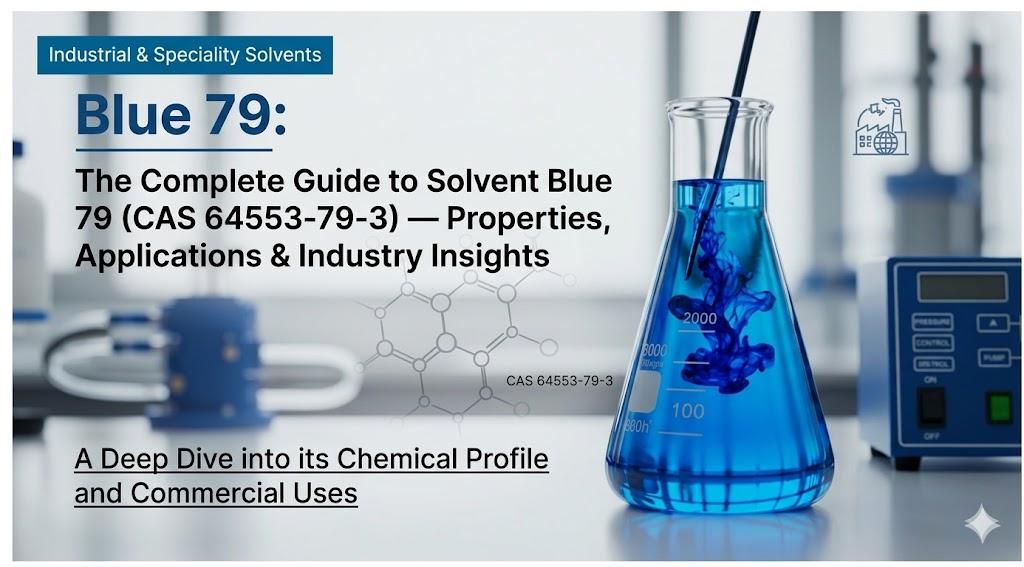
Blue 79: The Complete Guide to Solvent Blue 79 (CAS 64553-79-3) — Properties, Applications & Industry Insights

If at the fuel depot you encounter a specialized blue colour, and while removing it from the drum you see that the lubricant has a very intense bluish-blackish colour, then it is 99% certain that you have Blue 79 on your hands. Blue 79 is the best-known colourant within Solvent Blue petroleum blue dyes, a highly soluble anthraquinone dye that was developed exclusively for use within fuels, oils, and other solvent-based applications.

In this post, we’ll take you through the basics of Blue 79: what it is and its history, how it came to replace the old blue dyes, where you’ll find it today, and how to buy it. Whether you’re a fuel blender, lubricant manufacturer, or industrial dye buyer, this article has you covered.

What Exactly Is Blue 79?

Blue 79 (CAS 64553-79-3) is a synthetic anthraquinone dye. Its chemical name is 9,10-anthracenedione, 1,4-diamino-, N, N-mixed 2-ethylhexyl-, methyl-, and pentyl-derivs. The key backstory: Originally, Blue 79 was developed by BASF as a highly soluble form of Solvent Blue 35 (Oil Blue 35, 1,4-bis(butylamino)anthraquinone), which is a very good blue dye but only dissolves to around 2% in xylene (which makes it pretty useless industrially) BASF added a second side-chain of longer, more branched alkyls onto the anthraquinone molecule, producing Blue 79 which can form stable liquid solutions at over 60% solids in xylene and remain at room temperature down to -20°C.

This leap in solubility was huge. It meant refineries could drop the more hazardous powder for a liquid dye that was safe to use, easy to apply and very predictable.

Primary Applications of Blue 79

1. Fuel and Petroleum Colour-Coding

Blue 79 has been primarily used in the coloration of petroleum-based fuels. Refining companies globally rely on the use of this dye to differentiate various grades of fuel, including different octane levels of gasoline, sulphur grades of diesel, aviation fuels, kerosene and gas oil. In certain areas, blue dye for diesel is reserved solely for government- and state-owned vehicles.

Blue 79 plays a vital role in green fuel dye formulas. Blue is a fundamental component of green fuel dye formulas. Since green is created by mixing a blue dye with a yellow dye (generally Solvent Yellow 107) Blue 79 is added to yellow dyes to replicate the exact green color specified by some national fuel-marking standards.

2. Lubricants, Hydraulic Fluids, and Industrial Oils

For product identification and differentiation, transmission fluids, gear oils, hydraulic oils, and cutting fluids are frequently dyed blue. A clean, bright blue that does not deteriorate after a long period in storage and is not affected by the typical heat seen by normally functioning machinery is available from Blue 79.

3. Wax, Candle, and Speciality Product Colouring

For colouring candles, waxes, and other specialised materials, when diluted in paraffin and other wax systems, Blue 79 is simple to dissolve.

4. Printing Inks and Coatings

Blue 79 has high tinting strength and fast dispersion in oil-based inks. The anthraquinone structure also offers inherently improved lightfastness over azo-based dyes, which is an advantage in some ink and coating applications that are exposed to sunlight.

Case Study: Improving Fuel Depot Safety and Efficiency with Blue 79

Background: A country oil marketing company with a chain of fuel storage depots throughout the Middle East was facing constant problems with their blue fuel dye programme. Their Blue dye system at the time used a powder of solvent blue 35 that had to be manually weighed out and pre-dissolved on-site in batches of small quantities of xylene prior to being injected into fuel storage tanks. This system was slow, exposed staff to large quantities of dye dust, and resulted in inconsistent coloured dye from batch to batch.

The Problem: Depot workers had already raised safety concerns about prolonged inhalation of the powder form of the dye, and during quality audits it was discovered that colour levels varied by 35% between tanks that had been dyed with powder and that three batches in one quarter had been rejected due to lack of a strong blue tint.

The Solution: The company switched to a pre-prepared Solvent Blue 79 (CAS 64553-79-3) liquid concentrate in a high-flash solvent base. The concentrate is packaged in sealed drums and therefore removes all handling of powder products. The concentrate was dosed directly into the fuel flow using the current proportional dosing systems installed at each depot and was accurately proportioned to 15ppm of Blue 79.

Key Takeaway: The transition from powdered Solvent Blue 35 to liquid Blue 79 was not merely about the consistency of colour – it was an important step in protecting the safety of the workplace and, as a result, efficiency. That’s the very benefit that the move from powder to liquid petroleum dyes was intended to provide. That is why Blue 79 has been adopted as the industry standard.

What to Look for When Sourcing Blue 79

Because Blue 79 is not a pure compound but rather a blend of alkylated anthraquinone derivatives, variations in product quality and performance can exist among different manufacturers. These are the key qualities to look for:

  • No insolubles: Your dye should be a pure liquid with no solids suspended in it. Insolubles build up in injection line filters, dosing pumps, and storage tanks.
  • Instantly and Completely Dissolve: Your dye should instantly & completely dissolve in the material that you are going to use the dye in to form a clear, consistent hue of blue.
  • Colour strength consistency: Check that all production batches have been tested at a recognised laboratory for colour strength with a spectrophotometer. The correct dye dosage and colour strength should be available on a certificate of analysis for all production batches.
  • Freeze stability: The liquid should be stable at temperatures of -20°C and below for crystallisation or phase separation to occur.
  • ISO certification: Seek out manufacturers who have ISO 9001:2015, ISO 14001:2015, and ISO 45001:2018 quality, environmental, and safety standards.

Anar Chemicals LLP has been a creator of Blue 79 in high-flash and xylene solvent base for more than 40 years as a dye and speciality chemicals manufacturing company. They are an ISO 9001:2015, ISO 14001:2015 & ISO 45001:2018 certified company providing a full range of petroleum dye products for refineries and fuel companies around the world. Check out their entire Liquid Petroleum or Fuel Dyes collection online.

Frequently Asked Questions About Blue 79

What is Blue 79 dye used for?

Blue 79 (Solvent Blue 79 – CAS 64553-79-3) is used in petroleum fuels, lubricants, and industrial oils (and their formulations) for colouring to facilitate visual identification and distinction between grades. It is also used in candles, wax, and ink systems, which require a blue colour stable in non-aqueous media.

What is the CAS number for Blue 79?

CAS number 64553-79-3. This is the CAS registration for the alkylated 1,4-diaminoanthraquinone derivative that is used in petroleum dye formulations.

What is the recommended dosage of Blue 79 in fuel?

Blue 79 is used at approximately 10 to 20 ppm in petroleum products, although this dosage will vary depending on the desired shade and the coloured fuel/oil.

What is the difference between Blue 79 and Solvent Blue 35?

Blue 79 is an alkylated, high-solubility version of Solvent Blue 35. They are identical except Blue 79 has longer alkyl side chains that greatly increase the solubility of the dye in fuels and other organic solvents. Solvent Blue 35 in powder form dissolves just under 2% in xylene, whereas Blue 79 can stabilize solutions well above 60%.

Blue 79 fuel – does it impact fuel performance?

No. Blue 79 is insoluble in hydrocarbons, and it is added at such a low concentration that it does not influence combustion behaviour, octane/cetane number, or performance.

Why do refineries dye fuel blue?

Blue fuel dyes have many uses: distinguishing fuel quality grades during storage and transportation, for national fuel data collection, preventing theft of government stockpiles, and for the colour-coding regulations of the country in question.

Where can I buy the best Blue 79?

Blue 79 is also manufactured by speciality petroleum dye manufacturers, such as Anar Chemicals LLP (anarchem.com), an ISO 9001:2015,ISO 14001:2015 & ISO 45001:2018 certified company that manufactures a wide range of dyes, with over 40 years of product experience. Blue 79 is manufactured in high-flash and xylene solvent bases.

How do I store Blue 79?

Store in a tightly sealed bottle, away from direct sunlight, at temperatures between 5C and 40C. The shelf life, stored correctly, is approximately 2 years from date of manufacture.

Uncategorized

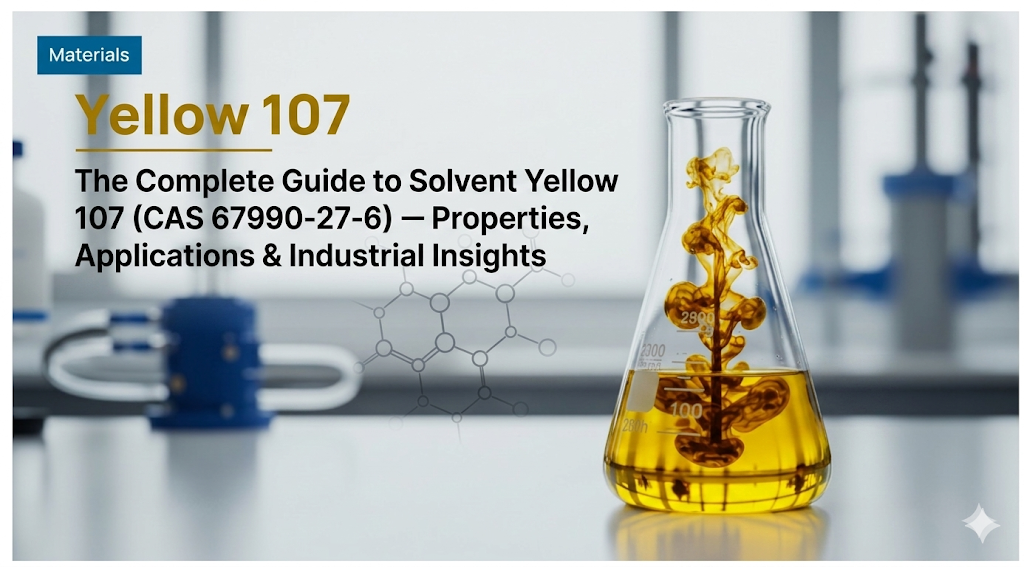
Yellow 107: The Complete Guide to Solvent Yellow 107 (CAS 67990-27-6) — Properties, Applications & Industrial Insights

Why do some petroleum products have a buttery yellow hue, and how do refining companies instantly identify a specific grade of fuel? Odds are that you, or someone you know, has been in touch with Yellow 107. This solvent yellow dye also commonly contributes to the color of drums, tanks, and lines used for wax processing and in lubricant manufacturing.

If you’re interested in learning more about yellow 107, then this comprehensive guide is for you. Here we’ll look at the history of yellow 107, its chemical structure and performance characteristics, its use as a dye additive for lubricant and other petroleum processing operations, and how the best yellow dye stacks up against the competition.

What Exactly Is Yellow 107?

Yellow 107 is the synthetic dye more commonly referred to by its color index identity of C.I. Solvent Yellow 107 (CAS number 67990-27-6, C.I. number 21140). The chemical formula for Yellow 107 is C44H62N4O2, and its molecular weight is 674.96 g/mol. Yellow 107 is produced by double diazotisation of 3,3-dimethylbenzidine, coupled with 4-nonylphenol.

Warm yellow with an orange-yellow hue. Dissolves completely in hydrocarbons and petroleum products and non-polar media with no difficulty or cloudiness. 100% Oil Soluble—100% soluble in hydrocarbons, petroleum products, and non-polar media. Available as a concentrated liquid in high-flash solvents, xylene or toluene.

Apart from its intense tinting strength, the highly significant property that makes Yellow 107 extremely useful is that it is compatible with a large number of petroleum products and is thermostable. It does not change the properties or qualities of the fuels or oils that it colors – just what the industry wants.

Primary Applications of Yellow 107

1. Fuel and Petroleum Product Colour-Coding

Most of the Yellow 107 produced is used in the petroleum industry. Fuel refineries and fuel distribution companies use it to differentiate between different ranges and types of fuel, for example, through sulfur content in diesel, high-octane and low-octane fuels, and between unleaded and leaded petrol. This cosmetic difference isn’t just cosmetic; it’s about preventing miscommunication and protecting consumers on the road and in the tank.

Different countries have different requirements for colour and concentration of these fuel types. Fuel identification programmes rely on the dye colour, which is commonly used in Asia, Africa, and the Middle East to identify fuel. It is one of the main dyes approved for petroleum colouring in India and beyond.

2. Lubricants, Greases, and Industrial Oils

Manufacturers of transmission fluids, gear oils, hydraulic oils and industrial lubricants use Yellow 107, as it gives uniform, recognizable coloration to the end product to allow consumers to readily identify it. The product also differentiates the manufacturer’s product in the market.

3. Wax, Candle, and Speciality Product Colouring

Yellow 107 is freely soluble in paraffin and other wax vehicles, making it a popular bright, stable yellow for candles and wax products where high tinting strength is required. It is highly soluble, so there is no sediment, blockages in wicks, or uneven colour distribution.

4. Printing Inks and Coatings

It is also used in printing inks, in which it exhibits high tinting strength in addition to being readily dispersed throughout the ink.

Case Study: Standardising Fuel Colour-Coding for an Indian Petroleum Distributor

Background: The distributor, which was a mid-size distributor in the petroleum business, with a depot network around western India, faced higher rejection at the pump due to problems with the identification of fuel. All the depots used dyes from various local sources, and the colour used in the same grade of the fuel varied across depots. The fuel sample was submitted for analysis and inspection.

The Issue: The inconsistency was confusing to the depot workers and even suggested that the product was being altered by the customer. The distributor was after a predictable yellow dye so that consistency would be achieved at every site without changing over to a new mixing system.

The Result: The distributor worked with the supplier to continue to source their yellow dye supply from a single ISO-certified Yellow 107 (CAS 67990-27-6) supplier in a high-flash solvent base. The standard flash formulation was pre-calibrated for 15 ppm and supplied in a ready-to-use liquid formulation that could be injected in-line directly into fuel lines without further dilution.

Key Learning: Moving to a quality-assured, single-source Yellow 107 supplier saved the headaches associated with inconsistent dye batches. This experience speaks to an important lesson that applies to all dye markets in the petroleum industry: supplier consistency is a critical factor.

What to Look for When Sourcing Yellow 107

Because Yellow 107 is a commercial dye and not a single pure compound (the alkylation and coupling process produces a mixture of related structures), quality can vary significantly between manufacturers. Here are the factors that matter most:

  • Pure: The product must be free of all insoluble matter. Minute quantities of insoluble matter can build up in storage and fuel injection systems after time.
  • Fully dissolvable: Yellow 107 should fully dissolve in the products that it is added to, such as oil or fuel, and result in a homogeneous, transparent colour without any cloudiness.
  • Consistent: If you go with a product that is subject to spectrophotometric quality assurance on each batch, then you will have consistency of intensity of colour as well as colour hue.
  • Wide range of solvent bases: Whether you want Yellow 107 to be used in a high-flash solvent, xylene, or toluene base, a competent manufacturer will be able to provide you with all three.
  • ISO certification: ISO 9001:2015, ISO 14001:2015, and ISO 45001:2018 certifications prove a company’s dedication to quality, environment, and safety standards.

Anar Chemicals LLP are that committed to consistency; they are ISO 9001:2015, ISO 14001:2015 & ISO 45001:2018 accredited with over 40 years of experience in dyes and speciality chemicals. They manufacture Yellow 107 in both high-flash and xylene or toluene solvent bases, and their liquids are supplied to fuel and petroleum companies around the world. View our full range of liquid petroleum or fuel dyes.

Frequently Asked Questions About Yellow 107

What is Yellow 107?

Yellow 107 (Solvent Yellow 107, CAS 67990-27-6) is a yellow colour, mainly used in the colouring and distinction of fuels, lubricants, and other oils. It can be used in wax colouring, candle making, printing inks, and in specific plastic products.

What is the CAS number for Yellow 107?

CAS 67990-27-6 Colour Index Number C.I. 21140.

Are Solvent Yellow 124 and Yellow 107 the same?

No. Solvent Yellow 124 and Yellow 107 are both dyes with different chemical structures and purposes. Solvent Yellow 124 was the dye of the EU Euromarker used for the identification of tax-exempt fuel and to colour fuel; Yellow 107 is used as a colourant for visually identifying fuel to colour code for the fuel industry.

How much Yellow 107 should I add to fuel?

The typical application rate of Yellow 107 in petroleum products is between 10 and 20 ppm, with the exact amount being dependent on the intensity of the colour required and the particular product being coloured.

Is Solvent Yellow 107 reactive?

No. Solvent Yellow 107 is non-reactive in all hydrocarbon systems at colouring levels and does not affect combustion qualities, octane or cetane values, or the mechanical performance of any engines.

How should Yellow 107 be stored?

Storage conditions: Store in a tightly closed container in a dry and well-ventilated environment at a temperature range of 5 °C to 40°C. Shelf life: 2 years from the date of manufacture at room temperature.

Where can I buy high-quality Yellow 107?

Yellow 107 is sold by speciality chemical vendors such as Anar Chemicals LLP (anarchem.com), an ISO certified company with more than 40 years of experience in manufacturing petroleum dyes and specialty chemicals. The company has manufacturing of Yellow 107 with high-flash, xylene, and toluene solvent base.

Is Yellow 107 safe to handle?

As with the majority of industrial solvent dyes, this product must be handled using normal precautions—suitable gloves, eye protection, and exhaust ventilation. Use the manufacturer’s SDS/MSDS for details of safety precautions.